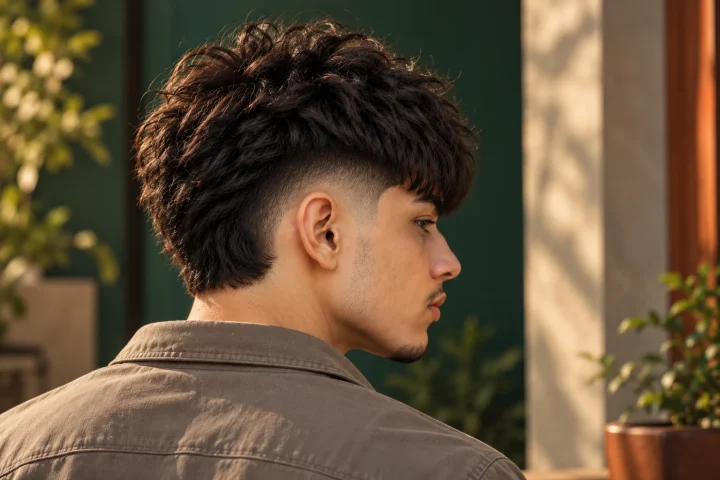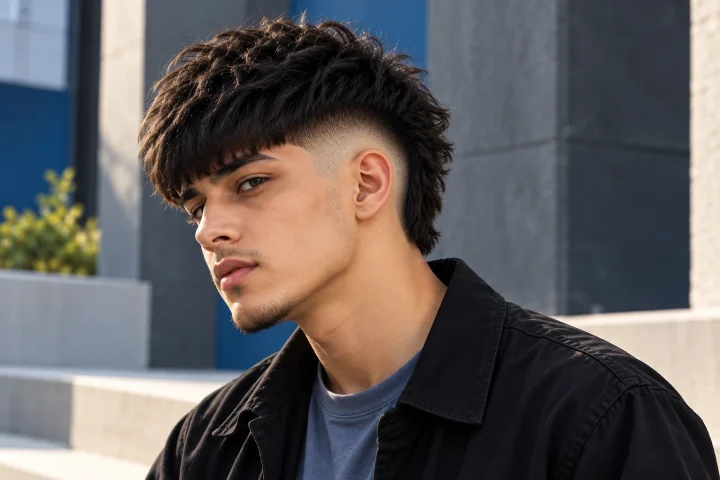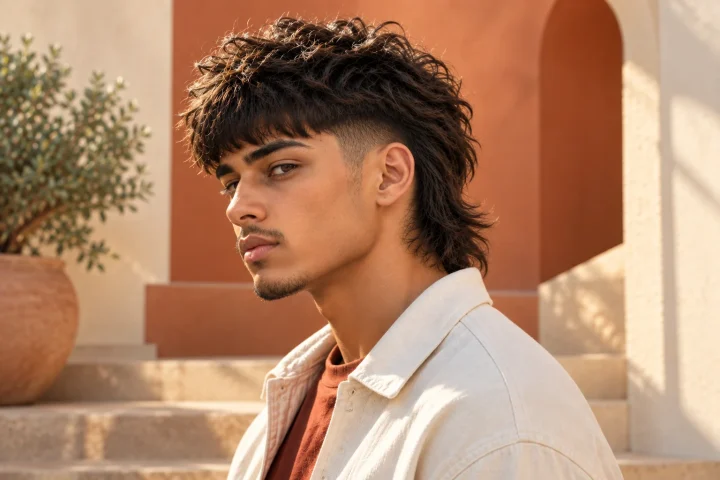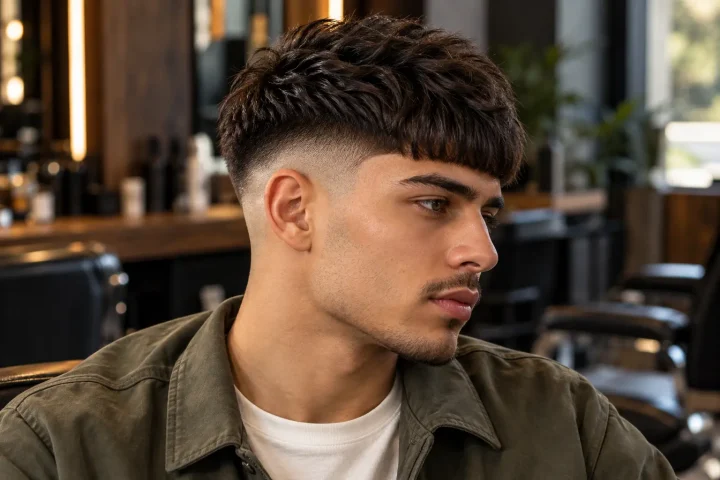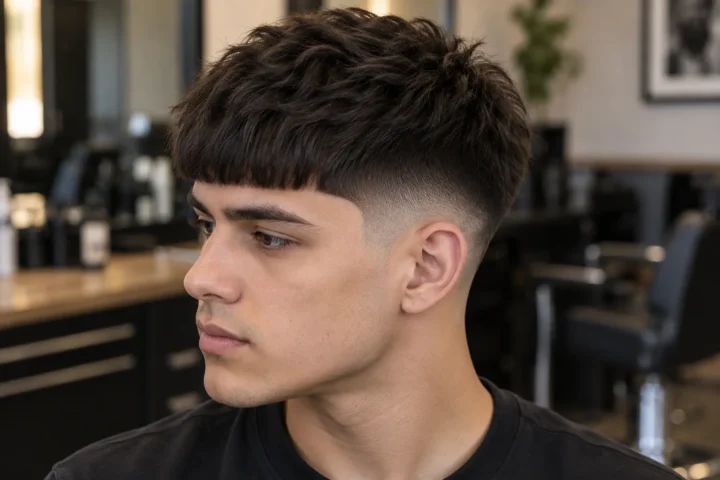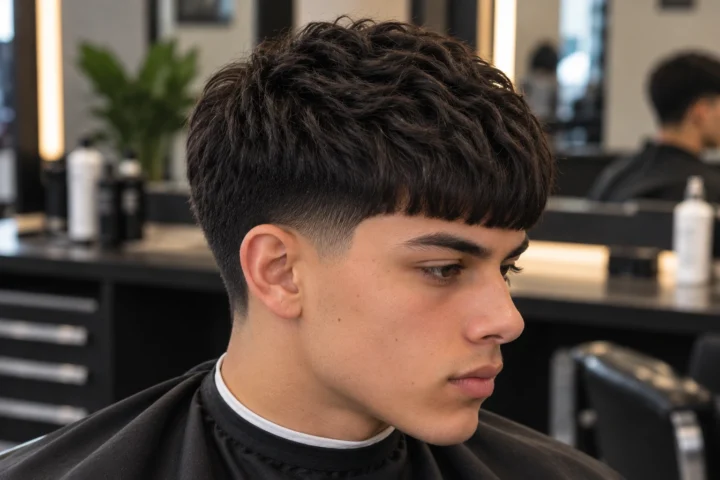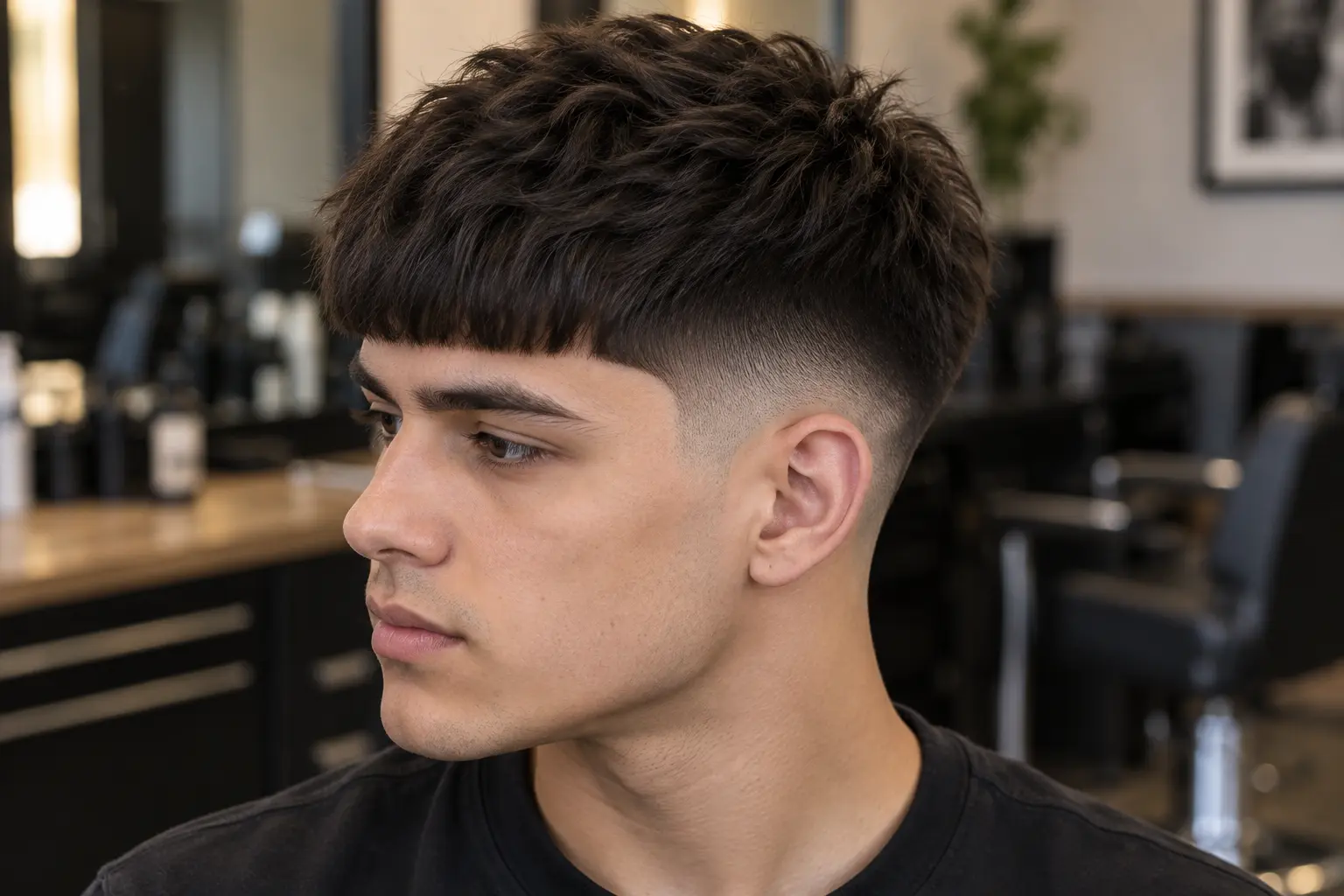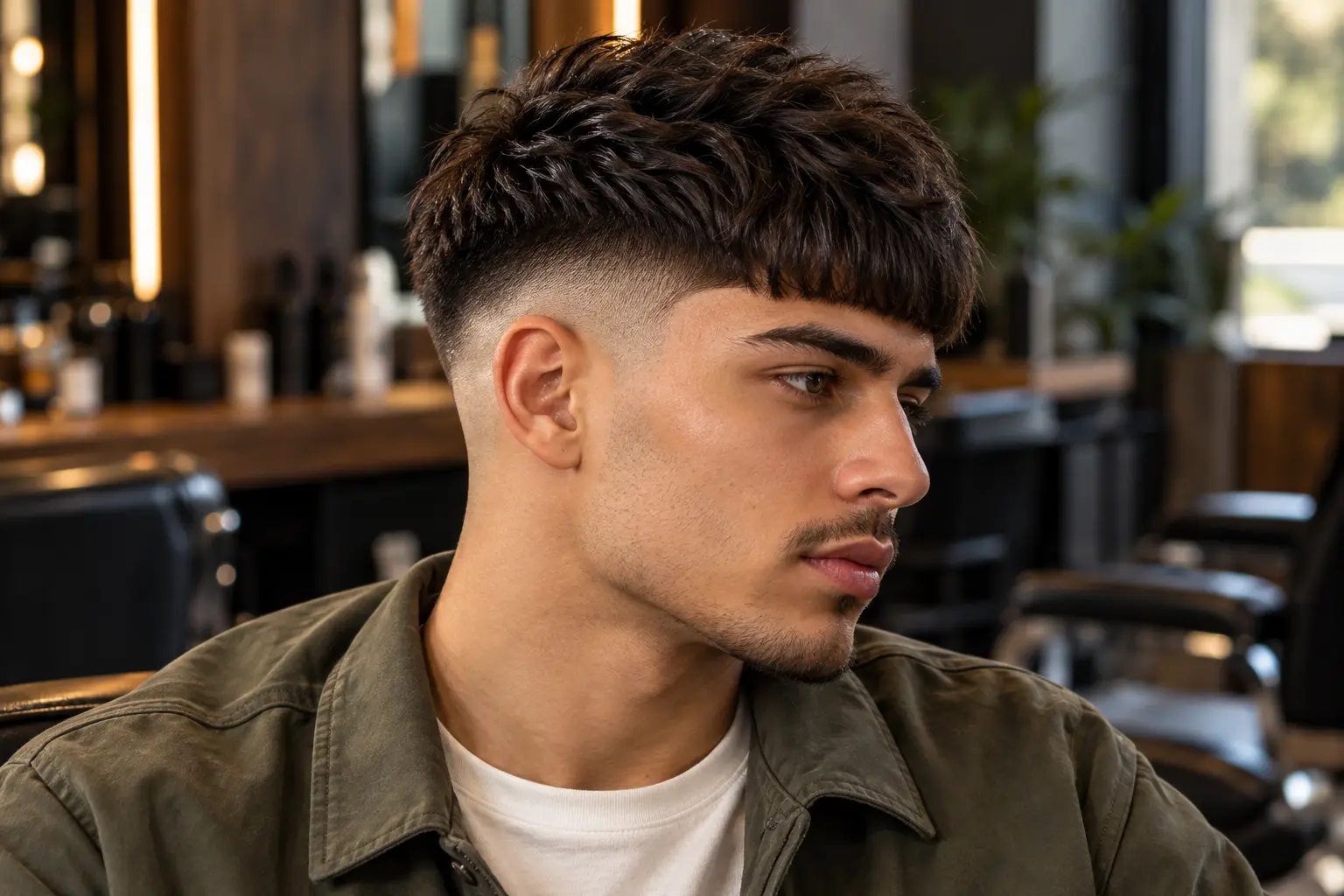

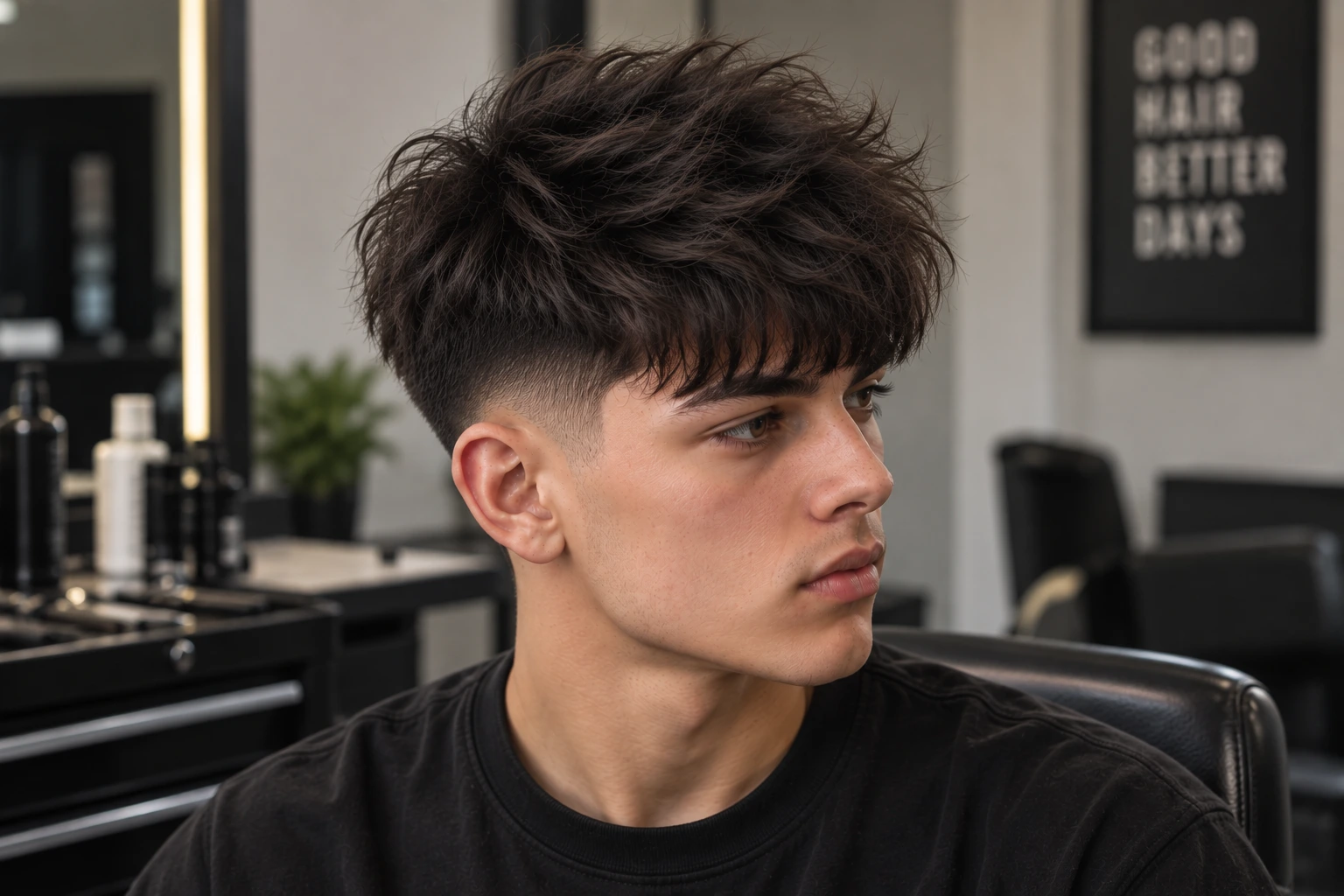
A Fluffy Edgar keeps the recognizable shape of an Edgar haircut but replaces the flatter, heavier top with soft volume, movement and an airy texture. The fringe still gives the haircut structure, while extra length and texture on top create the fluffy finish.
Getting that effect, however, is not simply a matter of growing your hair longer.
The haircut needs enough length to lift, the right amount of weight removed from the top, and a styling routine that builds volume without making the hair stiff or puffy. Your natural hair texture also changes how the finished haircut will look.
If you are considering a Fluffy Edgar, this guide will help you decide whether it suits your hair, which version to choose, what to tell your barber and how to keep the volume from falling flat.
What Makes an Edgar Haircut “Fluffy”?
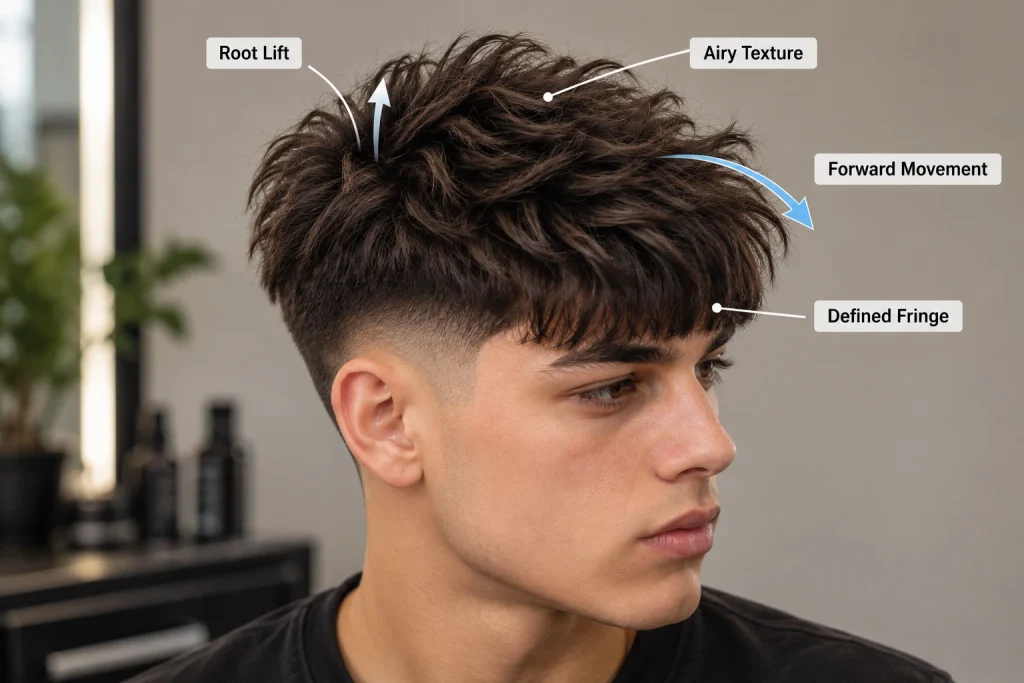
The easiest way to understand a Fluffy Edgar is to look at the top of the haircut.
A traditional Edgar haircut is recognized by its forward-directed top and defined fringe. A fluffy version keeps that basic identity but introduces noticeably more lift and movement.
Instead of the top sitting compactly against the head, it has a softer and fuller silhouette.
A good Fluffy Edgar usually combines:
- Enough length on top to create lift
- Texture or layering that allows the hair to move
- Volume through the upper section
- A fringe that still identifies the haircut as an Edgar
- Shorter or controlled sides that prevent the haircut from becoming bulky
- A natural or matte finish rather than a wet, heavily coated appearance
The important distinction is volume versus bulk.
Volume makes the hair appear lifted and mobile. Bulk simply means there is a lot of heavy hair sitting in one area.
If too much weight remains on top, the hair may initially look large but quickly collapse. If too much hair is removed, however, there may not be enough structure left to create the full silhouette.
The barber therefore needs to create movement without removing the foundation that supports the shape.
Will a Fluffy Edgar Work With Your Hair?
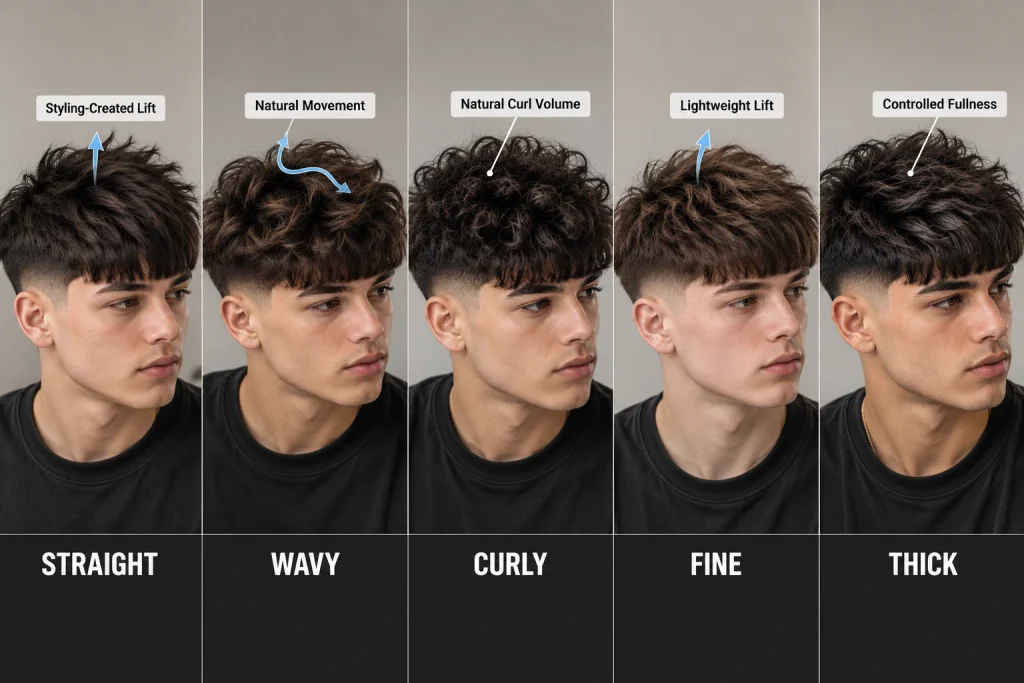
You do not need one specific hair type to wear a Fluffy Edgar.
Straight, wavy and curly hair can all produce the look, but they do not produce it in the same way.
The real question is:
Where will your volume come from?
For some people, their natural texture provides it. Others need strategic layering and blow-drying to create the same effect.
| Your Hair | What to Expect | Best Approach |
|---|---|---|
| Straight | Can look flat without styling | Texture + root lift while drying |
| Wavy | Naturally creates movement | Preserve the wave and avoid heavy products |
| Curly | Naturally produces fullness | Control the shape rather than flattening curls |
| Fine | Can achieve volume but may lose it faster | Keep the shape lighter and use minimal product |
| Thick | Excellent fullness but can become bulky | Remove excess weight strategically |
Straight Hair
Straight hair can make an excellent Fluffy Edgar, but the haircut alone may not create the finished effect.
You usually need enough length for movement plus texture through the top. Blow-drying the roots upward rather than simply drying the hair forward helps create the lift associated with the style.
The objective is not to make every strand stand vertically. You want a lifted base with the upper hair eventually moving up and slightly forward into the Edgar shape.
Wavy Hair
Naturally wavy hair has an advantage: movement is already built into the hair.
Instead of trying to manufacture texture, the haircut should preserve enough length for the waves to appear while controlling unnecessary bulk.
This often produces one of the most natural-looking versions of the Fluffy Edgar.
Curly Hair
Curls can create substantial volume without much encouragement.
The challenge is maintaining the Edgar silhouette without flattening the natural curl pattern.
If your curls are the main feature you want to preserve, our Curly Edgar Haircut guide goes deeper into curl-specific variations and styling. On a Fluffy Edgar, the focus is slightly different: the curls are being used to build a larger, softer silhouette.
Fine Hair
Fine hair does not automatically rule out a Fluffy Edgar.
What matters is how much density you have and whether the haircut retains enough usable length.
Heavy waxes, creams and excessive product can work against you because they add weight. Fine hair generally benefits more from a lighter approach that creates lift at the roots without coating the entire top.
Thick Hair
Thick hair can create impressive volume, but simply leaving everything long is usually not the answer.
Too much internal weight can make the top expand outward instead of lifting cleanly.
A barber can selectively remove bulk and create movement while retaining enough density to keep the haircut full.
How Much Hair Do You Need for a Fluffy Edgar?
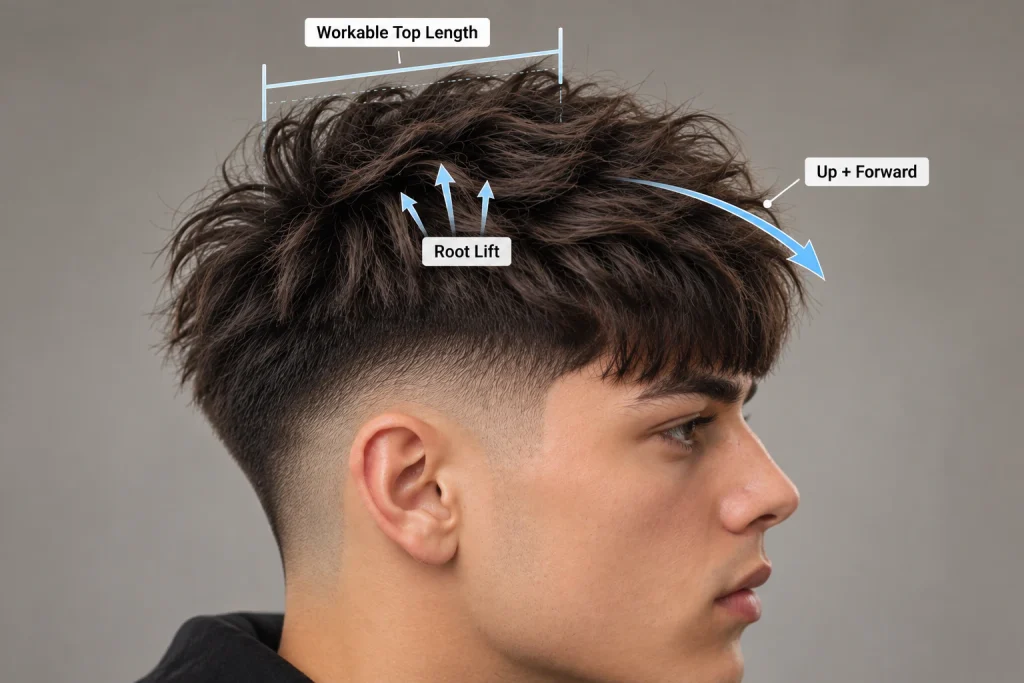
There is no universal measurement because curl shrinkage, density and texture affect how long hair appears.
As a practical starting point, however, the top usually needs several inches of workable length rather than the very short top used for some classic Edgars. Barber-oriented sources commonly recommend around 3 inches or more for a clearly fluffy version.
Do not focus only on a number.
Ask whether your current hair can:
- Lift away from the scalp
- Move forward without immediately collapsing
- Show visible texture
- Maintain some fullness above the fringe
If it cannot yet do those things, growing the top a little longer may produce a better result than trying to force a fluffy finish onto hair that is simply too short.
Which Fluffy Edgar Matches the Look You Want?
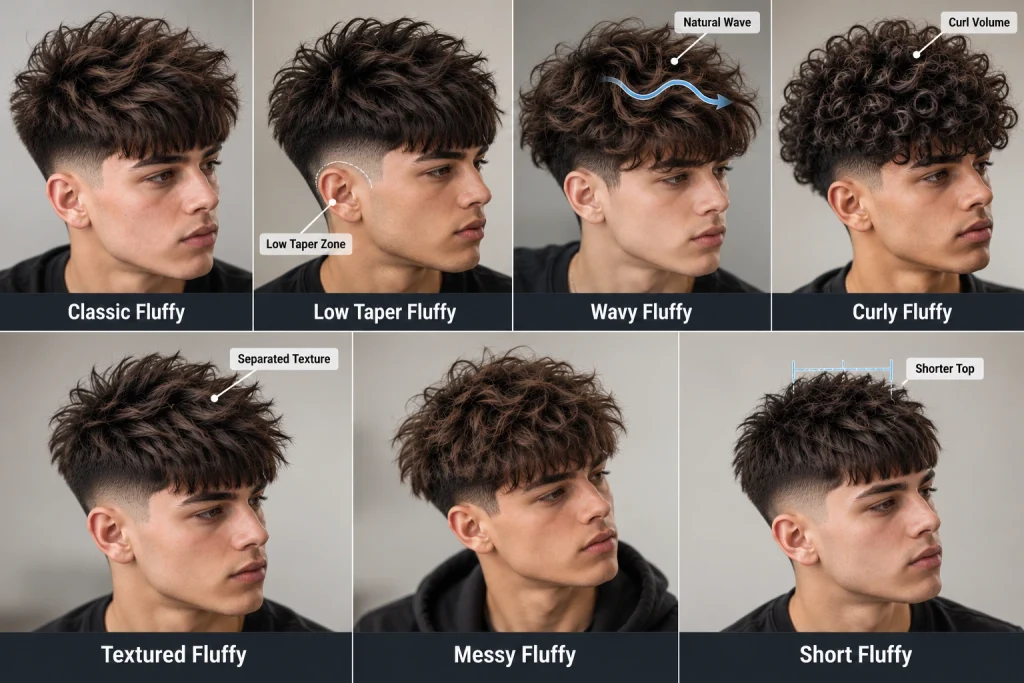
There is more than one way to create the fluffy effect.
Instead of choosing a variation because its name sounds good, choose according to your natural texture, how much contrast you want and how much styling you are prepared to do.
Classic Fluffy Edgar
This is the best starting point if you want the fluffy character to be the main feature.
The top remains full and lifted while the front retains enough definition to read clearly as an Edgar.
Compared with more aggressive fade versions, the transition from the top to the sides can feel more balanced.
Choose it if: you want recognizable Edgar structure without making the sides the main attraction.
Low Taper Fluffy Edgar
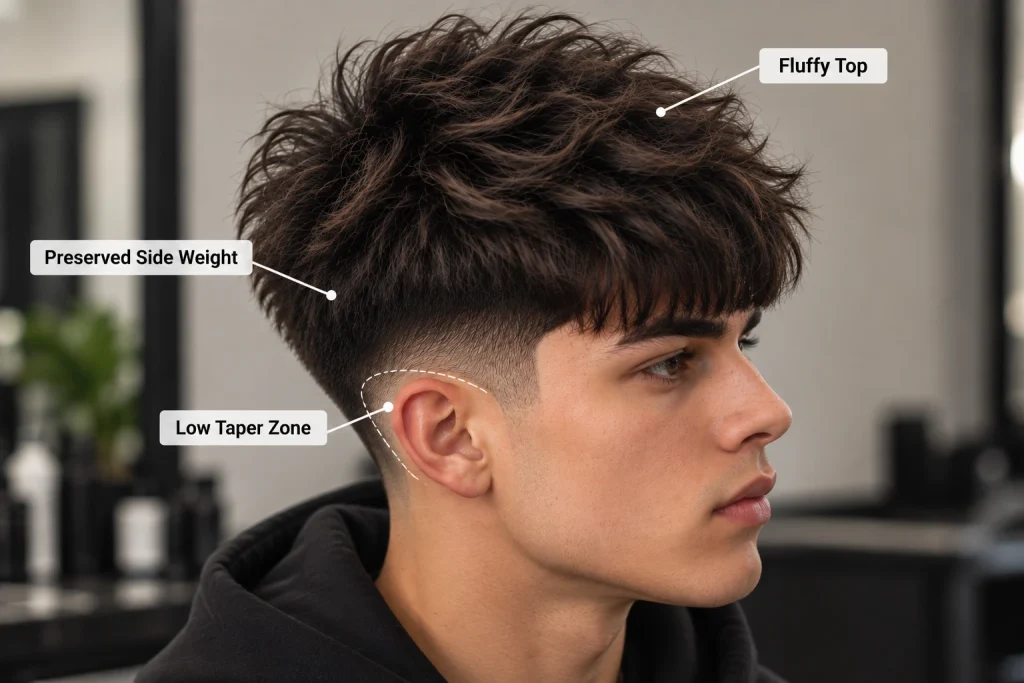
A Low Taper Fluffy Edgar combines a voluminous top with a small, clean taper concentrated near the sideburns and neckline.
This pairing works particularly well because the low taper cleans the perimeter without removing all the visual weight from the sides. That helps the fluffy top look integrated rather than disconnected.
Choose it if: you want a clean haircut while keeping a softer overall silhouette.
If the taper itself is your main concern, see our Low Taper Edgar Haircut guide for the differences between a true low taper and a low fade.
Wavy Fluffy Edgar
Waves create irregular movement through the top, so this version tends to look less deliberately “styled.”
The barber’s job is largely to shape the existing movement rather than erase it.
A slightly softer fringe can also complement the waves better than forcing every strand into an unnaturally rigid line.
Choose it if: your hair already bends or waves and you want to work with that texture.
Curly Fluffy Edgar
Here, natural curls supply much of the volume.
Keeping sufficient top length allows the curl pattern to remain visible, while controlled sides prevent the entire haircut from becoming round or overly wide.
The fringe can remain recognizable without forcing the curls into a completely straight edge.
Choose it if: you want your natural curls to provide the fluffy effect.
Textured or Layered Fluffy Edgar
This version emphasizes separation and movement.
Instead of one solid mass of hair, different sections of the top become visible as the hair lifts and separates.
It is particularly useful when the hair has enough density but tends to sit heavily when cut at one uniform length.
Choose it if: you want noticeable texture rather than a smooth, rounded top.
Messy Fluffy Edgar
The messy version intentionally loosens the finish.
The fringe and overall silhouette still provide enough structure to identify the haircut, but individual sections do not need to sit perfectly in place.
This can also make day-to-day styling more forgiving.
Choose it if: you prefer a relaxed finish and do not want every strand precisely arranged.
Short Fluffy Edgar
You do not necessarily need an exaggerated, tall top.
A shorter version uses moderate lift and texture to create the fluffy character while keeping the overall haircut compact.
The trade-off is simple: less length usually means less dramatic volume, but it can also mean faster styling.
Choose it if: you like the fluffy look but do not want a long top or a lengthy morning routine.
Fluffy Edgar vs. Regular Edgar: What Actually Changes?
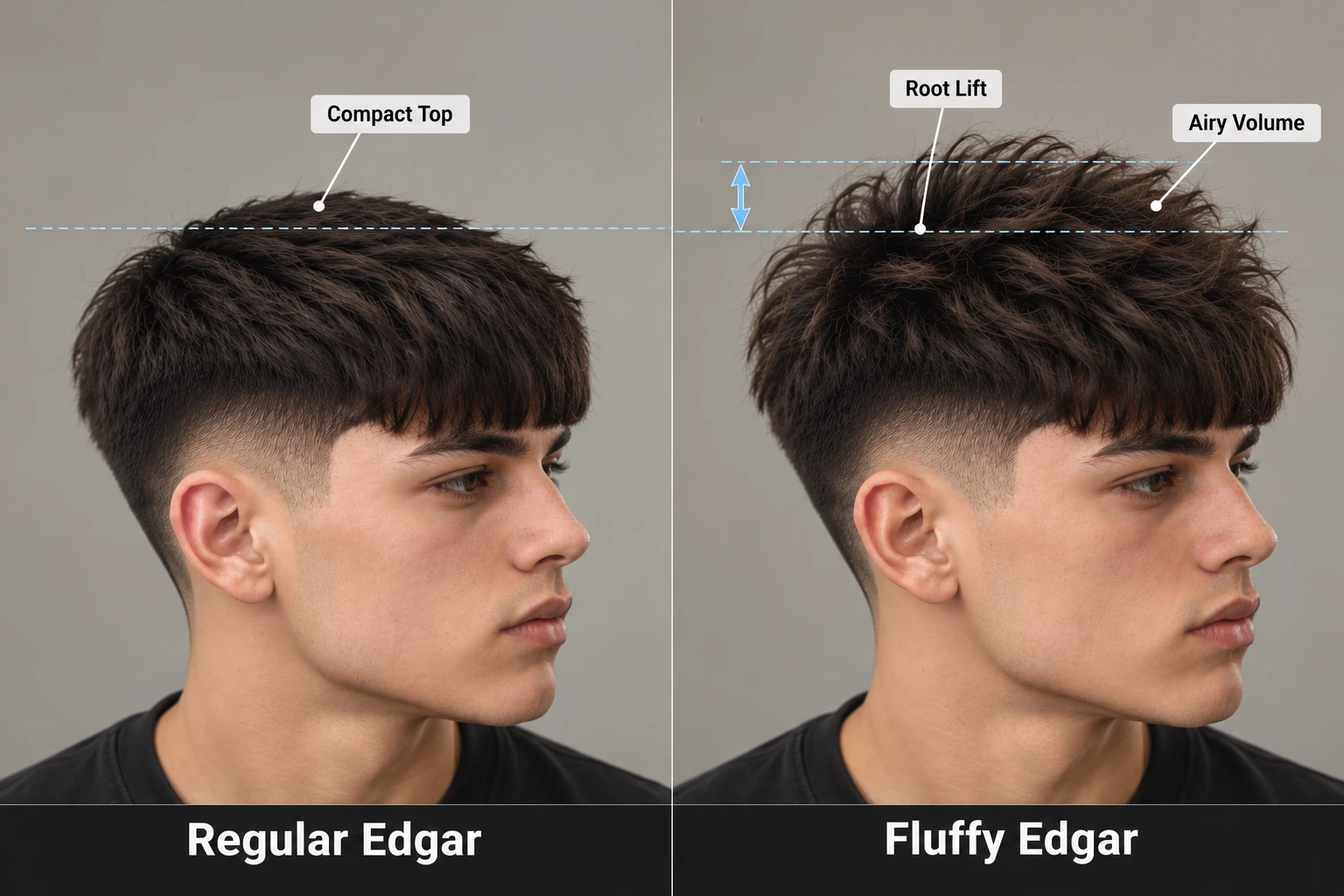
Both haircuts belong to the same family, but their visual effect is quite different.
| Feature | Regular Edgar | Fluffy Edgar |
|---|---|---|
| Top | More compact | Fuller and lifted |
| Texture | Controlled/defined | Soft and airy |
| Movement | Limited to moderate | More visible |
| Fringe | Usually stronger and more rigid | Can appear softer |
| Styling | Often simpler | More dependent on volume |
| Product | Depends on variation | Usually works better with lighter application |
| Overall impression | Sharp and structured | Relaxed and dimensional |
Neither is automatically better.
If you want a highly defined, compact silhouette, a classic Edgar may make more sense.
If you like the Edgar fringe but think the standard version looks too flat or rigid, the fluffy variation solves exactly that problem.
Don’t Just Tell Your Barber “Make It Fluffy”
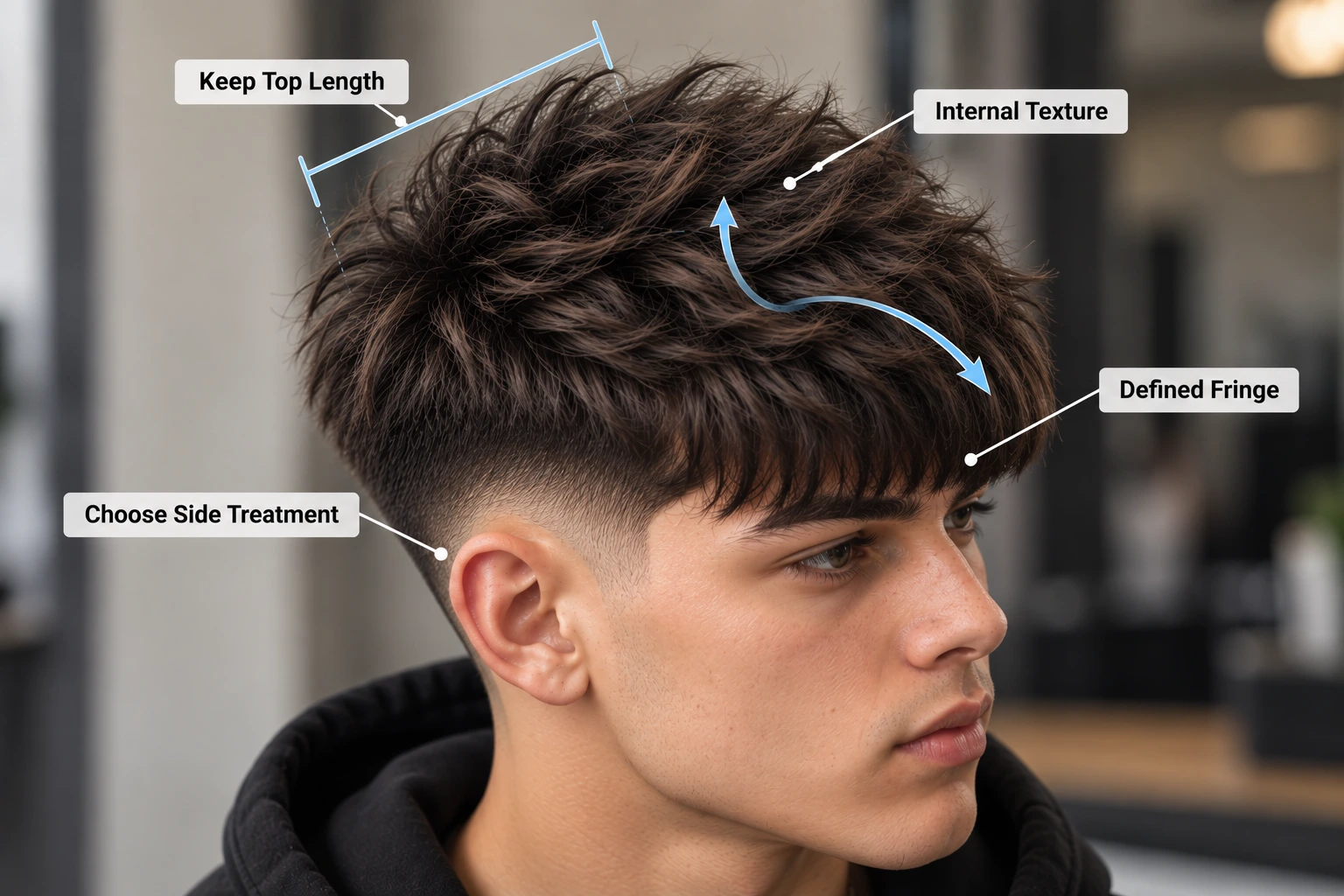
“Give me a Fluffy Edgar” is a useful starting point, but it leaves too many details open to interpretation.
The better approach is to explain what you want to preserve, where you want volume and how you want the sides finished.
Tell your barber:
- You want an Edgar-based shape with a recognizable front
- You want enough length retained on top to create volume
- You want movement and texture rather than a heavy solid top
- You do not want the top thinned so aggressively that it loses fullness
- Whether you prefer a strong or softer fringe
- Whether you want a taper, fade or fuller sides
- How much daily styling you are willing to do
A Simple Barber Request
You can say:
“I want a Fluffy Edgar with enough length left on top for volume and movement. Keep the Edgar shape at the front, add texture so the top doesn’t sit heavy, and keep the sides [low tapered/faded] without taking the blend higher than I want.”
Then show your reference photo.
That last step matters because terms such as fluffy, textured, taper and fade can be interpreted differently by different barbers.
A photograph communicates the desired height, fringe, side weight and transition much more clearly than the haircut name alone.
Show the Barber the Side View Too
Do not bring only a front-facing photograph.
For a Fluffy Edgar, the side profile tells the barber important things the front cannot show clearly:
- How high the top should sit
- Where the volume is concentrated
- How much side weight remains
- Where the taper or fade begins
- How the crown connects with the top
If possible, take two or three reference angles of the same haircut.
The 5-Minute Fluffy Edgar Routine
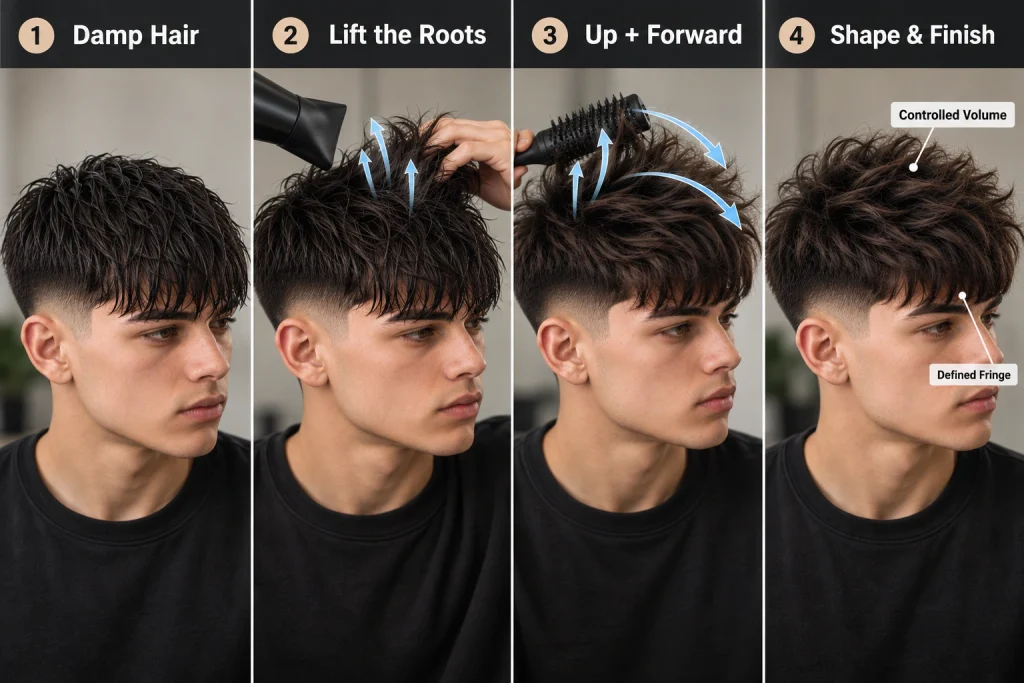
This is where many Fluffy Edgars succeed or fail.
The goal is not simply “big hair.”
You want controlled root lift with visible movement, followed by enough forward direction to retain the Edgar silhouette.
Step 1: Start With Damp, Not Soaking-Wet Hair
Gently remove excess water first.
Hair does not need to be dripping wet when you begin shaping it.
Avoid aggressively rubbing it with a towel. The American Academy of Dermatology recommends gentler drying practices and warns that excessive heat can damage hair. (American Academy of Dermatology)
Step 2: Use Product Sparingly
If your hair needs help holding volume, apply a small amount of an appropriate lightweight pre-styling product.
Do not begin by covering the entire top in heavy wax.
More product does not automatically mean more hold. On a fluffy hairstyle, too much weight can destroy the very lift you are trying to create.
Step 3: Build Lift at the Roots
This is the most important part.
Direct the airflow toward the roots while lifting sections with your fingers or an appropriate brush.
Rather than immediately pressing everything toward your forehead, establish some height first.
Blow-drying for root lift and using lighter products are common professional approaches for creating fuller-looking hair. (Vogue)
Step 4: Direct the Hair Up and Forward
Once the roots have lift, begin shaping the top toward the front.
Think:
up first → forward second.
If you only blow-dry forward, the hair can lie against the scalp.
If you only blow-dry upward, you may create volume but lose the recognizable Edgar direction.
Combining the two gives you both.
Step 5: Shape the Fringe
The fringe acts as the visual anchor.
You can keep it relatively blunt for a stronger Edgar appearance or allow some texture for a softer version.
Do not make the entire top fluffy and then forget the front. Without some deliberate fringe shape, the haircut can start looking like a generic textured crop or blowout.
Step 6: Finish Without Crushing the Volume
Once the shape is established, use only enough finishing product to maintain separation and control.
Work it through with your fingers rather than repeatedly flattening the hair with your palms.
A natural or matte finish usually complements the airy texture better than a heavily saturated appearance.
Your Fluffy Edgar Looked Great at the Barber—So Why Is It Flat Tomorrow?
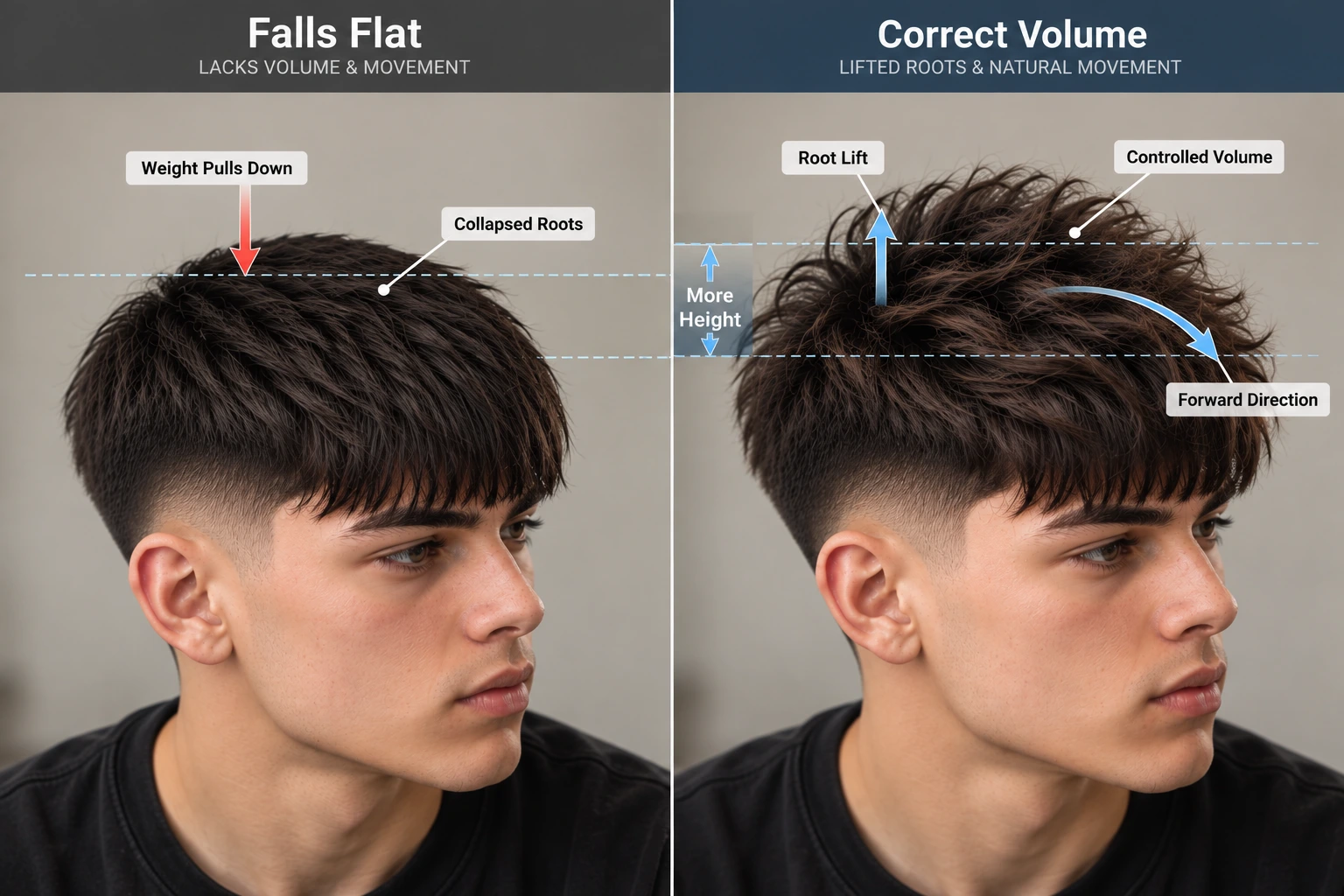
If your haircut looks good immediately after styling but collapses shortly afterward, the problem is not necessarily your hair type.
Usually one of a few things is happening.
Your Top Is Too Heavy
Long hair is not automatically fluffy hair.
If the top has accumulated too much weight, gravity begins working against the shape.
The solution may be better internal texture or weight distribution at your next haircut—not necessarily cutting everything short.
You Are Drying It Flat
Drying the hair straight forward from beginning to end encourages it to lie closer to the scalp.
Create the root lift first.
Then establish the final direction.
You Are Using Too Much Product
This is one of the easiest mistakes to make.
You notice that your volume is not holding, so you add more product. The extra product makes the hair heavier, so it falls even faster.
Start small. Add only what the hair actually needs.
Your Product Is Too Heavy
A product can provide excellent hold and still be wrong for the effect you want.
Very heavy creams, oils or waxes may reduce movement and make fine or easily weighed-down hair look flatter. Professional volume advice similarly tends to favor lighter styling approaches when fullness is the goal.
There Is Not Enough Length Yet
If the top is extremely short, there simply may not be enough hair to create the silhouette shown in your reference photograph.
Sometimes the solution is not another styling technique.
It is two or three more weeks of growth.
There Is Too Much Length
The opposite can also happen.
As the top grows, the extra weight may begin pulling the hairstyle downward.
That is often the point when reshaping—not necessarily dramatically shortening—the haircut becomes useful.
The Haircut Wasn’t Built for Volume
Styling cannot completely compensate for the wrong foundation.
If the top was cut uniformly heavy, aggressively thinned, or too short for your intended result, you may struggle every morning to recreate a shape the haircut itself does not support.
That is why the barber consultation matters as much as the styling product.
Fluffy or Frizzy? Know the Difference
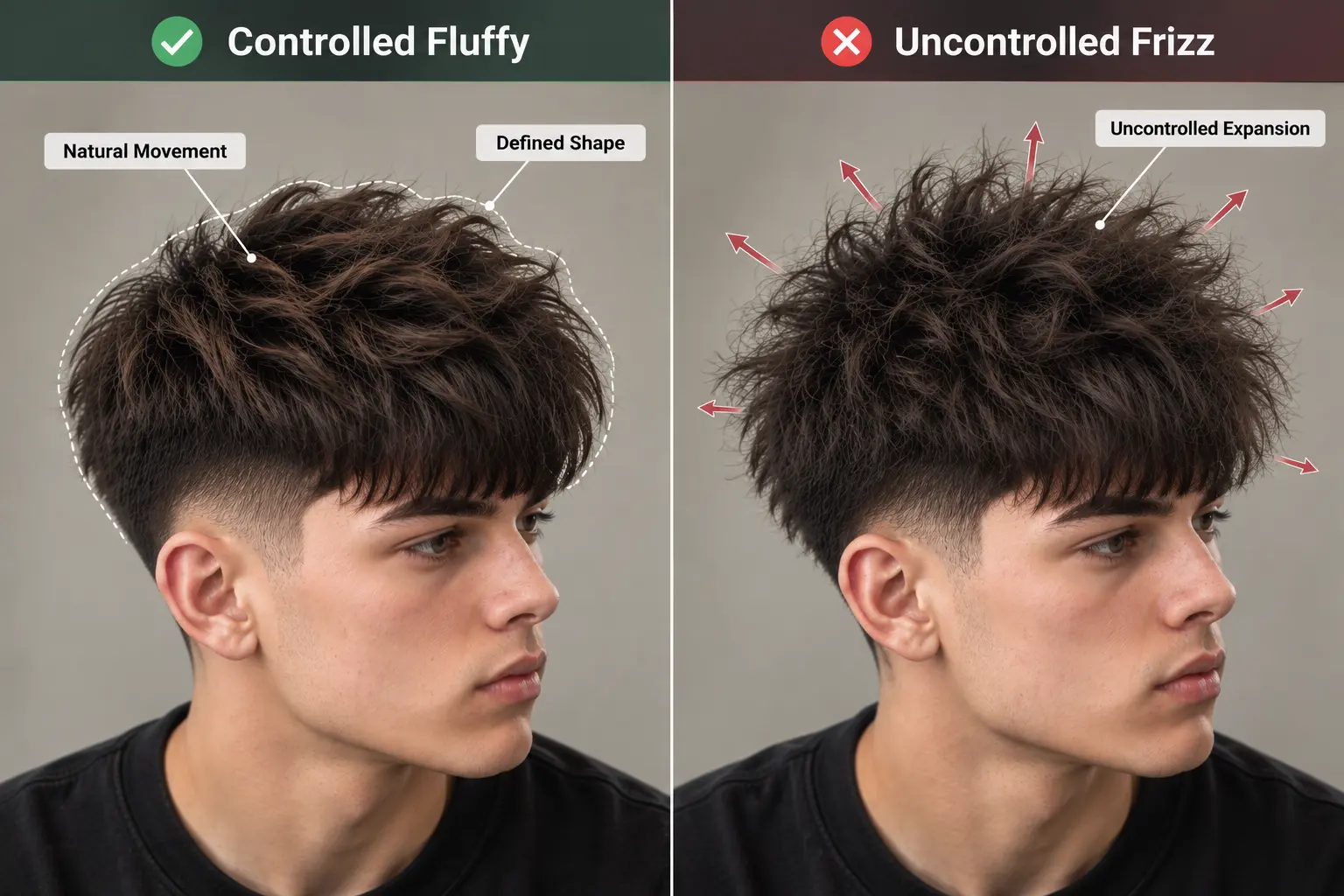
A fluffy finish should still look intentional.
You want softness, separation and controlled volume.
Frizz is different: the hair loses its intended shape and individual strands create uncontrolled expansion.
This distinction matters particularly with naturally wavy or curly hair.
Trying to eliminate every bit of natural irregularity can make a Fluffy Edgar look overworked. But allowing the hair to expand without any overall silhouette can hide the haircut.
The target sits between those extremes:
controlled shape + natural movement.
Keeping Your Fluffy Edgar Looking Good Between Haircuts
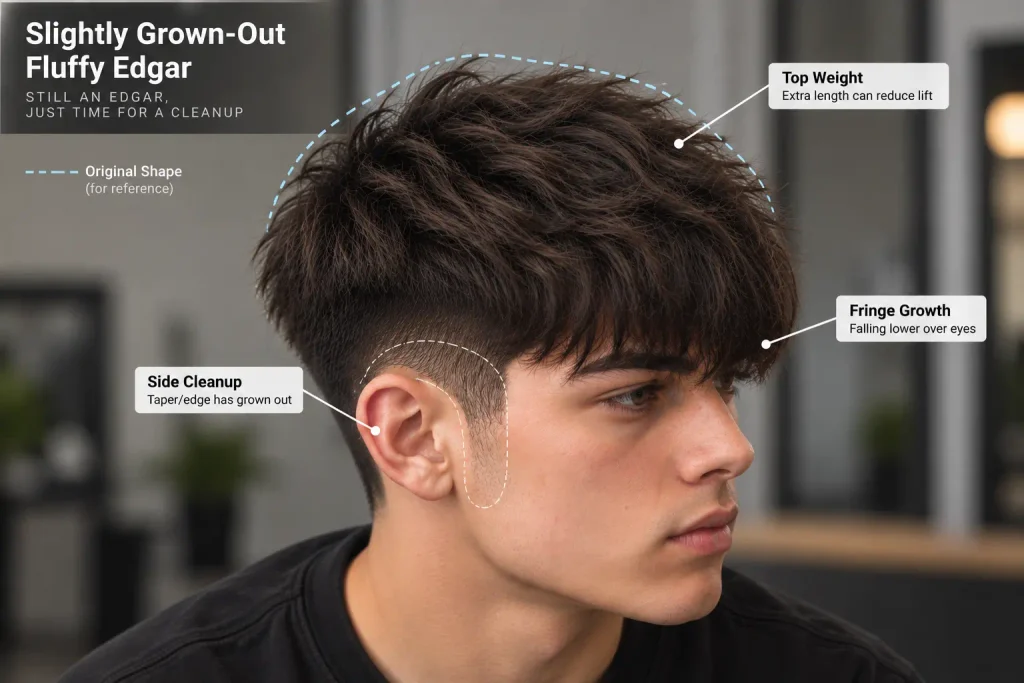
The top and sides do not grow out at the same visual rate.
You may notice the perimeter becoming untidy while the top still looks good, or the top becoming too heavy even though the taper still appears acceptable.
Instead of automatically cutting everything back to its original length, identify which part has actually lost its shape.
When the Fringe Gets Too Long
An overgrown fringe can change the proportions of the haircut and pull attention downward.
Ask your barber to restore the front while preserving the top length needed for volume.
When the Top Becomes Heavy
If you still like the length but cannot create lift anymore, the haircut may need reshaping or controlled weight removal rather than a major reduction in length.
When the Sides Grow Out
A taper or fade will gradually lose definition.
You can refresh the perimeter while leaving the fluffy top relatively untouched if you are happy with its current length.
This is particularly useful with a low-taper version because the top may take longer to reach the volume you want than the taper takes to grow out.
Do Not Chase Maximum Volume Every Day
Your hair does not need to look identical every morning.
Some days the natural texture will produce more height; other days the finish may be softer.
Constant high-heat styling just to reproduce maximum volume is unnecessary. Dermatologists recommend limiting excessive heat exposure and using low or medium heat where practical.
Should You Get a Fluffy Edgar?
By this point, the choice should be fairly simple. The Fluffy Edgar makes sense when you want the Edgar shape but don’t want the top to look compact or rigid.
| Get the Fluffy Edgar if… | Skip it if… |
|---|---|
| You want noticeable volume and movement on top | You prefer a short, compact top |
| You like a softer Edgar rather than a very rigid finish | You want a sharply structured haircut |
| Your hair has enough length to create lift, or you’re willing to grow it | You don’t want to grow or maintain extra top length |
| You want your natural waves or curls to remain visible | You prefer your natural texture tightly controlled |
| You’re comfortable spending a few minutes creating root lift | You want a true wash-and-go haircut |
| You like a natural, airy or slightly messy finish | You prefer a slick, heavily controlled finish |
Still somewhere in the middle? Start with a shorter Fluffy Edgar or pair it with a low taper. You’ll get some of the movement and softness without committing to an exaggerated amount of volume.
If the fluffy finish itself isn’t what you’re looking for, use our Edgar Haircut guide to compare the broader Edgar family before choosing your next cut.
Frequently Asked Questions About the Fluffy Edgar
Can straight hair get a Fluffy Edgar?
Yes. Straight hair can create a Fluffy Edgar, although it may require more deliberate root lift than naturally wavy or curly hair. The haircut should provide enough usable top length and texture, while blow-drying helps establish the volume.
Is a Fluffy Edgar good for thin or fine hair?
It can be, depending on density and the haircut. Fine hair often benefits from avoiding excessive weight and heavy styling products. The aim should be believable lift rather than trying to create an oversized top that the hair cannot support.
How long should the top be?
There is no single correct length because texture, density and curl shrinkage change how hair behaves. For a clearly fluffy version, however, you generally need several inches of workable top length; around 3 inches or more is a common barber recommendation.
Is a Low Taper Fluffy Edgar a good combination?
Yes. It is one of the most natural pairings because a low taper cleans the edges while preserving more weight through the sides. This allows the fluffy top to remain the dominant feature. Current Edgar guides also commonly feature this combination.
Is a Fluffy Edgar the same as a Messy Edgar?
Not exactly.
Fluffy describes the volume and airy character of the top. Messy describes how deliberately irregular or relaxed the hair is arranged.
A haircut can therefore be fluffy without being messy—and it can also be both.
Can curly hair be styled into a Fluffy Edgar?
Yes. Curly hair naturally provides volume and movement, so the goal is usually to shape that fullness rather than manufacture it. If curl pattern and curl-specific styling are your main concerns, read our Curly Edgar Haircut guide.
Why doesn’t my Fluffy Edgar look like my reference photo?
The most common reason is that your hair and the model’s hair are different.
Compare the density, natural texture, top length, curl/wave pattern and growth direction rather than only comparing the haircut outline.
A good barber should adapt the reference to your hair instead of trying to reproduce it literally.
Do I need a fade with a Fluffy Edgar?
No.
A fade can create stronger contrast, but a taper or fuller side can work just as well. In fact, retaining more side weight can produce a softer transition that suits the fluffy top particularly well.
The side treatment should support the top—not automatically follow whatever fade happens to be trending.
Final Thoughts
The best Fluffy Edgar is not necessarily the biggest one.
It is the version where length, texture, volume and side shape work together.
If your hair naturally waves or curls, much of the movement may already be there. If it is straight, the right cut and root-lifting technique can create the missing dimension. Fine hair needs restraint with weight and product, while thick hair often needs better control of bulk.
Most importantly, solve the haircut before trying to solve everything with styling products.
Keep enough length. Show your barber the shape you want. Decide how much side weight you want to preserve. Build lift at the roots. Then use the smallest amount of product necessary to hold the result.