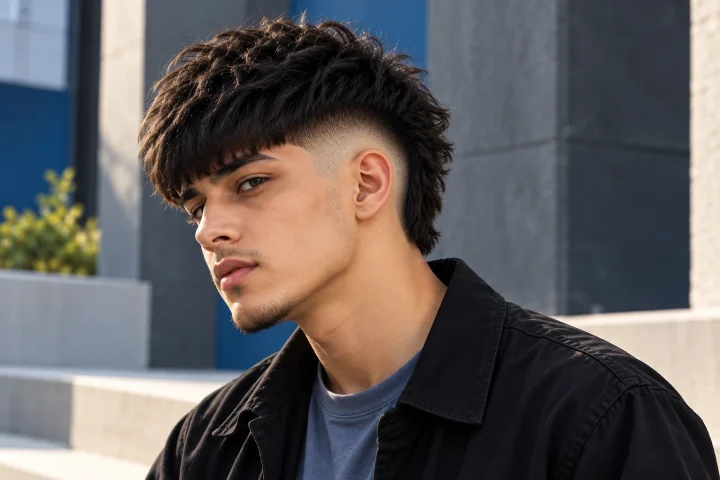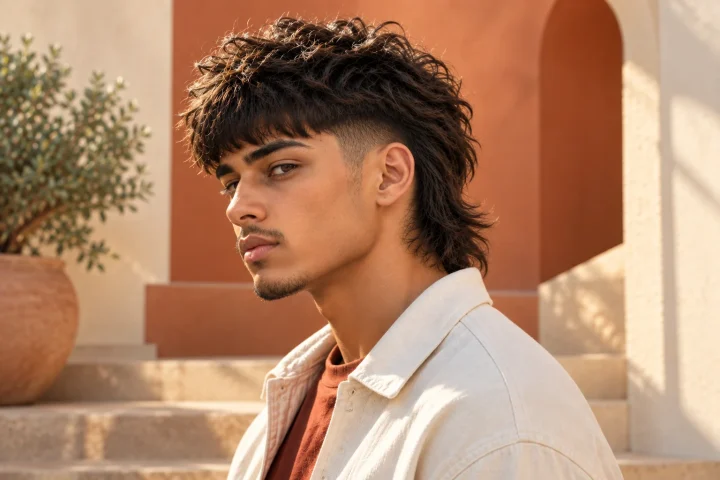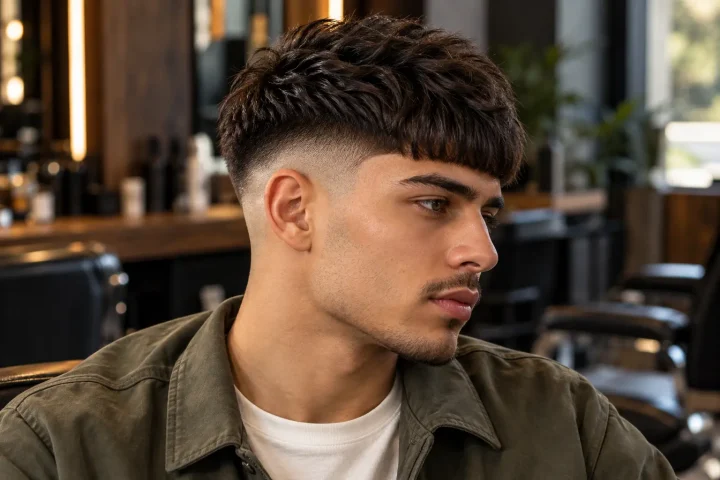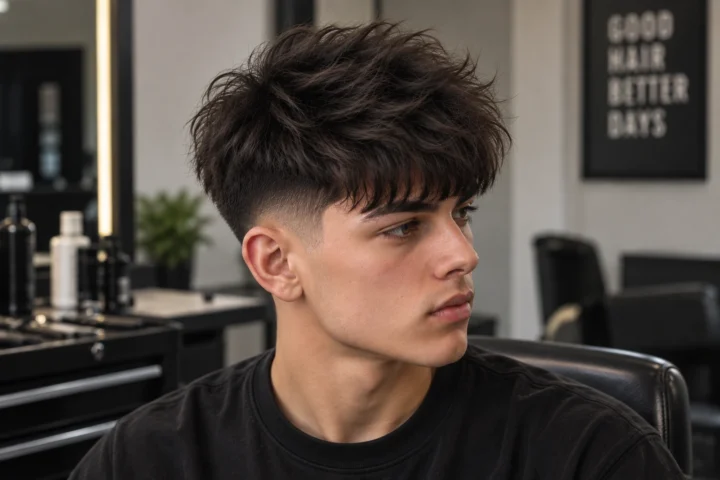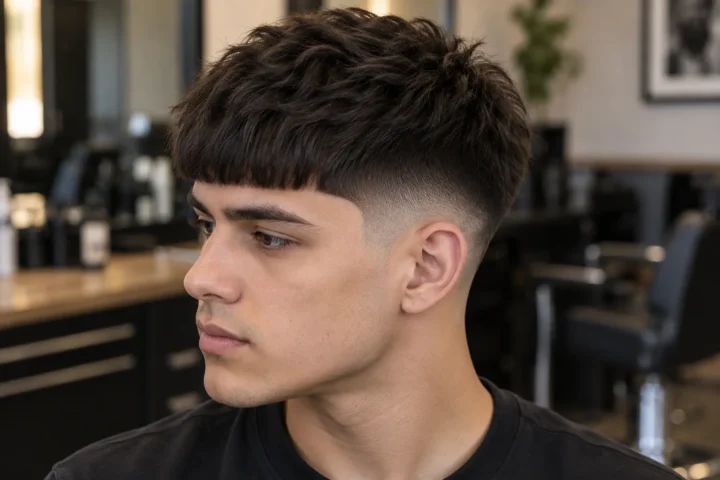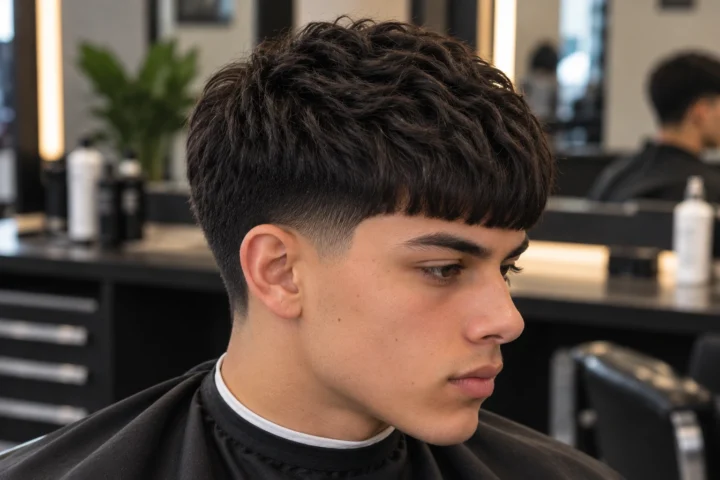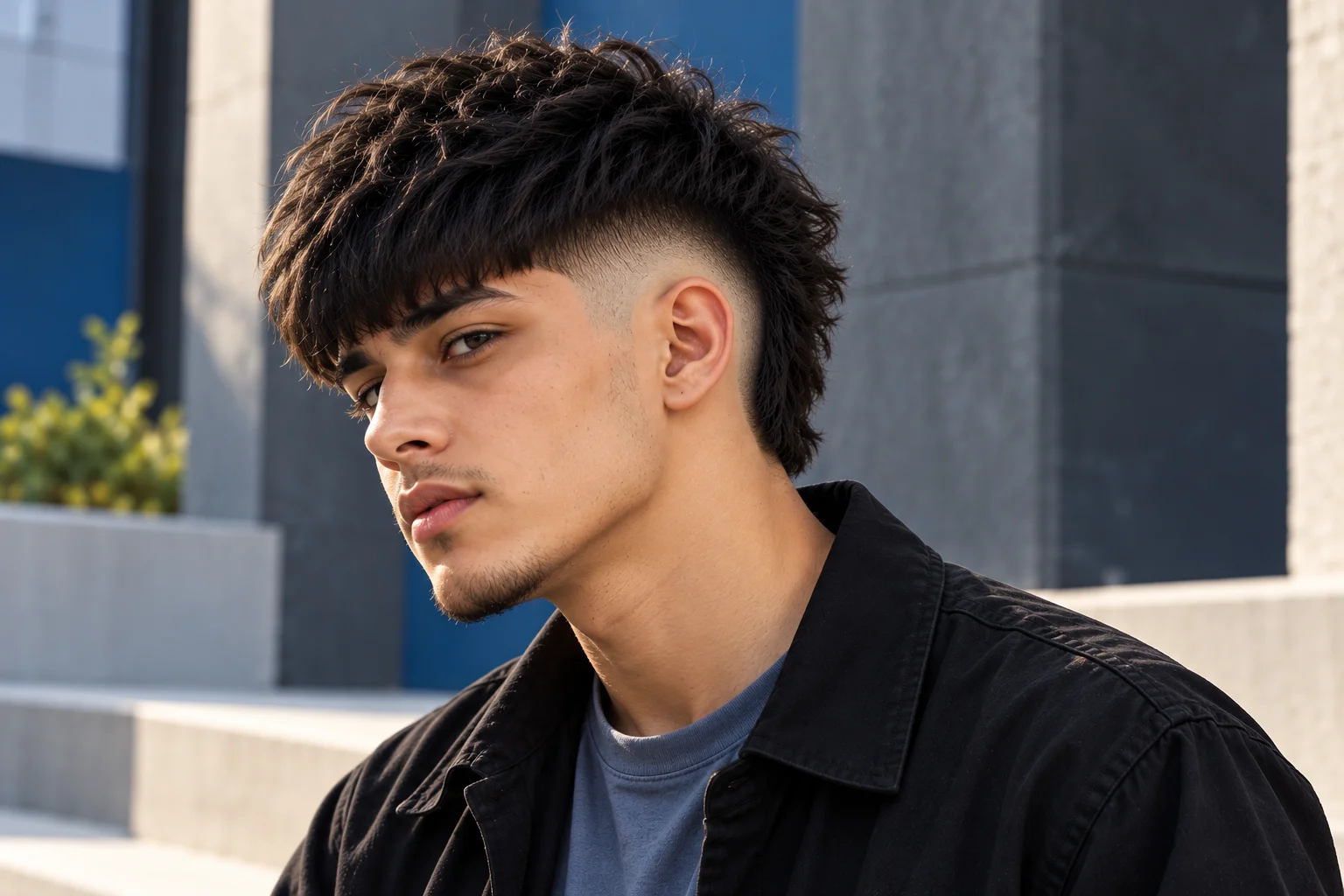

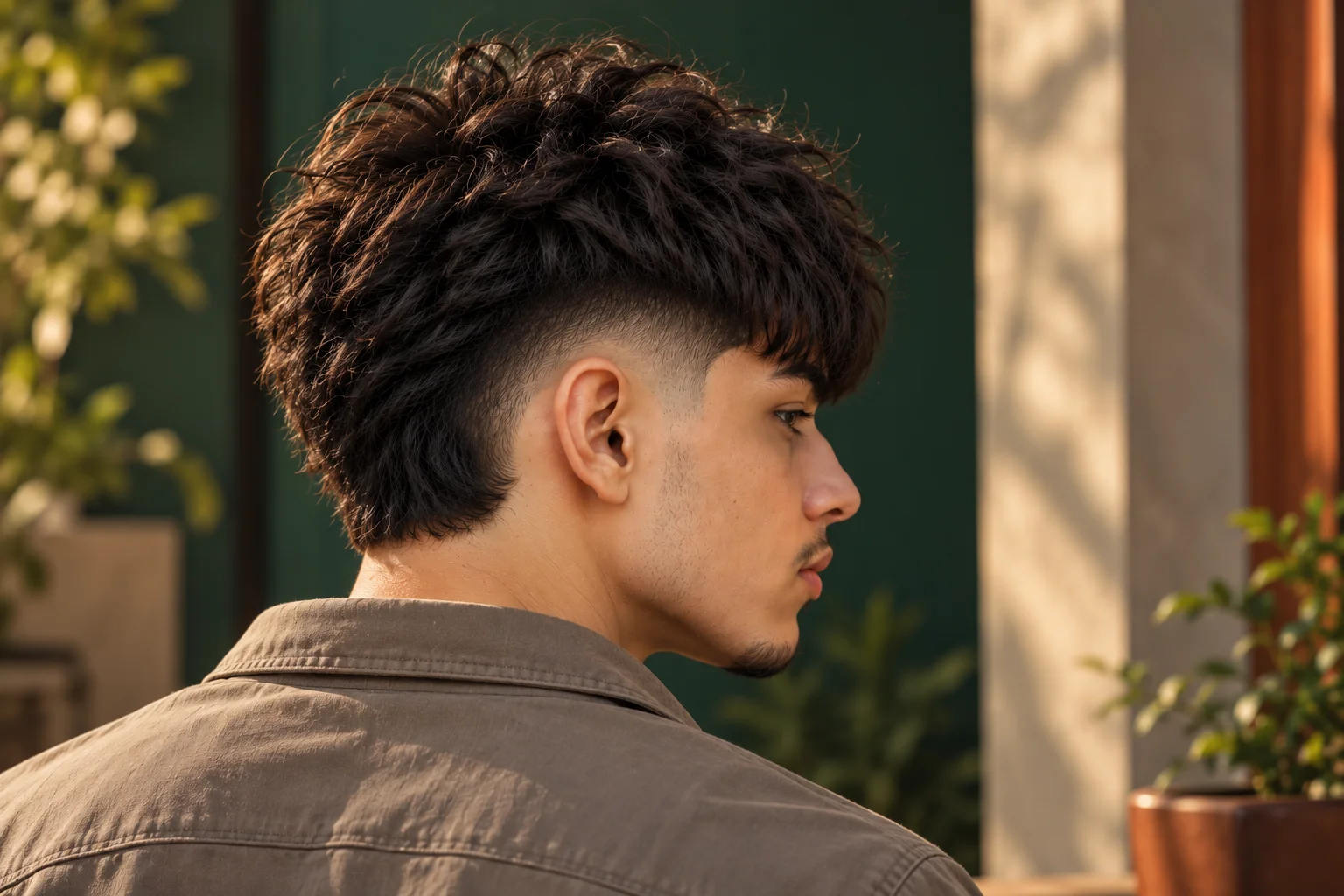
You can get the fringe right, nail the texture on top and still walk out with a Drop Fade Edgar that looks nothing like your reference photo. The reason is often happening behind your ear.
A Drop Fade Edgar combines the strong forward shape of an Edgar with a fade that travels downward as it moves behind the ear. But simply asking for a Drop Fade Edgar haircut leaves an important decision unanswered: how far should that fade actually drop?
A shallow curve can keep the haircut clean and controlled. A deeper one can reshape the entire side and back profile. Before the clippers come out, it helps to decide three things: where the fade begins, how far it drops and how much weight should remain above and behind that curve.
That is what this guide will help you figure out.
What Actually Makes an Edgar Fade a “Drop” Fade?
The easiest mistake is to think “drop” means another fade height.
It doesn’t.
Low, mid and high generally describe where a fade begins on the side of the head. Drop describes what the fade line does as it travels toward the back.
Instead of staying relatively level, the transition descends behind the ear and follows the natural curve toward the rear of the head.
Think of the haircut as four connected parts:
EDGAR FRONT → SIDE FADE → DROP BEHIND THE EAR → REAR WEIGHT
The front still needs the recognizable Edgar identity: a forward-directed top and defined fringe. The sides create the contrast, but the feature that makes this an Edgar drop fade is the descending path behind the ear.
That path matters because it changes how much darker hair remains above the fade and how the haircut looks from the side and rear—not just how short the sides are.
If you’re still deciding between different Edgar shapes, start with our Edgar Haircut guide before choosing the fade.
The Part Most People Don’t Decide: How Deep Should the Drop Be?
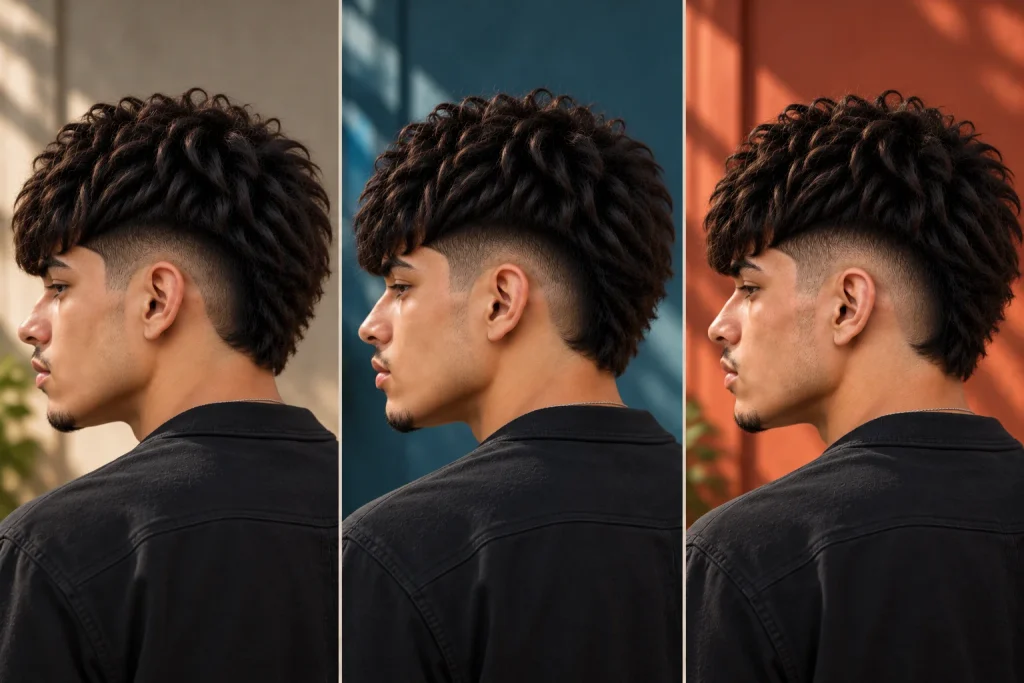
Two men can have the same fringe, similar top length and the same starting fade height, yet their Drop Fade Edgar cuts can look surprisingly different.
Change the depth of the curve behind the ear and you change the silhouette.
A Subtle Drop Keeps Things Controlled
A subtle drop only descends moderately as it passes behind the ear.
From the front, the haircut can look quite clean and conventional. Turn to the side, however, and you should still be able to see the fade line gently moving downward rather than running straight toward the back.
This works particularly well when you want the Edgar shape to remain the main feature and don’t want the fade to dominate the haircut.
The important word here is subtle, not invisible. If there is barely any downward movement behind the ear, the result can start looking like a regular fade rather than a true drop fade.
A Balanced Drop Makes the Curve Obvious
For many people, this is the easiest version to recognize.
The fade follows a noticeable downward path behind the ear while enough darker weight remains above it to make the curve visible. You get more shape from the side without making the back feel excessively disconnected.
A balanced Drop Fade Edgar haircut also photographs well from a three-quarter angle because you can see both the Edgar top and the descending fade in the same view.
If you are unsure what depth to request, this is a useful visual starting point to show your barber and adjust from there.
A Deep Drop Changes the Silhouette
A deeper drop creates a much stronger fall toward the rear.
More of the darker hair is preserved above the descending line, which can make the upper side and back appear heavier in contrast with the faded area below. The haircut becomes much more sculpted when viewed from the side.
This is where reference photos become especially important. “Deep” is not a universal measurement, and the curve needs to work with your head shape, top length and the amount of rear weight you want to keep.
Go too aggressive without planning the back and the fade can begin to look disconnected from the rest of the Edgar.
Fade Height and Drop Depth Are Two Different Decisions
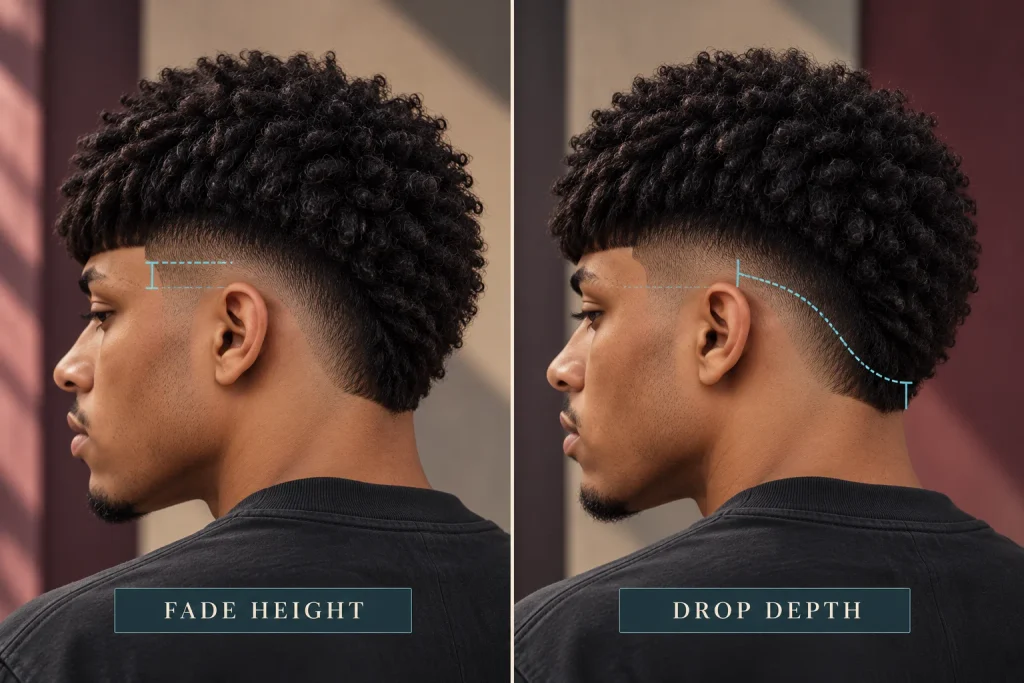
This distinction makes ordering the haircut much easier.
Imagine drawing a line around the side of your head.
Fade height decides where that line starts.
Drop depth decides how far that line falls as it moves behind your ear.
That means a barber can create a lower-starting drop fade with a restrained curve, or begin somewhat higher while still letting the transition descend toward the rear. Calling something a “drop” does not, by itself, tell the barber everything about its height.
This is also why a low drop fade Edgar should not simply be understood as “the lowest possible drop.” The “low” and the “drop” are describing different aspects of the fade.
If you prefer minimal contrast around the edges rather than a pronounced descending fade, compare this with our Low Taper Edgar Haircut before deciding.
Look at the Back Before You Choose the Drop
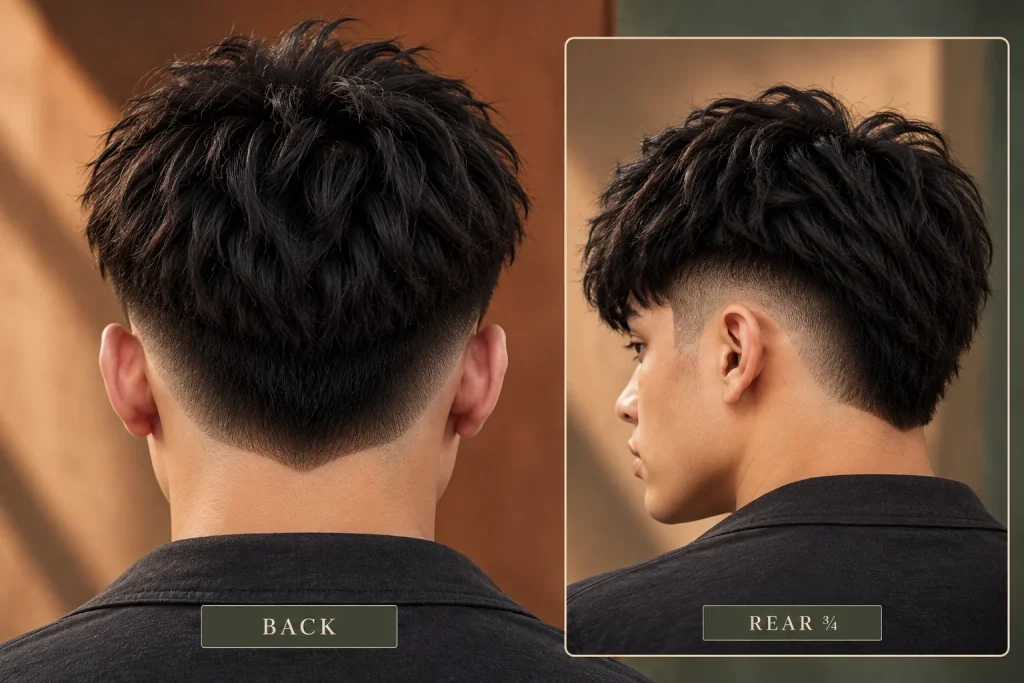
Most people choose a haircut from a side photo. With a Drop Fade Edgar, that can leave half the decision unseen.
Follow the fade line past the ear and ask: what happens next?
The curve creates a boundary between the shorter faded area below and the darker hair remaining above. How much hair is preserved around the rear can make the haircut feel compact, rounded or considerably heavier.
A deeper curve with plenty of weight above it creates stronger separation. A more restrained curve with a controlled back produces a cleaner silhouette.
The neckline matters too. You don’t want to choose an aggressive drop from the side and then discover that the rear treatment creates a shape you never intended.
There is another detail worth checking from directly behind: symmetry. The left and right curves should feel balanced. A small inconsistency that is difficult to notice from one side can become much more obvious when you look at the back.
So don’t judge your reference only from the front.
For this haircut, the side, rear three-quarter and back views tell you far more about the fade than the front view alone.
Drop Fade Edgar vs Burst Fade Edgar: Follow the Fade Line
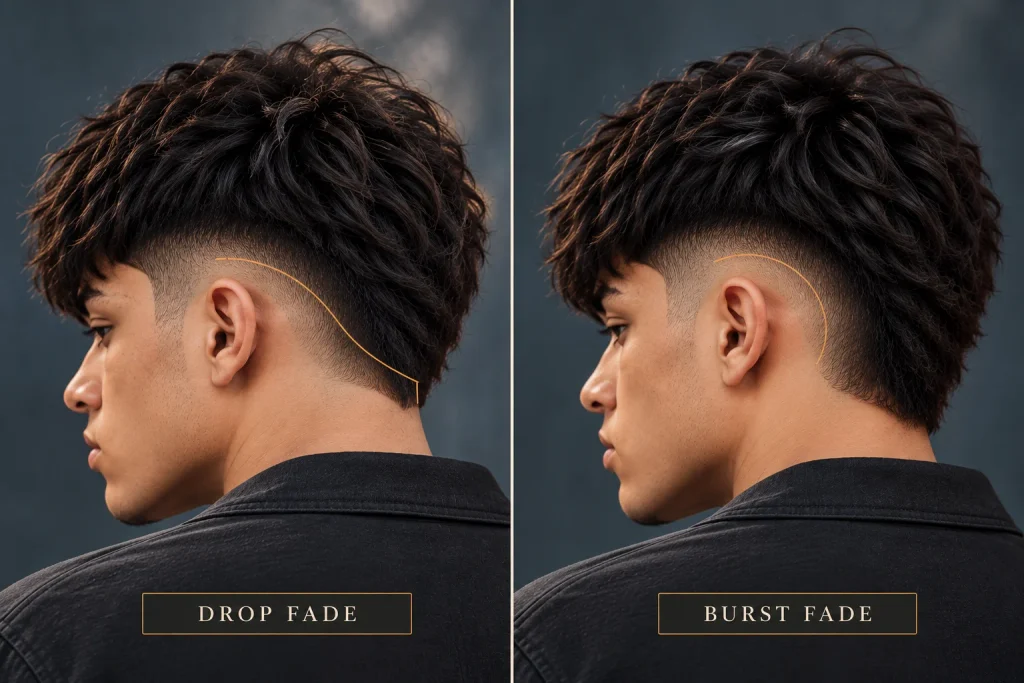
These two haircuts are easy to confuse because both create shape around the ear.
The quickest way to separate them is to stop looking at how short the hair is and instead follow the path of the fade.
A burst fade concentrates its rounded transition around the ear. The ear acts almost like the center point of the fade, with the transition creating a curved burst around it.
A drop fade behaves differently. Its defining visual is the fade line descending as it travels behind the ear toward the rear of the head.
So think:
Burst Fade → around the ear
Drop Fade → down behind the ear
If the rounded ear-centered shape is what you actually want, see our Burst Fade Edgar Haircut guide instead. Choosing between these two based only on a front-facing photo is one of the easiest ways to ask for the wrong fade.
Don’t Let the Drop Erase the Edgar
A technically good drop fade does not automatically make a good Drop Fade Edgar.
The Edgar still needs to read as an Edgar.
That usually means maintaining enough forward direction through the top and enough definition at the front to create the characteristic fringe. If the top loses that identity, you’re left with a drop fade attached to a different haircut.
The strongest versions make both elements readable at once: Edgar in the front, drop geometry through the side and rear.
How those elements balance, however, can change considerably with styling and hair texture.
Four Changes That Give a Drop Fade Edgar a Different Character
Rather than collecting dozens of nearly identical versions, it is more useful to look at changes that genuinely affect how the haircut behaves.
Textured Drop Fade Edgar
Texture breaks up the solid shape on top and creates visible separation through the hair.
This can make the transition between the heavier top and clean faded area feel less rigid. The drop remains visible behind the ear, but the eye also picks up movement above it.
For thicker straight or slightly wavy hair, a textured Drop Fade Edgar can prevent the top from appearing like one dense block.
Curly Drop Fade Edgar
Curls naturally create more volume and a softer outer shape above the fade.
That contrast can make the descending line particularly easy to see, especially when the barber preserves enough density above the curve. The goal isn’t to force curly hair into the same silhouette as straight hair; the drop should create structure underneath the natural curl pattern.
If curls are your starting point, our Curly Edgar Haircut guide goes deeper into how the Edgar shape changes with curl pattern and density.
Fluffy Drop Fade Edgar
A fluffy top shifts visual weight upward.
Instead of the fringe and top sitting compactly against the head, the hair carries more air and lift. Against a clean descending fade, that extra volume can create a much stronger top-to-side contrast.
The important part is maintaining enough forward Edgar direction so the result doesn’t become a generic fluffy fade. See the Fluffy Edgar Haircut guide if volume on top is your main priority.
Drop Fade Edgar With More Rear Weight
This version changes the haircut without necessarily changing the drop itself.
Leaving more hair above and behind the descending fade makes the rear silhouette fuller. The curve becomes more obvious because there is greater contrast between the faded area below and the preserved weight above.
This can work especially well when you like the movement of a longer rear but don’t necessarily want to move all the way toward an Edgar Mullet.
Your Hair Texture Changes How the Same Drop Looks
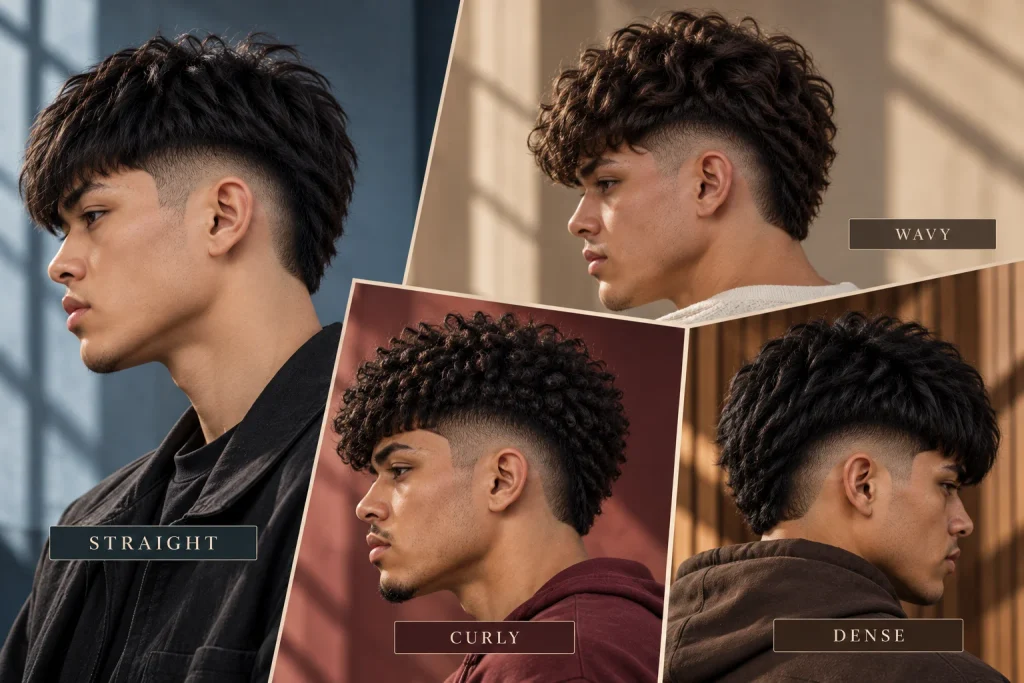
A reference photo tells you the geometry you like. Your natural hair decides how that geometry will actually read.
Straight hair tends to make edges, weight lines and the Edgar fringe look more defined. That can give the haircut a sharper, more graphic appearance.
Wavy hair introduces movement through the top and rear, which can soften the boundary between the heavier hair and the faded section.
Curly or coily hair builds volume differently. The fade may look especially pronounced because the fuller texture above creates stronger contrast with the shorter area underneath.
Very dense hair can leave substantial visual weight above and behind the drop. That isn’t necessarily something to remove. Sometimes that weight is exactly what makes the curve look strong.
The goal shouldn’t be to make every hair type reproduce the same reference photo. It should be to preserve the Drop Fade Edgar geometry while letting your natural texture behave naturally.
Show Your Barber the Path, Not Just the Haircut
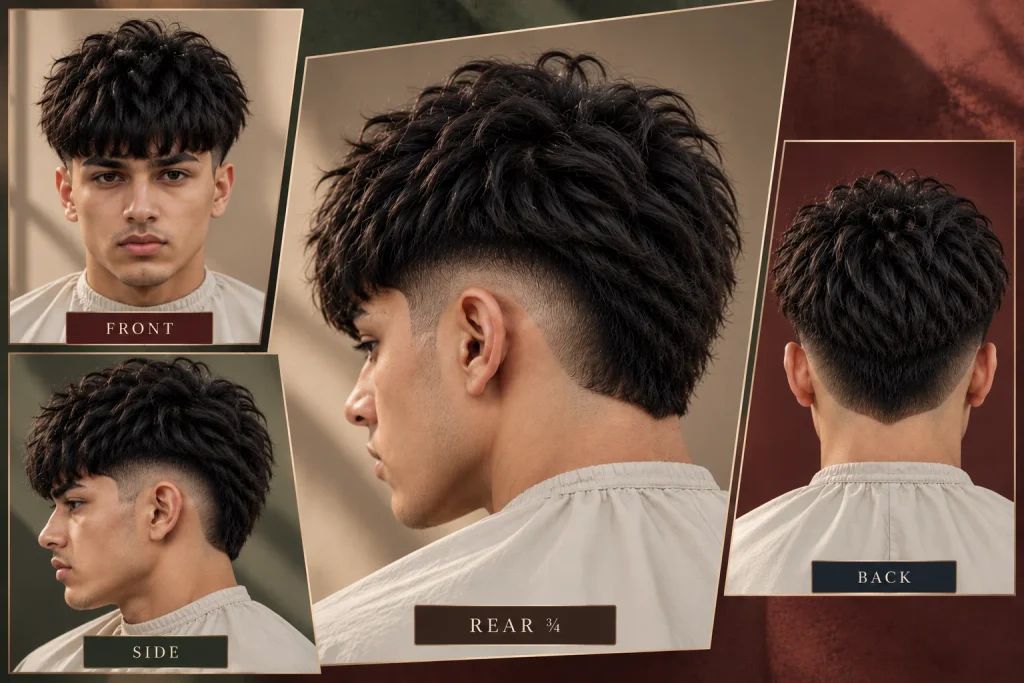
Saying “I want a Drop Fade Edgar” gives your barber the category.
Good references give them the instructions.
For this haircut, one photo is rarely enough. Build your reference around what each angle communicates.
Front: show the fringe and top shape you want.
Side: show where the fade begins and the path it takes behind the ear.
Rear three-quarter: show how deep you want the drop and how much weight should remain above it.
Back: show the rear silhouette, symmetry and neckline treatment.
Then describe the relationship between those features rather than throwing several haircut names together.
A useful request could sound like this:
“Keep this forward Edgar shape in front. Start the fade around this height, let it drop about this far behind the ear, and keep this amount of weight above the curve and toward the back.”
That is much harder to misunderstand than simply asking for a “low drop fade” and hoping you and your barber picture the same thing.
Five Ways a Drop Fade Edgar Goes Wrong
Some disappointing results aren’t bad haircuts. They’re simply different from what the client imagined.
The drop is too shallow. If the fade barely descends behind the ear, the defining geometry disappears and the haircut may read as a conventional fade.
The drop is deeper than expected. A dramatic curve can preserve much more weight above it and substantially change the rear silhouette.
Too much rear weight is removed. You may get the correct fade path but lose the darker shape that was supposed to sit above it.
The two sides don’t match. Because the fade curves toward the back, differences between the left and right sides can become particularly noticeable from behind.
The barber only sees your front reference. The Edgar fringe may come out perfectly while the feature that actually defines the drop is left to interpretation.
Most of these problems can be reduced before the haircut begins by choosing references that show the same cut from multiple angles.
Is a Drop Fade Edgar the Shape You Actually Want?
Choose a Drop Fade Edgar when you want the fade itself to contribute to the shape of the haircut—not simply make the sides shorter.
It makes particular sense if you like a clean Edgar front but want more contour as the haircut moves toward the rear. You also have room to make that effect restrained or much more noticeable by changing the depth of the drop and the amount of weight left above it.
If your priority is a rounded fade focused specifically around the ear, the Burst Fade Edgar is likely closer to what you’re picturing. If you mainly want subtle cleanup around the sideburns and edges while preserving more side weight, an Edgar with a taper may suit the goal better.
The name matters less than identifying the geometry you actually want.
Drop Fade Edgar FAQ
What is a Drop Fade Edgar?
A Drop Fade Edgar combines the forward fringe and top shape associated with an Edgar haircut with a fade that descends behind the ear toward the rear rather than staying relatively level.
Is a Drop Fade Edgar the same as a low fade Edgar?
No. “Low” describes where the fade begins, while “drop” describes the downward path the fade follows behind the ear. A drop fade can therefore be combined with different starting heights.
What’s the difference between a Drop Fade Edgar and Burst Fade Edgar?
A Burst Fade Edgar creates a rounded transition concentrated around the ear. A Drop Fade Edgar is defined by the fade line descending behind the ear toward the rear.
Does a Drop Fade Edgar work with curly hair?
Yes. A curly Drop Fade Edgar can create strong contrast between the natural volume above and the shorter descending fade below. The barber should adapt the weight and top shape to the natural curl pattern rather than treating curly hair like straight hair.
How do I ask my barber for a Drop Fade Edgar?
Show the barber front, side and rear references. Specify the Edgar fringe you want, where the fade should begin, how deeply it should drop behind the ear and how much weight you want preserved above and toward the back.
How deep should a drop fade go?
There is no single correct depth. A subtle drop creates a cleaner, quieter effect, while a deeper drop creates stronger rear contour and contrast. Choose the depth based on the silhouette you want rather than asking for the deepest possible fade.
Decide the Drop Before the Clippers Start
The difference between a Drop Fade Edgar you save to your phone and one you actually enjoy wearing often comes down to decisions hidden behind the ear.
Don’t stop at choosing the haircut name.
Decide where the fade begins, how far it should descend and how much weight should remain above and behind the curve. Then show those decisions from the side and back as clearly as you show the Edgar fringe from the front.
When those pieces agree, the fade doesn’t just clean up the sides. It becomes part of the shape of the haircut itself.