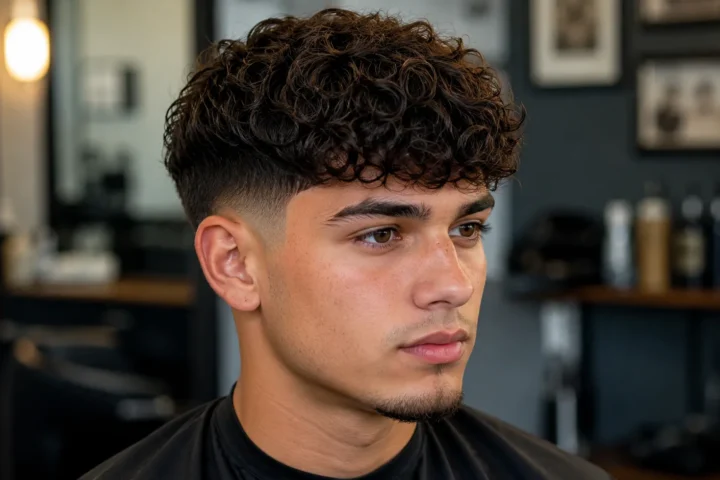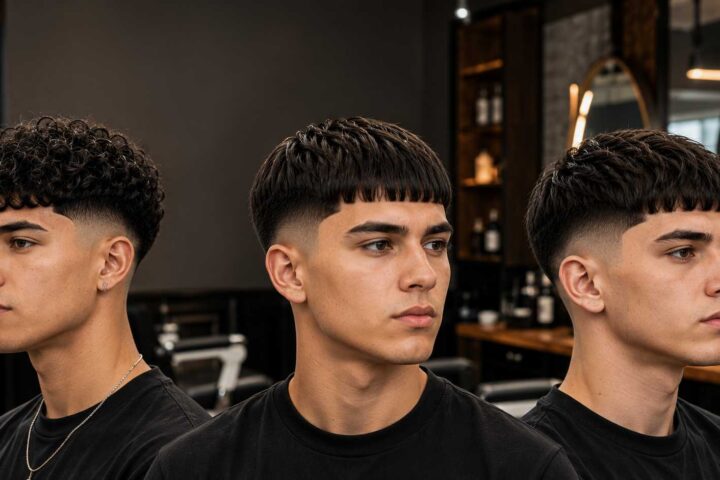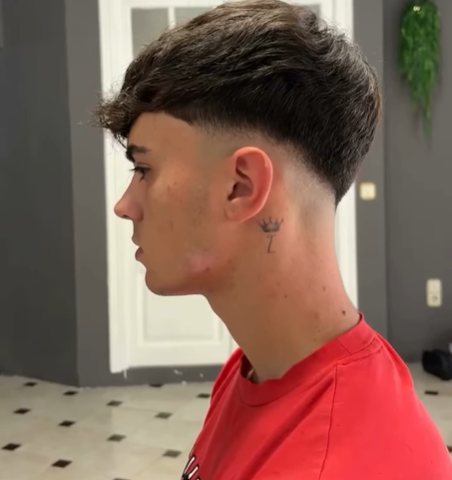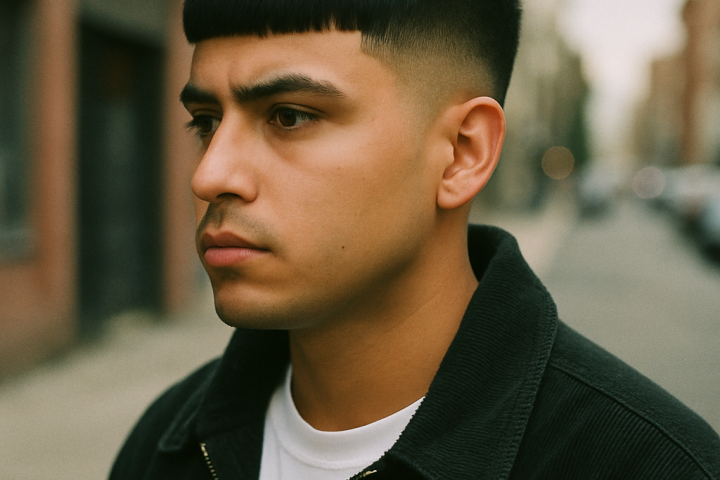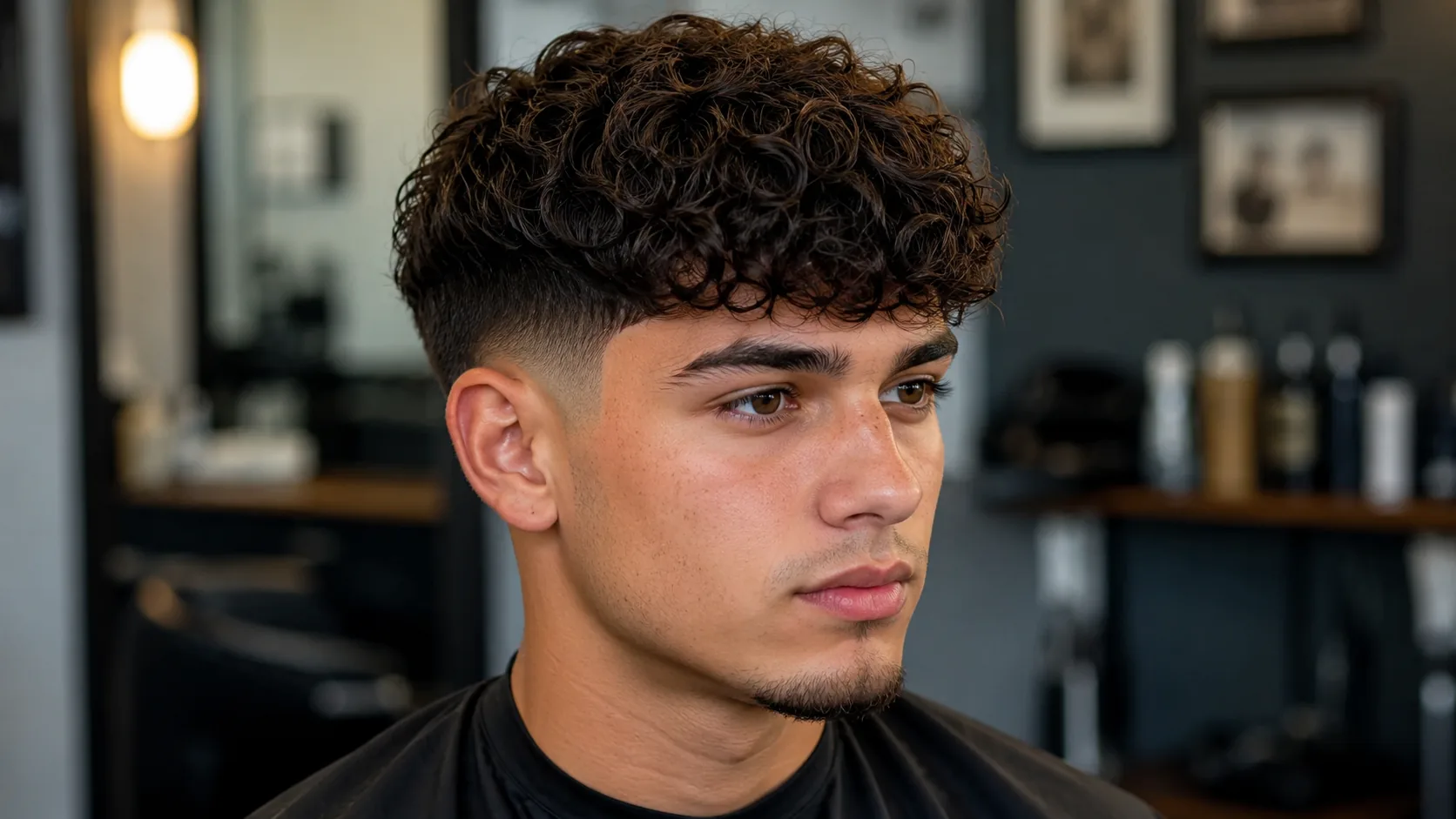

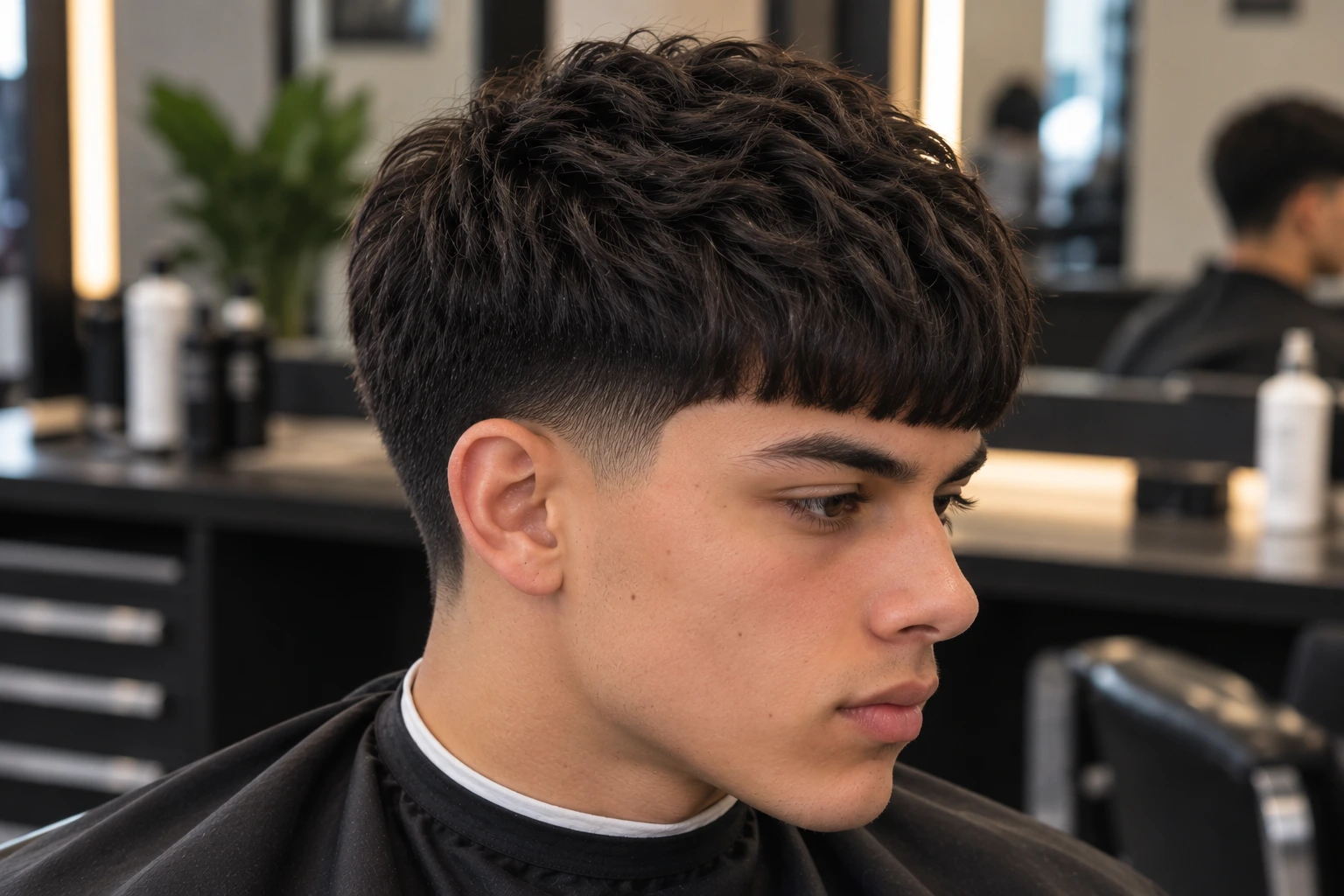
The low taper Edgar haircut combines the signature forward fringe of an Edgar with a subtle taper kept low around the edges of the hair.
Instead of removing a large amount of hair from the sides, the low taper mainly cleans up the sideburns, area around the ears and neckline while preserving more weight above them.
The result is an Edgar that still looks distinctive from the front but softer and more natural from the side.
That balance makes the low taper one of the most wearable Edgar variations, especially if you like the shape of an Edgar but don’t want the stronger contrast created by a higher fade.
In this guide, you’ll learn what makes a true low taper Edgar, how it differs from a low fade, which variations work with different hair textures, what to ask your barber for, and how to style and maintain the haircut.
What Is a Low Taper Edgar Haircut?
A low taper Edgar combines two main features:
- a forward-directed top and recognizable Edgar fringe;
- a gradual taper positioned low around the perimeter of the haircut.
The shortest transition normally stays around the sideburns, ears and lower neckline rather than extending far up the sides.
More hair is therefore preserved above the taper.
This is an important part of the haircut.
If the short transition spreads much farther across the sides, the result starts moving toward a low fade rather than the subtle appearance of a traditional low taper. Current barber references similarly distinguish a low taper by its localized edge cleanup and greater retention of side weight.
The Edgar portion remains equally important.
The top should retain a forward direction toward the forehead, creating a recognizable fringe. That fringe can be blunt, textured, curly or slightly softer depending on the variation and natural hair texture.
If you’re new to the haircut itself, our Edgar Haircut guide explains the complete Edgar family before you choose a specific taper or fade.
What Does a Low Taper Edgar Look Like?
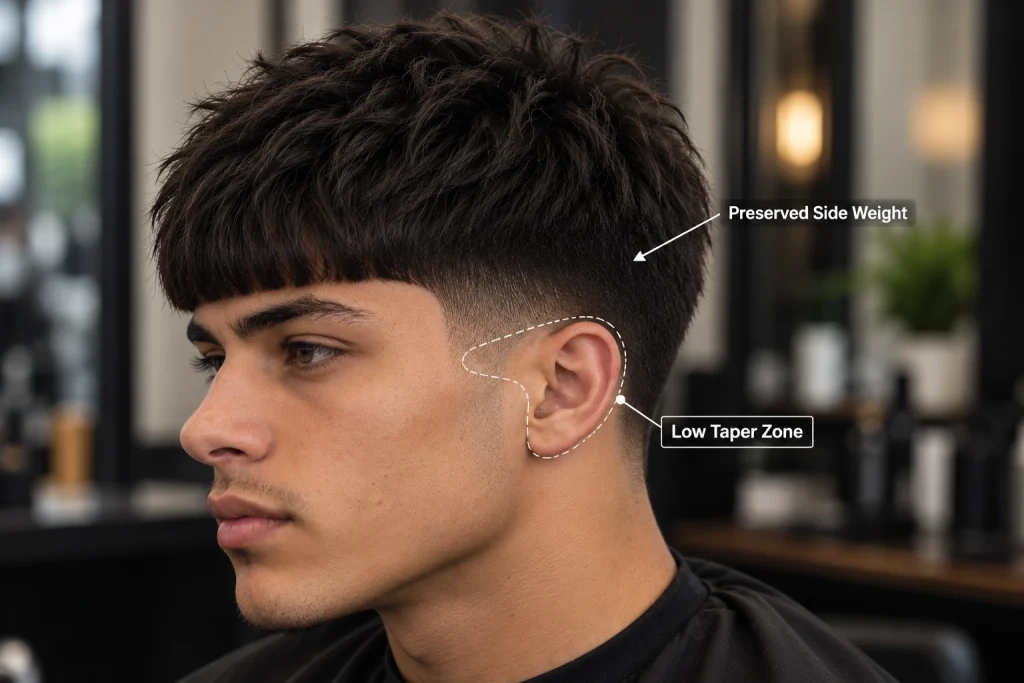
The haircut looks different depending on the viewing angle.
From the Front
The Edgar shape is the dominant feature.
Hair generally moves forward toward the forehead, ending in a defined or textured fringe.
From the Side
This is where the low taper becomes easiest to recognize.
The shortest transition stays close to the lower hairline rather than climbing high up the side of the head.
Because the taper occupies a relatively small area, more natural weight remains above it.
From the Back
The neckline can also gradually shorten toward the bottom, keeping the perimeter neat without creating a large exposed faded section.
Together, these features create a haircut with:
- a recognizable forward fringe;
- fuller-looking sides;
- a clean lower perimeter;
- and relatively subtle contrast between the top and sides.
Low Taper vs. Low Fade Edgar
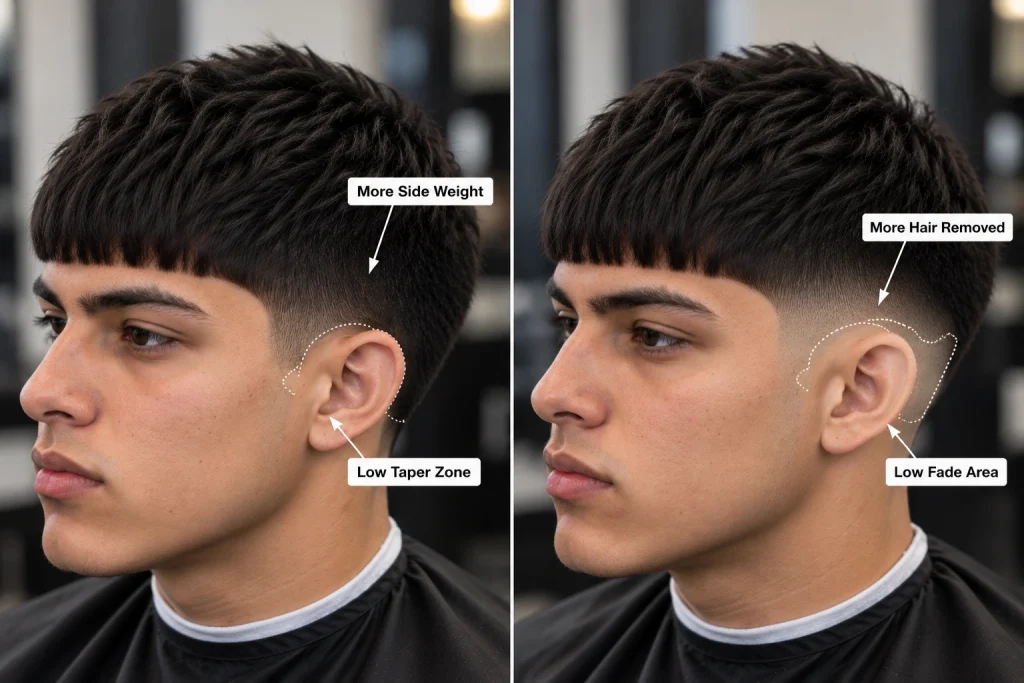
The difference can be small in photographs, which is also why these terms are sometimes confused.
A low taper Edgar concentrates the shortest transition around the edges—particularly the sideburns and neckline—and preserves more weight through the sides.
A low fade Edgar generally creates a broader faded transition across the lower sides and back, producing more visible contrast. Barber terminology isn’t perfectly standardized, so showing the desired transition in a reference photo is often more reliable than relying on the haircut name alone.
| Feature | Low Taper Edgar | Low Fade Edgar |
|---|---|---|
| Short transition | Concentrated around edges | Extends farther across lower sides |
| Side weight | More preserved | More removed |
| Contrast | Subtle | More noticeable |
| Exposed area | Smaller | Larger |
| Overall appearance | Softer and natural | Sharper and more contrasted |
Neither is automatically better.
Choose according to how much contrast you want around the sides.
Why Choose a Low Taper Edgar?
The biggest advantage of a low taper is balance.
The Edgar already has a strong visual feature at the front. Adding an aggressive fade can make the entire haircut considerably bolder.
A low taper allows the fringe and top to remain the main focus while quietly cleaning the perimeter.
Consider a low taper Edgar if you want:
- an Edgar without highly exposed sides;
- more natural weight around the head;
- a neat sideburn and neckline;
- subtle rather than dramatic contrast;
- flexibility with different top textures;
- or a relatively conservative introduction to the Edgar style.
It can also transition naturally into other Edgar variations later because much of the side weight remains intact.
Popular Low Taper Edgar Haircut Styles
The taper can stay in approximately the same position while the top length, texture and fringe change considerably.
These are the most useful variations to understand.
1. Classic Low Taper Edgar
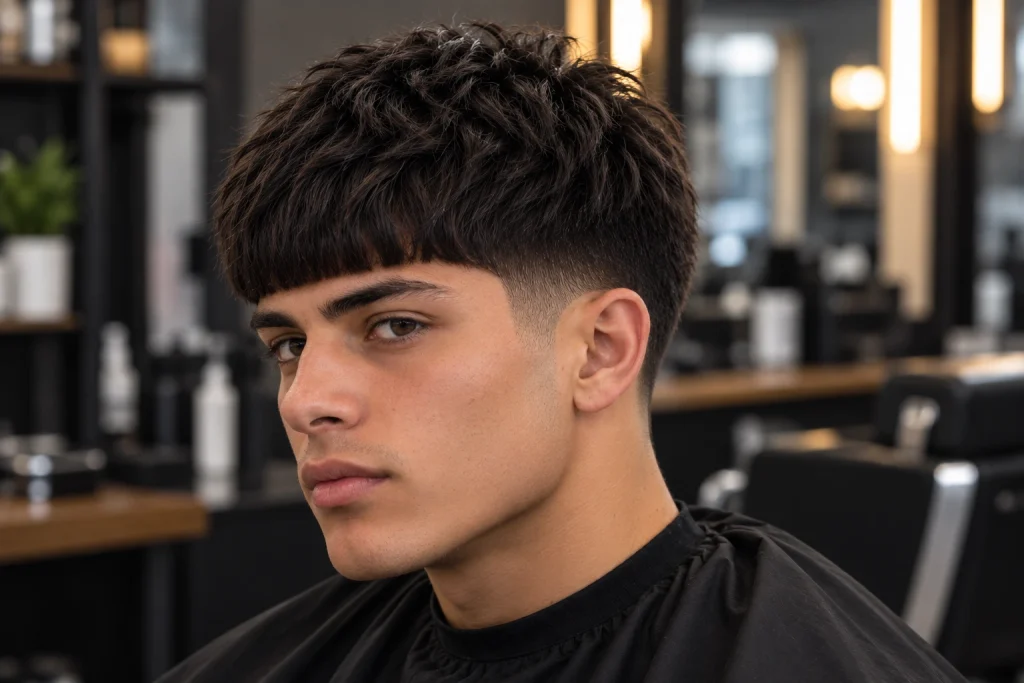
The classic version keeps the overall Edgar shape simple.
Hair is directed forward toward a relatively defined fringe while the low taper cleans the sideburns, ears and neckline.
More weight remains through the sides than with a full fade.
This is one of the best options if you want the low taper to refine the Edgar rather than dominate it.
2. Textured Low Taper Edgar
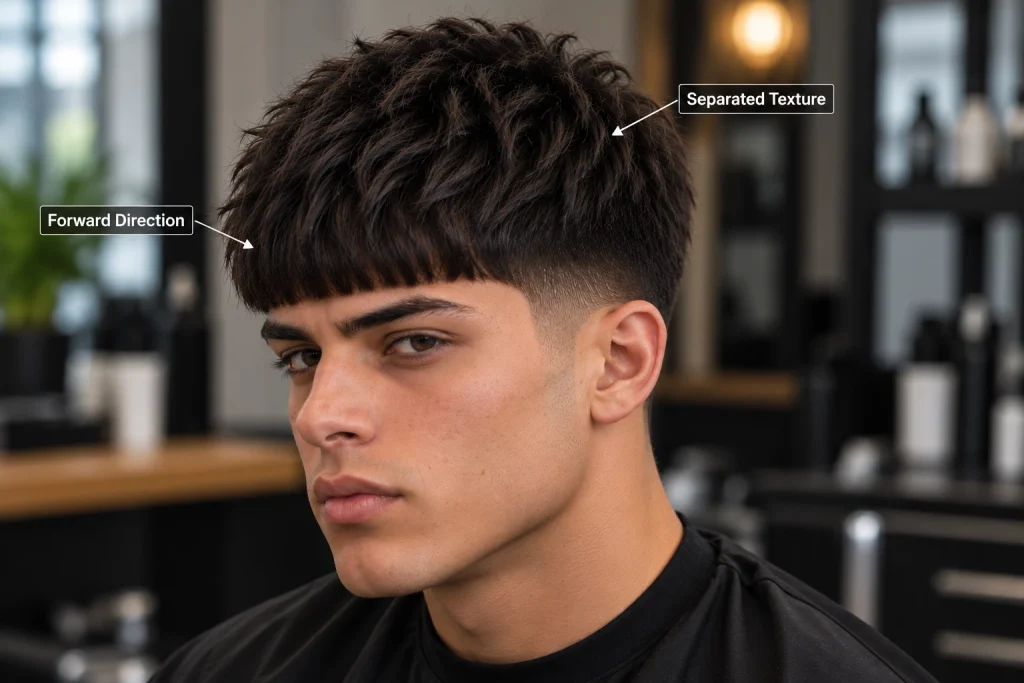
The textured version introduces separation and movement through the top.
Instead of appearing completely uniform, individual sections of hair become more visible.
The overall direction should still remain forward.
Too much random movement can weaken the recognizable Edgar silhouette and make the haircut resemble an ordinary textured crop.
This variation works particularly well when your hair already has some natural movement.
3. Curly Low Taper Edgar
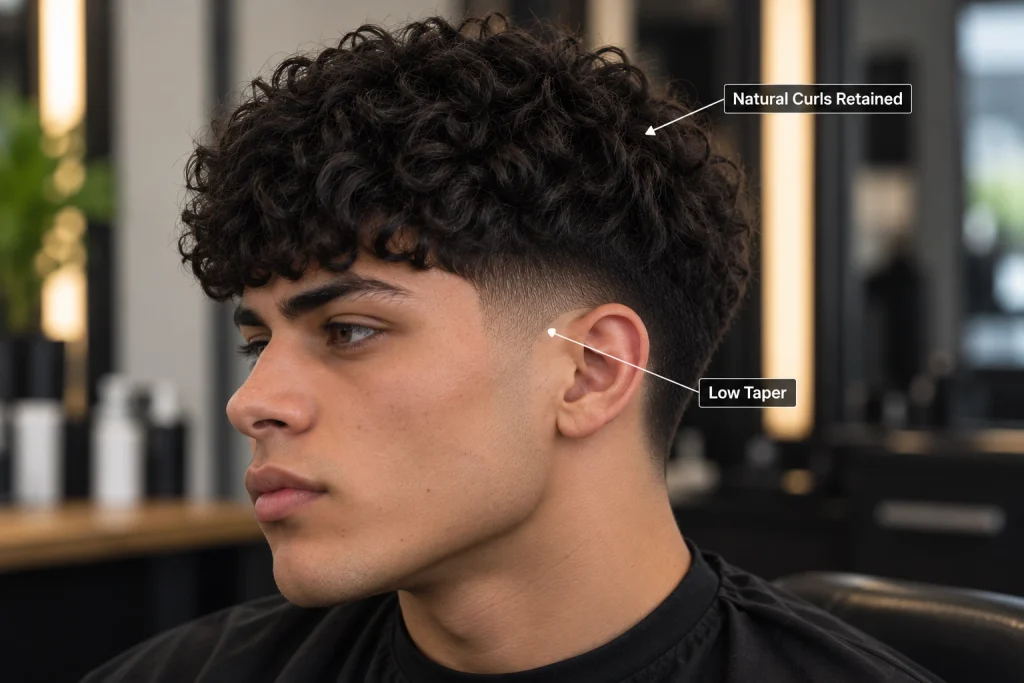
Natural curls can remain prominent on top while the low taper cleans the perimeter.
Unlike a straight-haired Edgar, the fringe doesn’t need to form a perfectly rigid horizontal line. The curl pattern can create a softer front while preserving the overall forward silhouette.
Enough length should remain on top for the natural curls to form properly.
If curly hair is your main concern rather than the taper itself, see our Curly Edgar Haircut guide for detailed guidance on curl length, styling and fade choices.
4. Fluffy Low Taper Edgar
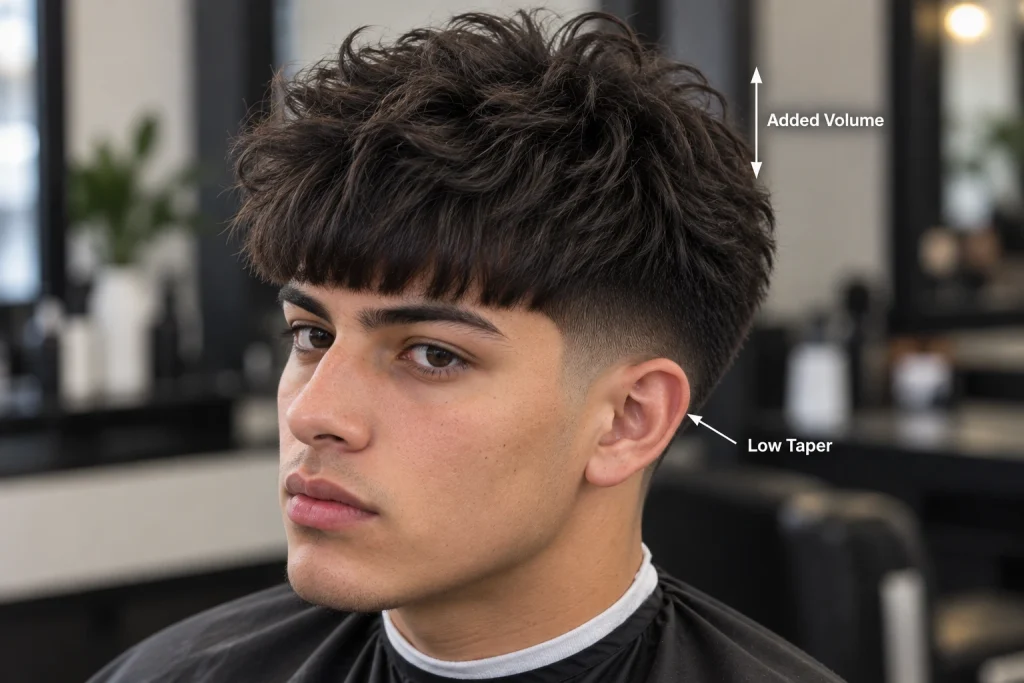
The fluffy version keeps additional height and airy volume through the top.
Instead of sitting compactly against the head, the hair is lifted while still moving generally forward.
The subtle low taper complements this particularly well because it preserves enough side weight to transition naturally into the fuller top.
The result is softer than pairing the same volume with a highly exposed fade.
5. Messy Low Taper Edgar
A messy Low Taper Edgar uses deliberate irregularity through the top.
Individual sections can move slightly differently, and the fringe may appear less rigid.
The important word is deliberate.
The clean taper around the perimeter helps distinguish controlled messy texture from hair that has simply grown out.
6. Short Low Taper Edgar
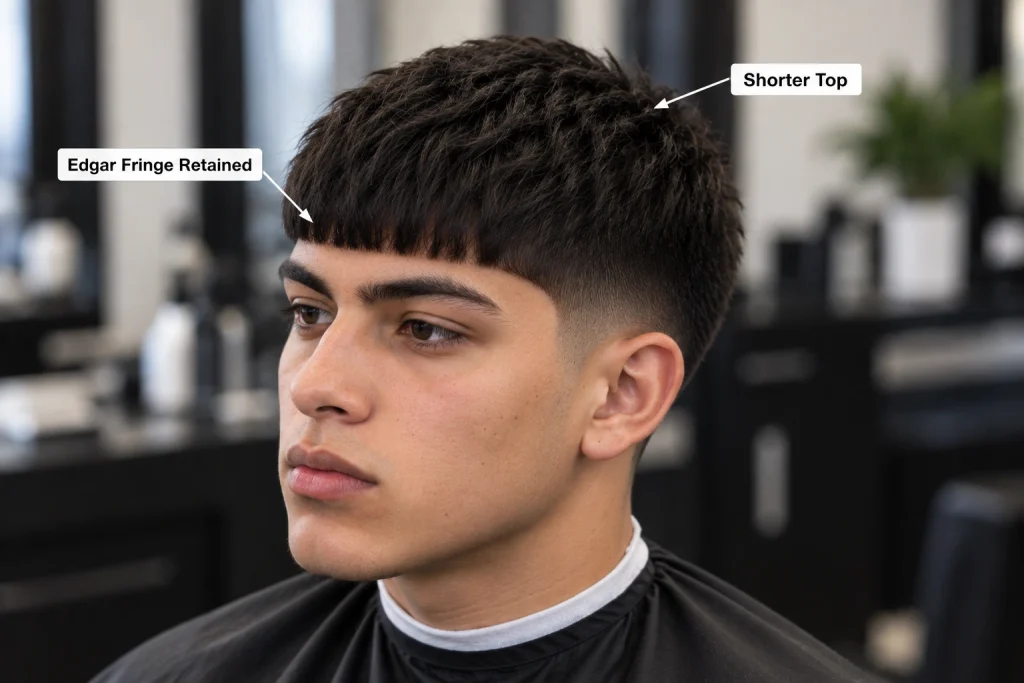
The Edgar can also be worn with a relatively short top.
There still needs to be enough hair toward the forehead to establish the characteristic forward fringe.
The overall silhouette becomes more compact and generally requires less daily styling than longer or fluffier versions.
However, taking too much length away from the top can weaken the Edgar shape entirely.
7. Low Taper Edgar With Longer Top
Keeping additional length on top provides greater flexibility for texture, movement and volume.
The contrast in this variation comes largely from the difference in length between the fuller top and clean perimeter rather than from exposing a large faded section.
Longer hair requires more deliberate shaping as it grows because excessive length can eventually obscure the Edgar silhouette.
Low Taper Edgar for Different Hair Types
A low taper can work with several hair textures, but the top shouldn’t be cut identically on everyone.
Straight Hair
Straight hair can produce a particularly clear Edgar fringe.
Because the front edge is highly visible, inconsistencies in the fringe can also become more noticeable.
Texture can be introduced through cutting and styling if a completely solid top looks too heavy.
Wavy Hair
Wavy hair naturally adds movement.
Rather than forcing every strand completely flat, some natural wave can remain while maintaining the overall forward direction.
A slightly textured fringe often complements this hair type.
Curly Hair
Curly hair requires enough top length for the curl pattern to remain visible.
Remember that curls may sit considerably shorter once dry and settled.
Removing too much length—particularly around the front—can dramatically change the final silhouette.
Thick Hair
Thick hair can hold the Edgar shape extremely well, but excessive bulk may need controlled removal.
The objective isn’t to thin the hair aggressively.
Enough density should remain to maintain the intended top shape while reducing unnecessary bulk.
Fine or Lower-Density Hair
A very heavy, blunt fringe can sometimes make lower-density areas more noticeable.
A softer textured approach may produce a more balanced appearance.
Your barber should work with the actual density and growth pattern rather than copying a reference photograph exactly.
Does Face Shape Matter?
Face shape can help determine the proportions of a Low Taper Edgar, but it shouldn’t be treated as a strict rule.
The haircut is adjustable through:
- top height;
- fringe length;
- side weight;
- texture;
- and overall volume.
For a round face, some controlled height on top can help prevent the haircut from appearing excessively wide.
For a longer face, excessive vertical volume may exaggerate length, so a more compact top can create better balance.
For square or angular faces, a sharp fringe can reinforce facial angles, while additional texture can soften them.
For oval faces, several combinations of top length and fringe shape can work.
Hair density, growth direction, head shape and personal preference can matter just as much as face shape.
Low vs. Mid vs. High Taper Edgar
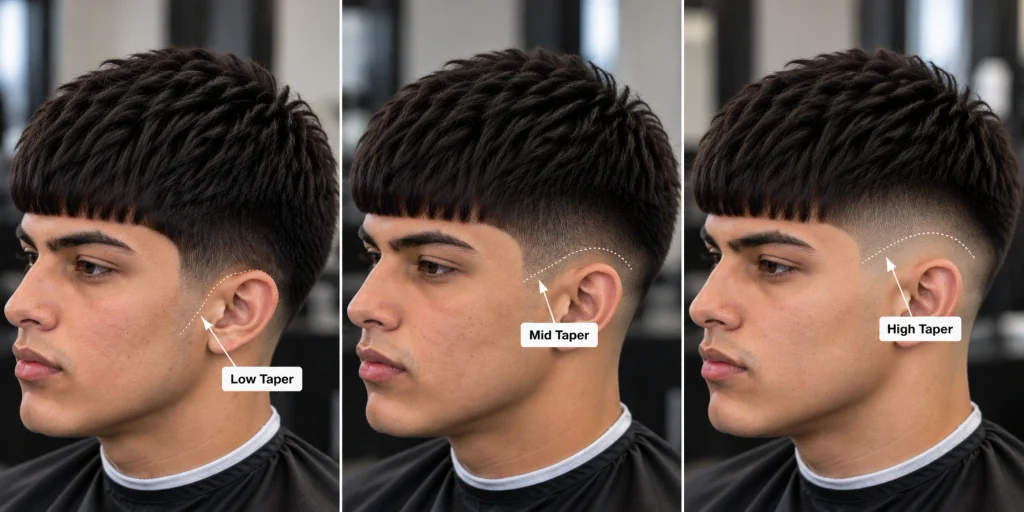
The height of the taper changes the visual relationship between the top and sides.
| Taper Height | Side Appearance | Contrast | Overall Effect |
|---|---|---|---|
| Low | Most side weight retained | Subtle | Natural and controlled |
| Mid | More visible transition | Moderate | Balanced and defined |
| High | Stronger separation | Higher | Sharper and bolder |
A low taper is particularly useful when you want the top and fringe to remain the main visual features.
A higher transition makes the sides increasingly important to the overall appearance.
How to Ask Your Barber for a Low Taper Edgar
Don’t rely entirely on saying:
“Give me a Low Taper Edgar.”
Haircut terminology varies between barbers, and that phrase doesn’t explain several important details.
Instead, communicate the following.
1. Show Exactly Where You Want the Taper
Ask for the taper to remain low around the sideburns and neckline, with the transition kept close to the natural perimeter.
If preserving side weight is important to you, say so explicitly.
2. Decide How Short You Want It
“Low” describes where the taper sits.
It doesn’t tell the barber how short you want the bottom.
You may prefer a softer finish with some visible hair or a much tighter transition.
Discuss this separately.
3. Choose Your Top Length
Show a photograph with hair texture reasonably similar to your own whenever possible.
A fluffy Edgar, short Edgar and curly Edgar require very different amounts of top length.
4. Explain the Fringe
Decide whether you prefer the front:
- blunt and defined;
- textured;
- short and compact;
- curly and natural;
- or softer and less severe.
The fringe has a major influence on whether the finished haircut still reads clearly as an Edgar.
A Better Way to Ask
You could tell your barber:
“I want an Edgar with the top directed forward and this amount of length. Keep the taper low around the sideburns and neckline and preserve the weight above it. Keep the fringe similar to this reference.”
Then show both a front and side photograph.
Current barber guidance likewise emphasizes specifying taper height and using reference images because haircut terminology alone can be interpreted differently.
What Reference Photos Should You Bring?
Ideally, bring at least two views.
Front view:
Shows the top shape and fringe.
Side view:
Shows exactly where the low taper begins and how much side weight remains.
A rear view can also help if the neckline treatment matters to you.
Try to use references with hair texture reasonably similar to your own.
A reference photograph should communicate the desired result—not promise that two different heads of hair will behave identically.
How to Style a Low Taper Edgar
The exact routine depends on whether your top is classic, textured, curly, messy or fluffy.
The basic objective remains the same: maintain the forward Edgar shape without hiding the natural texture.
Start With Slightly Damp Hair
Hair is usually easier to direct before it is completely dry.
Remove excess water first.
Establish the Forward Direction
Use your fingers or an appropriate styling tool to guide the top toward the forehead.
This establishes the basic Edgar silhouette before finishing products are added.
Build the Desired Texture
For a textured Edgar, create separation through small sections.
For a fluffy version, introduce controlled lift while maintaining the overall forward movement.
For curls, preserve the natural curl pattern rather than repeatedly brushing it apart.
Keep the Fringe Intentional
The front should look like a deliberate part of the haircut.
Depending on the variation, that may mean a clean blunt edge or a softer textured fringe.
Don’t Overload the Hair With Product
More product doesn’t automatically create better hold or texture.
Heavy application can flatten volume, clump strands together or make the top look greasy.
Start with a small amount and add more only if necessary.
How to Maintain a Low Taper Edgar
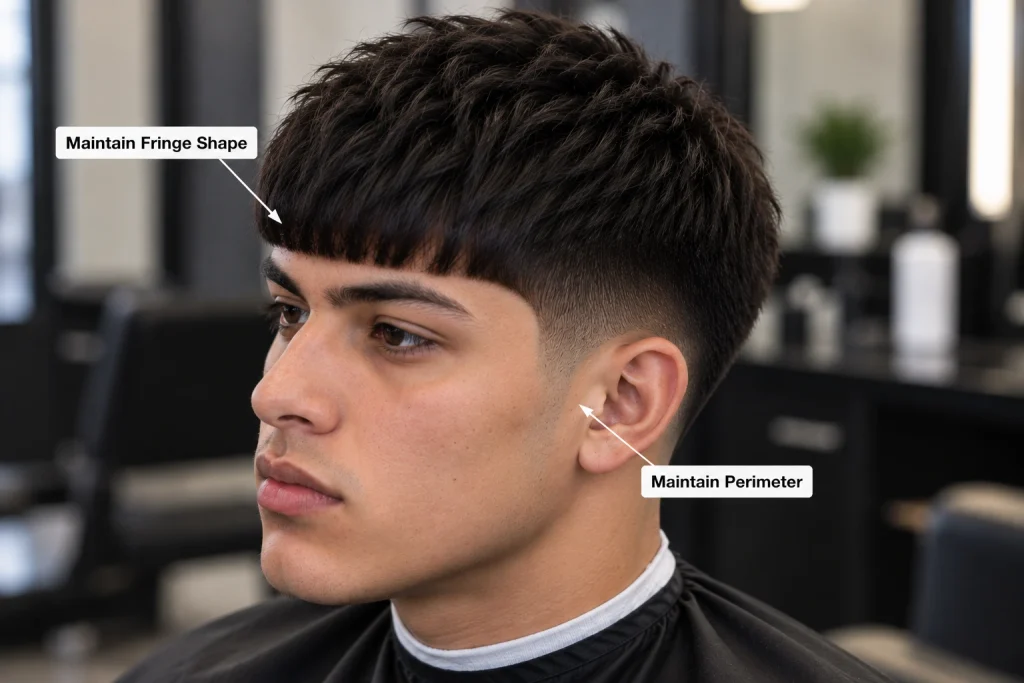
A low taper usually grows out more subtly than a highly exposed fade because more hair remains through the sides.
Even so, several areas eventually lose definition.
Keep the Perimeter Clean
Pay particular attention to the sideburns and neckline.
As these areas grow, the subtle taper becomes less visible.
Watch the Fringe
The fringe is one of the defining features of an Edgar.
As it grows longer, the front can gradually lose its intended shape.
Ask your barber to reshape it conservatively rather than automatically removing a large amount of length.
Preserve the Top Shape
Textured, curly and fluffy versions depend on sufficient top length.
Maintenance shouldn’t automatically mean cutting everything substantially shorter.
Trim According to the Finish You Want
There is no universal haircut interval.
A very tight low taper will show growth sooner than a softer one.
Your hair growth rate and how sharp you want the perimeter to remain should determine when you return to your barber.
Common Low Taper Edgar Mistakes
Taking the Taper Too High
This is one of the easiest ways to change the character of the haircut.
If the transition climbs too far up the sides, the result begins moving toward a mid taper or broader fade.
Removing Too Much Side Weight
A Low Taper Edgar works partly because hair remains above the tapered perimeter.
Removing too much of that weight can eliminate the subtle transition you’re trying to achieve.
Making the Taper the Only Focus
A technically excellent taper doesn’t automatically create a good Edgar.
The top and fringe still need to establish the haircut’s identity.
Cutting the Fringe Too Short
The fringe affects the entire front silhouette.
Hair texture and growth direction also influence where it finally sits, so conservative trimming is safer when you’re unsure.
Cutting the Top Too Short
Removing excessive top length can leave too little hair to create the intended texture, volume or forward movement.
The haircut may start resembling an ordinary short taper rather than an Edgar.
Copying a Different Hair Texture
A haircut shown on straight hair won’t behave exactly the same way on curls or strong waves.
Use inspiration with a texture reasonably similar to your own.
Using Too Much Product
Heavy styling products can flatten the texture and make separated strands appear clumped together.
Use only enough product to achieve the required control.
Letting the Sides Become Too Bulky
Although a low taper intentionally preserves side weight, excessive growth can eventually overwhelm the clean perimeter and weaken the overall silhouette.
There is a difference between preserved weight and simply overgrown sides.
Is a Low Taper Edgar Right for You?
A Low Taper Edgar is worth considering if you want:
- the recognizable Edgar fringe;
- relatively subtle sides;
- more natural side weight;
- a clean perimeter without a large exposed fade;
- flexibility with straight, wavy or curly hair;
- or a less aggressive Edgar variation.
It may not be the best choice if your main goal is dramatic scalp exposure or maximum contrast between the top and sides.
In that case, a mid or higher fade variation may better match the appearance you’re looking for.
Frequently Asked Questions
What Is a Low Taper Edgar?
A Low Taper Edgar combines the forward top and fringe of an Edgar haircut with a subtle taper concentrated low around the sideburns and neckline while preserving more hair through the sides.
What Is the Difference Between a Low Taper Edgar and Low Fade Edgar?
A low taper generally concentrates the shortest transition around the edges and preserves more side weight. A low fade typically extends the faded transition across a broader portion of the lower sides and back.
Does a Low Taper Edgar Work With Curly Hair?
Yes. The taper can clean the perimeter while curls remain prominent on top. Enough top and fringe length should remain for the natural curl pattern to form.
Can You Get a Low Taper Edgar With Straight Hair?
Yes. Straight hair can create a particularly defined forward fringe and compact Edgar silhouette. Additional texture can also be introduced if a softer finish is preferred.
Is a Low Taper Edgar the Same as a Low Taper Fade Edgar?
The terms are sometimes used interchangeably, and barber terminology varies. Instead of relying only on the name, show your barber how much of the side you want tapered and how much weight you want preserved.
Should I Get a Low, Mid or High Taper Edgar?
Choose according to the amount of contrast you want. A low taper retains the most side weight, while moving the transition higher generally creates stronger separation between the sides and top.
How Long Should the Top Be?
There is no single correct measurement. The required length depends on whether you want a short, classic, textured, fluffy or curly Edgar and on how your natural hair behaves.
Is a Low Taper Edgar High Maintenance?
The top can be relatively easy to manage, but the clean perimeter becomes less defined as the hair grows. How often it needs attention depends on your growth rate, how tight the original taper is and how sharp you want it to look.
Final Thoughts
The Low Taper Edgar haircut works because the two parts of the haircut have different jobs.
The forward top and fringe create the recognizable Edgar identity.
The low taper quietly cleans the sideburns, ears and neckline while preserving more natural weight through the sides.
Keeping that distinction clear is important.
A low taper shouldn’t accidentally climb into a mid fade, and a perfectly executed taper shouldn’t come at the expense of the Edgar’s top and fringe.
Choose the top length, texture, fringe and taper finish according to your own hair rather than copying another person’s haircut exactly.
Most importantly, show your barber clear front and side reference photos.
When the difference between haircut variations is only a few centimeters of transition placement, showing exactly what you mean is far more useful than relying on the haircut name alone.