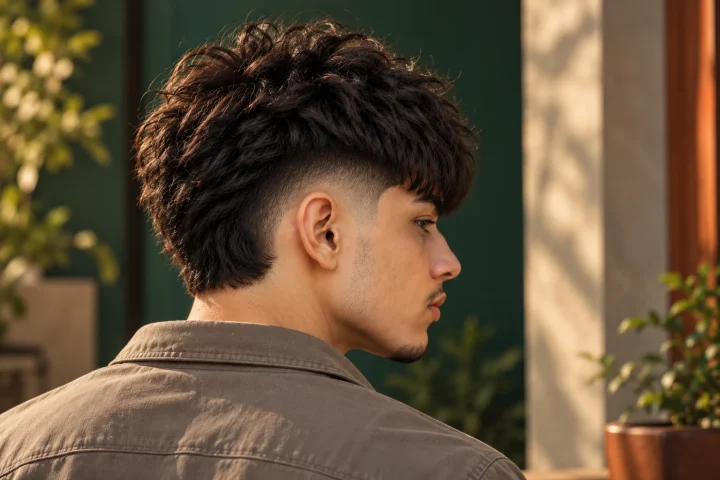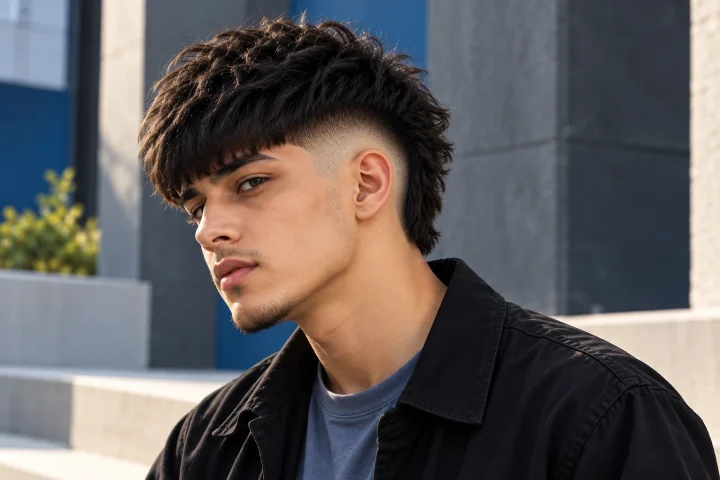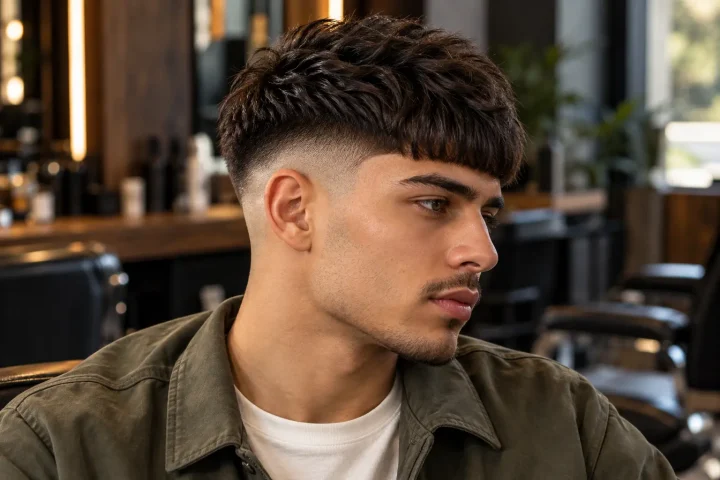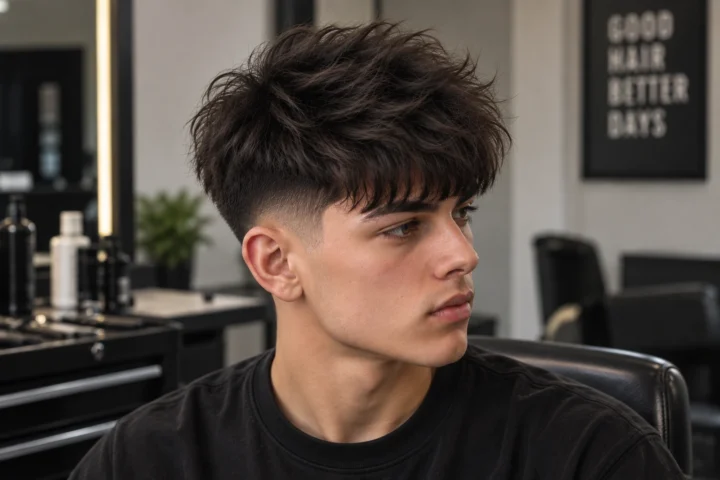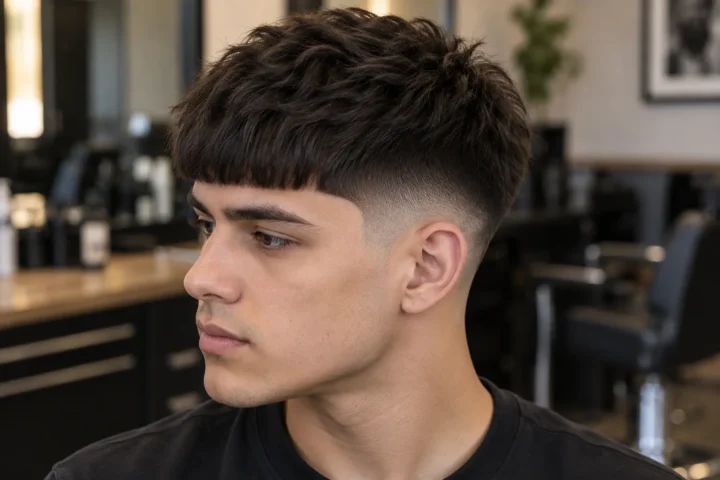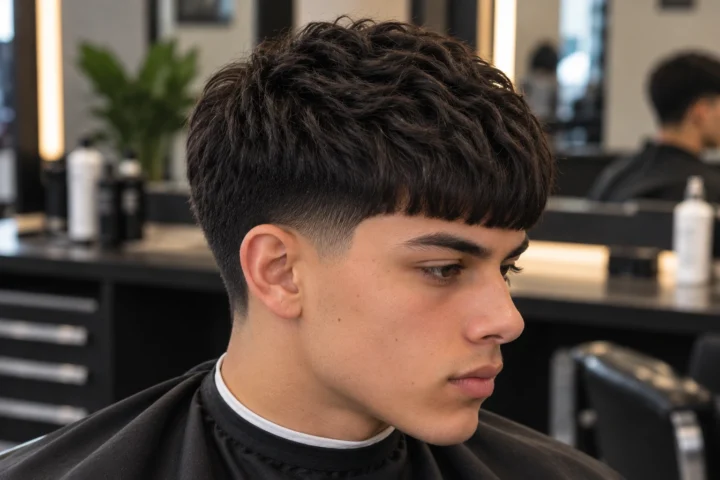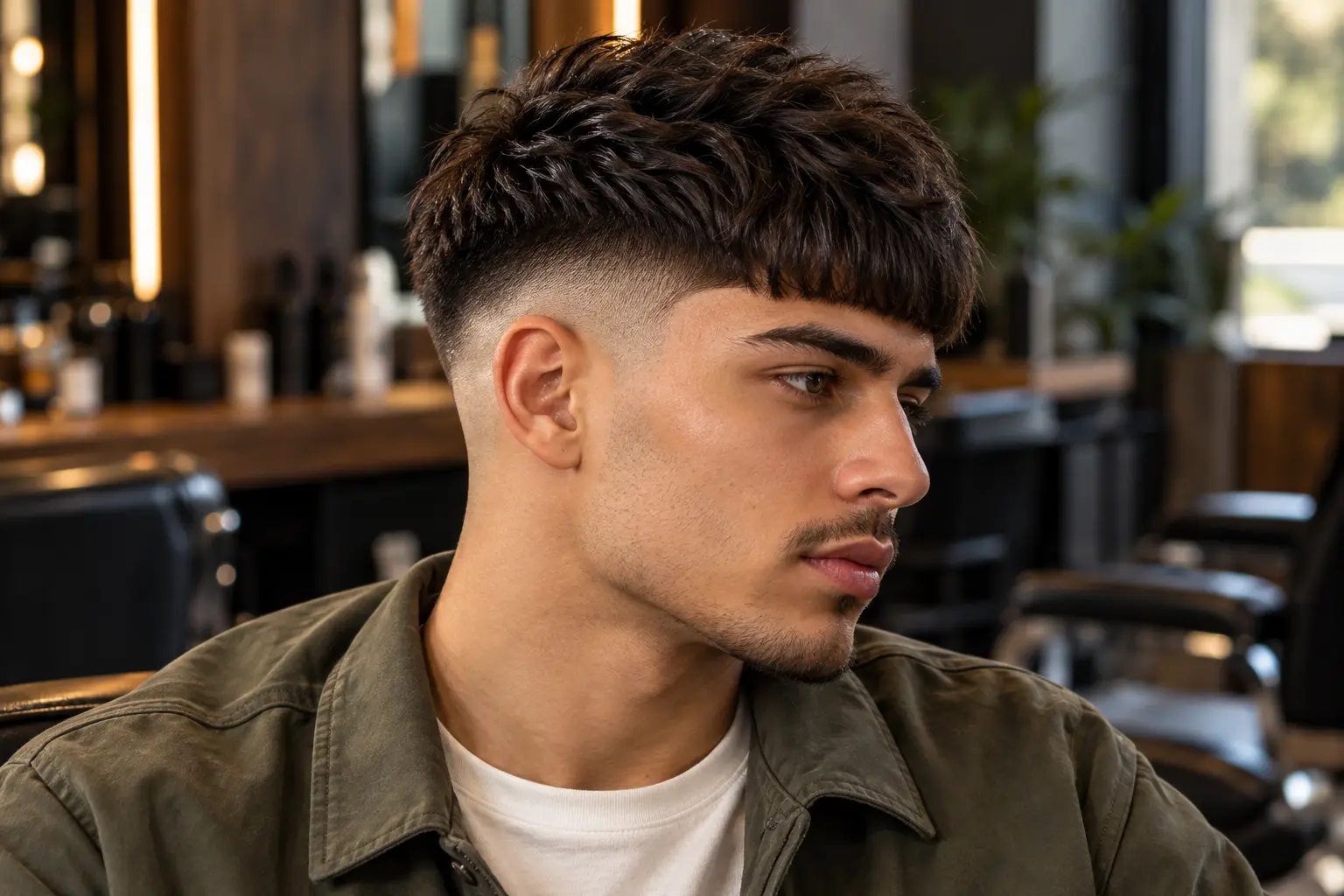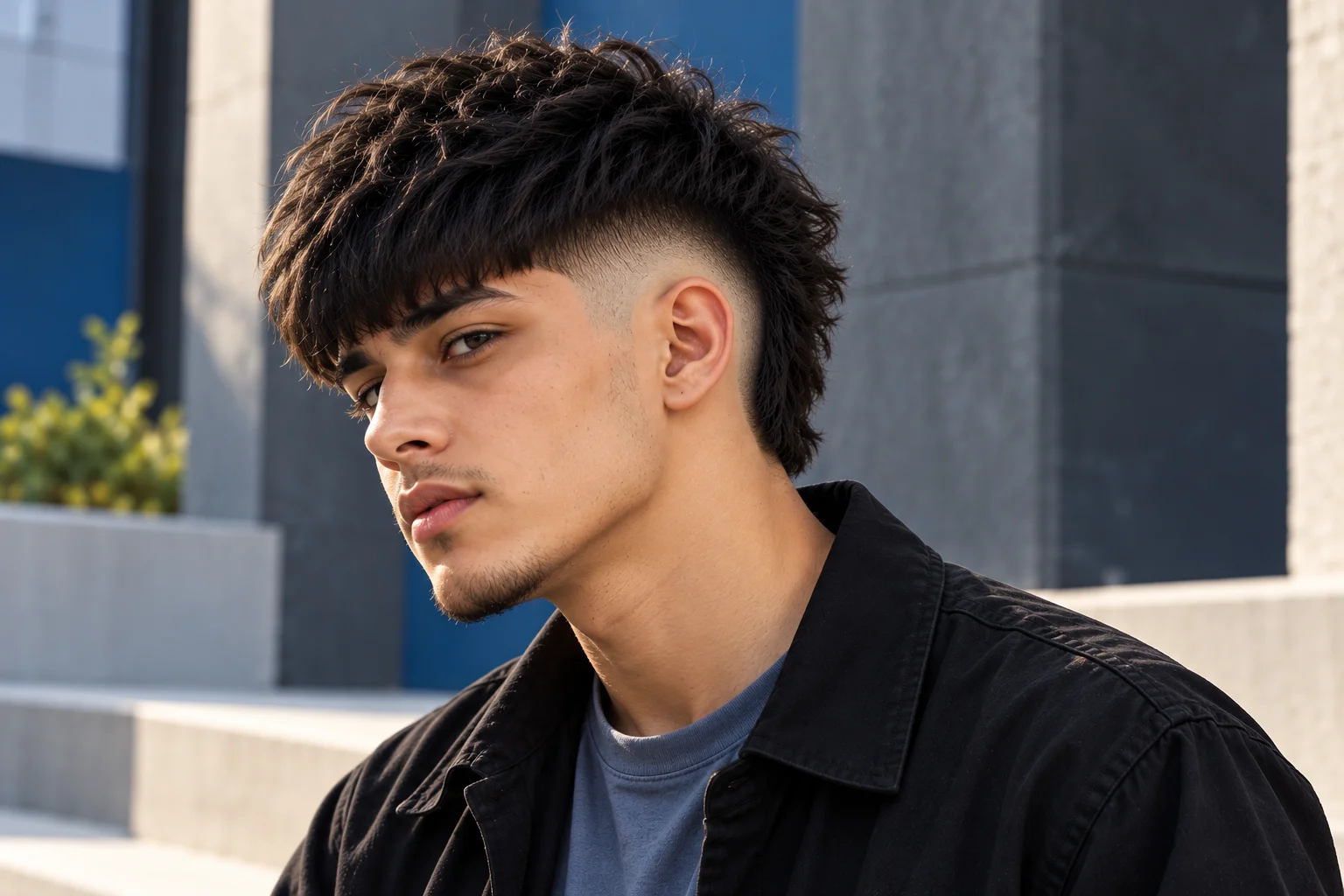

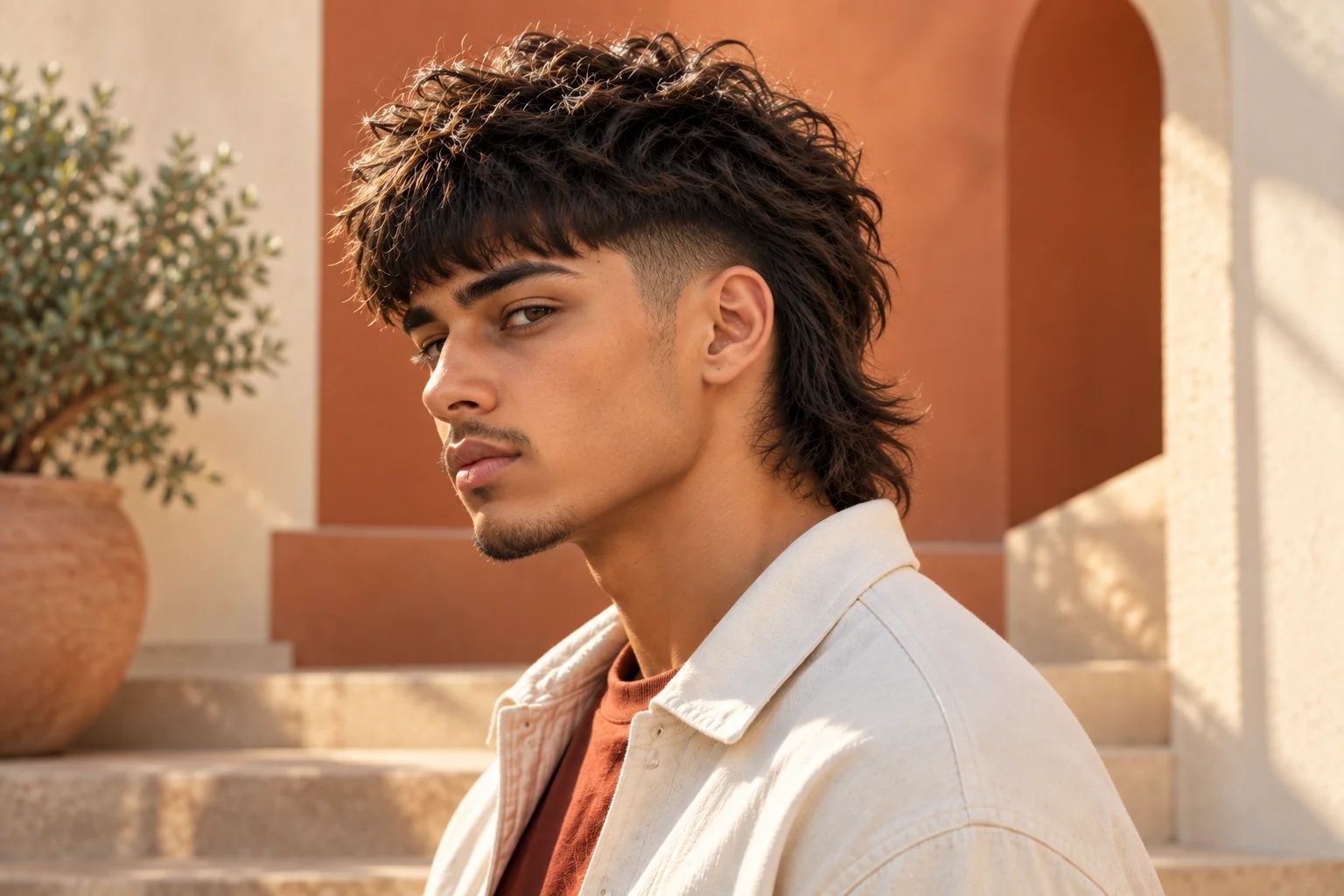
An Edgar Mullet haircut brings together two shapes that seem to pull in opposite directions. The front carries the recognizable structure of an Edgar—hair directed forward with a defined fringe—while the back keeps enough length to create the unmistakable mullet silhouette.
That contrast is exactly what gives the haircut its character.
But simply leaving the back longer does not automatically create a good Edgar Mullet. The front, sides, crown and back have to look as though they belong to the same haircut. Remove too much from the sides and the rear can look detached. Cut the back too short and the mullet disappears. Soften the front too much and the Edgar identity starts disappearing with it.
The important decision, then, is not simply “Which Edgar Mullet should I get?”
It is how you want the Edgar front and longer back to connect.
If you are still deciding whether this hybrid is the right direction, start with our complete Edgar Haircut guide, which explains the broader haircut and its main variations before you commit to keeping more length at the back.
An Edgar in Front. A Mullet From the Side and Back.
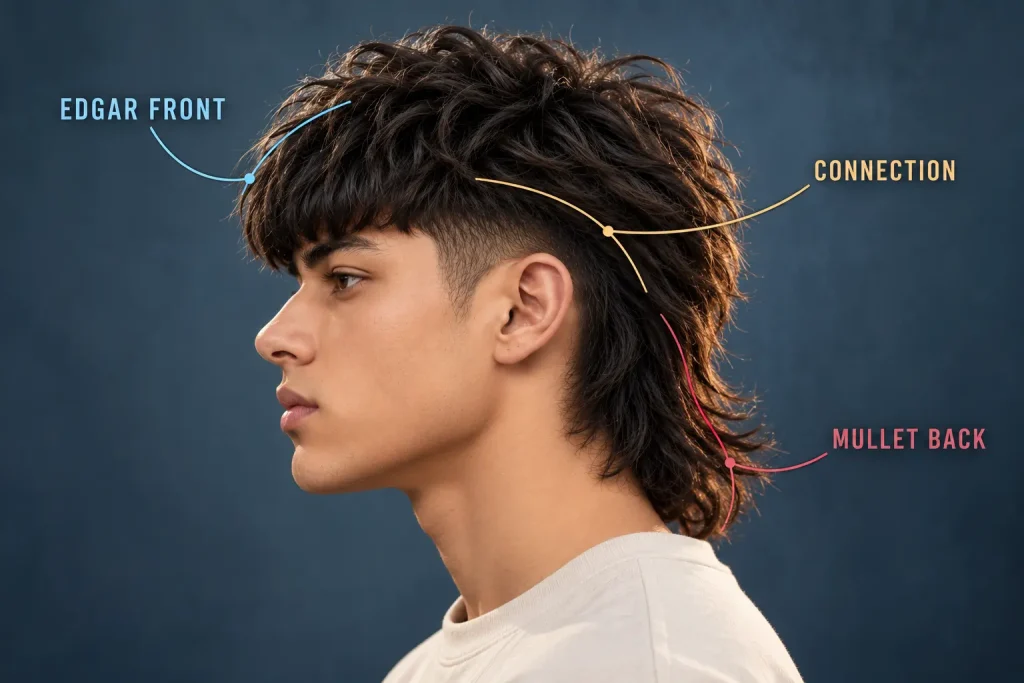
The easiest way to understand an Edgar Mullet cut is to stop looking at it as one shape.
Look at three areas instead.
The front establishes the Edgar. The hair generally moves forward toward a noticeable fringe rather than opening into a side part or being swept completely away from the forehead.
The sides control the connection. They determine how smoothly—or dramatically—the shorter front and top transition toward the longer rear. They may be tapered, faded or kept fuller depending on the silhouette you want.
The back creates the mullet. Length and weight are deliberately preserved behind the ears and toward the nape instead of being removed as they usually would be in a more compact Edgar.
That means the same haircut can give different impressions from different angles.
From the front, the Edgar may dominate.
Turn to the side and the relationship between the shorter sides and longer rear becomes visible.
From behind, the preserved length finally reveals how subtle or pronounced the mullet actually is.
This is why choosing an Edgar Mullet from a front-facing reference photo alone is a mistake. The side and back views matter just as much as the fringe.
The Back Is What Changes Everything
Imagine two people with nearly identical Edgar fronts, similar textured tops and similar side treatment.
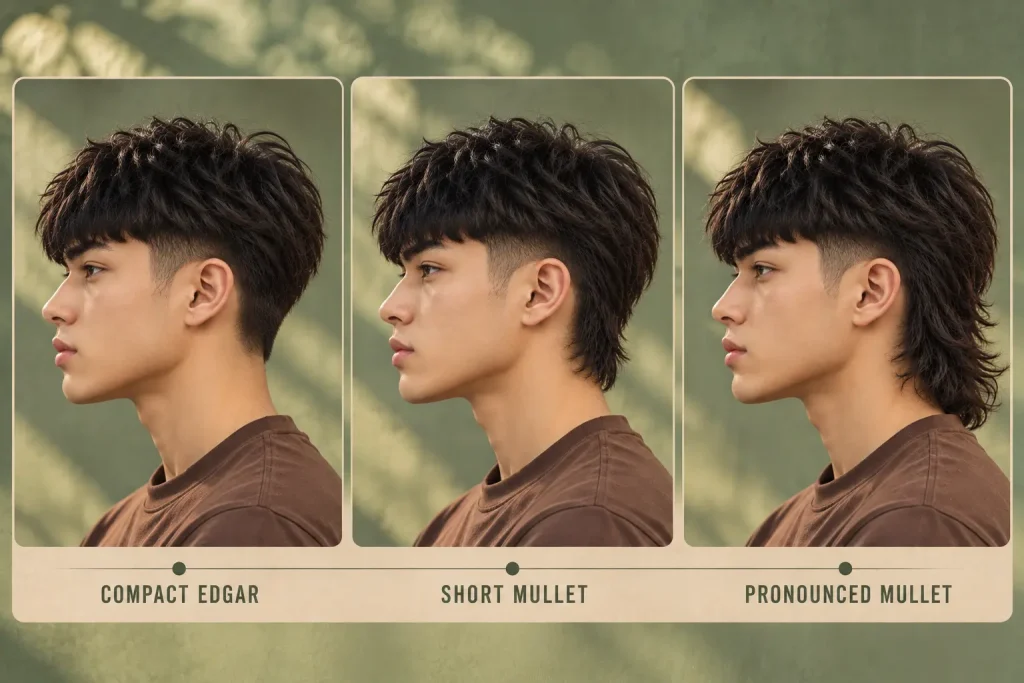
On the first person, the barber gradually shortens the hair toward the back of the head and cleans the rear into a compact silhouette.
On the second, the barber preserves visible length through the crown and rear and allows that length to continue toward the nape.
The first remains much closer to a conventional Edgar.
The second begins to read as an Edgar Mullet.
That does not mean the back has to be extremely long.
A shorter interpretation can create the effect through a modest but deliberate extension at the rear. A more pronounced version can carry considerably more length and movement.
The useful question isn’t:
“How many inches should the back be?”
It is:
“How obvious do I want the longer back to look compared with the sides?”
That question is much easier to answer with reference photos than with a fixed measurement.
It also gives your barber something meaningful to work toward.
Don’t Decide the Fade Before You Decide the Silhouette
It is easy to walk into a barbershop thinking:
“I want an Edgar Mullet with a fade.”
But that still leaves most of the important visual decisions unanswered.
Start with the side profile instead.
Do you want plenty of weight around the back and behind the ears?
Do you want a clean, obvious break between the sides and longer rear?
Or should the transition feel softer so the haircut reads as one continuous shape?
Only after deciding that should you choose how the sides will be tapered or faded.
An Edgar Mullet taper can clean selected areas while preserving more surrounding weight. An Edgar Mullet fade can remove more side weight and make the difference between the sides and longer back much more obvious.
Neither approach is automatically better.
The right choice depends on the silhouette you are trying to create.
If preserving more side weight is important to you, our Low Taper Edgar Haircut guide explains how a lower transition can clean the haircut without automatically removing a large amount of the surrounding shape.
With an Edgar Mullet, that distinction becomes especially important because the side treatment determines whether the longer back feels connected, contrasted or almost completely separated.
How Connected Should Your Edgar Mullet Look?
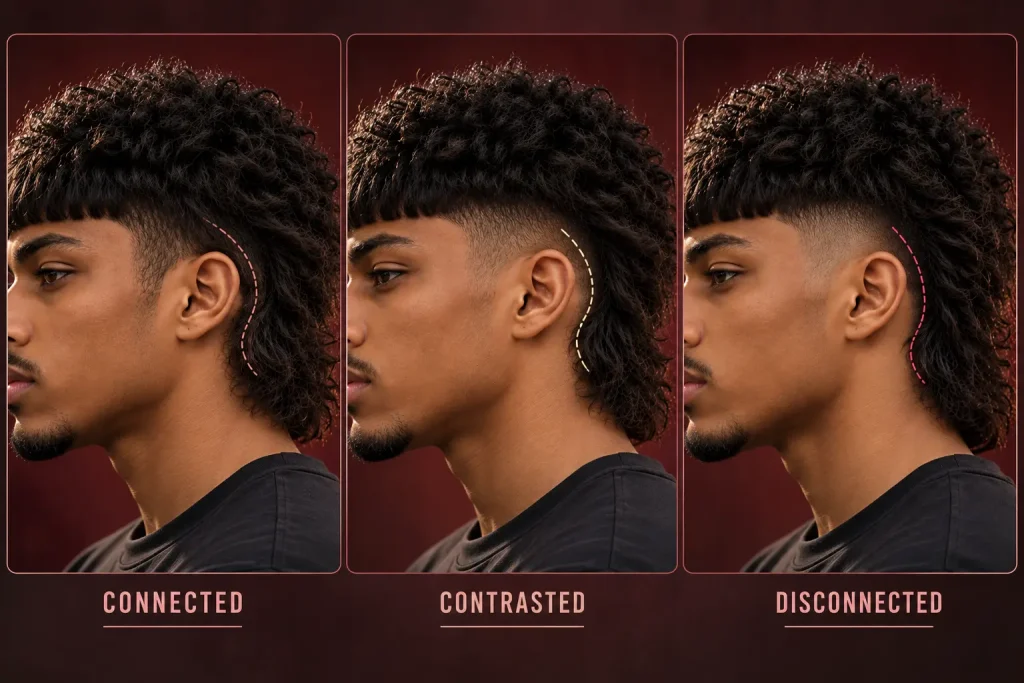
Instead of treating every tiny change as a new hairstyle, it is more useful to think of the Edgar Mullet as a spectrum.
At one end, the haircut is softer and more connected.
At the other, the front and back are separated by much stronger side contrast.
Softer and More Connected
More weight remains through the sides and toward the rear.
The shift from the Edgar front into the mullet feels less abrupt, making the haircut easier to read as one continuous shape.
The longer back is still visible—especially from the side—but it doesn’t overpower the rest of the haircut.
This direction makes sense when you want the mullet element to be noticeable without making it the only feature people see.
Clearly Contrasted
Cleaning more weight from the sides makes the front and rear easier to distinguish.
You still have enough visual connection for the haircut to make sense as a whole, but the longer back becomes more obvious.
This middle ground is where many modern Edgar Mullets sit: recognizable fringe, controlled sides and deliberate rear length.
Strongly Disconnected
Removing much more side weight makes the longer rear stand apart from the front and top.
The result can be bold and intentional when that separation is the goal.
But stronger contrast is not automatically better.
If too much of the connection behind the ear and through the crown disappears, the back can begin to look attached to the haircut rather than built into it.
So instead of asking:
“Which version is correct?”
Ask:
“How much connection do I want to keep between the Edgar and the mullet?”
That single decision makes many of the choices that follow much easier.
Edgar Mullet Styles Worth Knowing
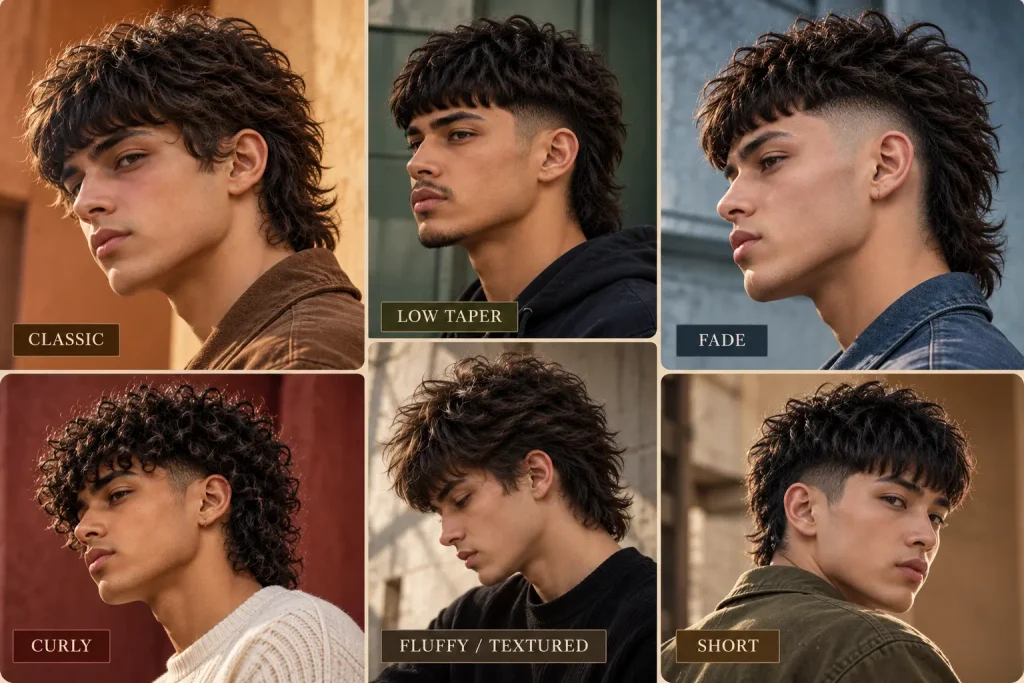
Once you understand the basic silhouette, taper placement, fade strength and top texture can change the personality of the haircut without changing its underlying identity.
Classic Edgar Mullet
The classic interpretation keeps both halves of the haircut easy to recognize.
The front retains a clear Edgar direction and fringe, while deliberate length through the rear establishes the mullet.
The sides sit between those two shapes rather than competing with them.
If you are new to the style, this is a useful visual reference because it lets you understand the Edgar Mullet before adding more aggressive fades or exaggerated texture.
Low Taper Edgar Mullet
A Low Taper Edgar Mullet cleans the lower side area while leaving more weight above it and toward the back.
That can help preserve a smoother connection between the Edgar and mullet portions of the haircut.
Pay particular attention to the area behind the ear when choosing a reference. Two cuts may both carry the same name while keeping very different amounts of weight there.
Mid Taper Edgar Mullet
A Mid Taper Edgar Mullet moves the transition farther up the side, changing the visual balance.
More of the side becomes cleaned up, which can make the preserved rear length stand out more clearly.
If you are unsure what actually changes when the transition moves higher, our Mid Taper Edgar Haircut guide explains that placement decision in greater depth.
For the Mullet version, however, the important thing is not the label itself. It is whether enough connection remains between the cleaner side and longer rear to produce the silhouette you wanted.
High Taper Edgar Mullet
A High Taper Edgar Mullet can create stronger top-to-side contrast and make the longer back more visually prominent.
But transition height and how closely the hair is finished are not the same decision.
A high transition does not automatically mean every part of the side must be taken extremely close. Our High Taper Edgar Haircut guide looks more closely at the difference between transition position and finish.
That distinction matters here because removing too much side weight can change the entire relationship with the back.
Edgar Mullet Fade
An Edgar Mullet Fade pushes the contrast further.
More of the sides can graduate into a closer finish, making the longer rear a much stronger visual feature.
That can work well when obvious separation is intentional.
It can also go wrong if the fade removes the connection that was supposed to make the front and back feel related.
When judging an Edgar Mullet Fade reference, don’t look only at the temple.
Look behind the ear.
That small area often tells you much more about how the fade and mullet actually interact.
Curly Edgar Mullet
A Curly Edgar Mullet changes the geometry of the haircut.
The front can still retain an Edgar direction and fringe, but the back may expand, coil and create much more three-dimensional volume than it would on straighter hair.
That natural movement can make the rear look fuller even without extreme length.
The goal should not be to force every curl into the outline of a straight-haired reference. It is to preserve the recognizable Edgar front while shaping the curls so the top, crown and longer back work together.
If curl behaviour is your main concern, our Curly Edgar Haircut guide goes deeper into fringe shape, curl pattern and styling without duplicating all of that guidance here.
Fluffy or Textured Edgar Mullet
A Fluffy Edgar Mullet or more loosely textured version changes the mood again.
Instead of relying on a rigid top shape, texture creates movement through the front and crown while the longer back establishes the mullet.
The challenge is controlling the transition.
Too much uncontrolled volume through the crown can hide the relationship between the top and back rather than improve it.
If that airy top is the feature you care about most, our Fluffy Edgar Haircut guide explains how the volume is created and maintained in more detail.
Short Edgar Mullet
A Short Edgar Mullet proves that the haircut does not need an exaggerated tail.
A shorter version can preserve just enough rear length to create a visible change in silhouette while keeping the overall haircut relatively compact.
This can also be a natural stage for someone growing from a conventional Edgar into a more obvious Mullet.
The key is intention.
If the back is simply overdue for a haircut, it can look like grow-out. If the crown, sides and rear have been shaped to work together, even a shorter back can clearly look deliberate.
Front, Side or Back: What Do You Want People to Notice?
Style names can help you search for references, but they do not tell you where the visual emphasis should sit.
A better approach is to decide what you want people to notice first.
If You Want the Edgar to Dominate
Keep the forward direction and fringe visually strong.
Let the back add character without overpowering the front.
From straight ahead, the haircut should still read immediately as an Edgar.
If You Want the Mullet to Dominate
Preserve more visible rear length and movement.
The profile and rear view become increasingly important because that is where the haircut carries most of its personality.
The Edgar front still anchors the hybrid, but the longer silhouette becomes the feature that separates it from a standard Edgar.
If You Want Maximum Contrast
A closer side treatment can make the front/top and longer rear feel dramatically different.
This can create a very strong silhouette.
It also leaves less room for error.
Once too much side or rear weight has been removed, styling cannot put the missing structure back.
If you are uncertain between two references, choose based on shape first and fade second.
Hair Texture Changes the Back as Much as the Top
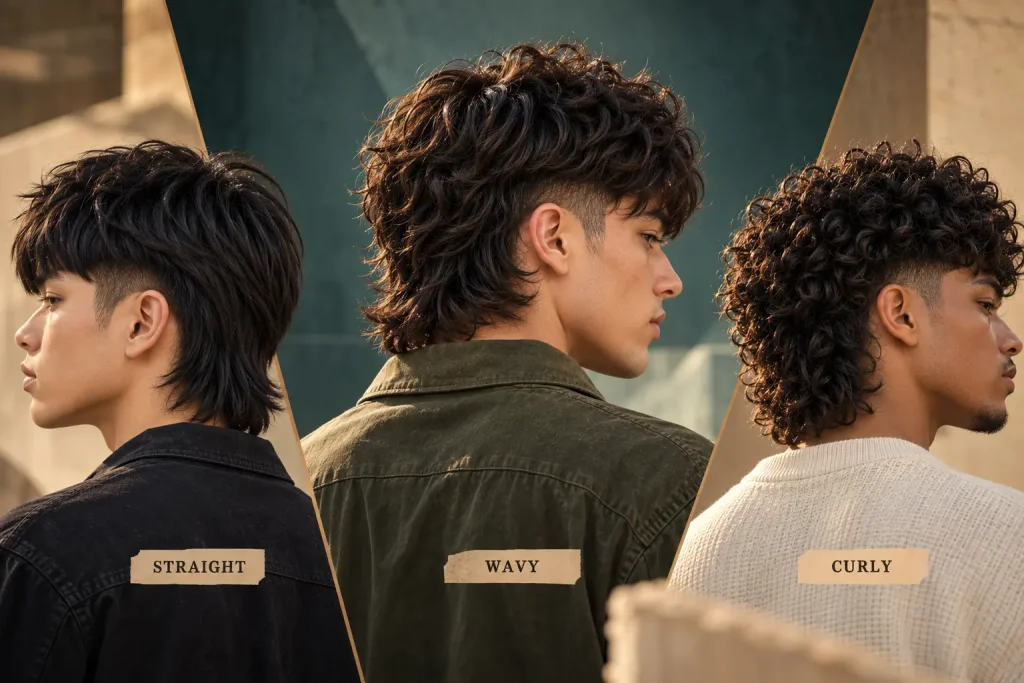
Two people can ask for the same Edgar Mullet haircut and leave with noticeably different silhouettes because their hair does not fall, expand or move in the same way.
Straighter Hair
Straighter hair tends to reveal the outline clearly.
That can make the fringe look especially defined, but it also makes the rear shape and transitions easier to see.
Poor connections have fewer places to hide.
Some controlled texture through the top and crown can prevent the haircut from appearing too flat while still preserving the forward Edgar direction.
Wavy Hair
Natural waves can soften the boundary between the structured front and freer back.
The rear can develop visible movement without needing extreme length, while the top can retain texture even when directed forward.
Rather than flattening that movement, the haircut can use it to connect the crown with the back.
Curly Hair
Curls can create much more volume through the top, crown and rear.
The final shape therefore depends not only on length but on how the curls contract, expand and sit when dry.
A useful curly Edgar Mullet should be shaped around that natural behaviour rather than treated as a straight Edgar Mullet with curls added afterward.
Hair density matters as well.
Two people with similar curl or wave patterns can still require different shaping because one has substantially more weight through the crown and back.
This is another reason a reference photo should guide the conversation rather than dictate an identical result.
The Barber Conversation Should Start With the Back
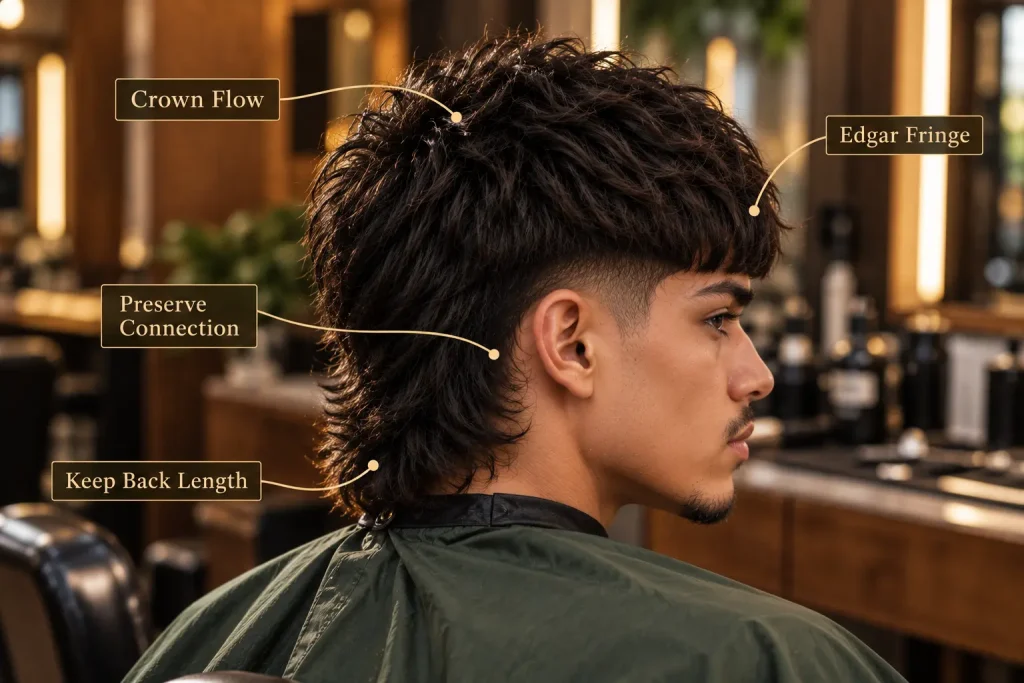
If you show your barber only a front-facing Edgar Mullet photo, you are hiding the part of the haircut that makes it a mullet.
A better consultation starts with the silhouette.
1. Show the Back You Want
Use a reference that clearly reveals how much rear length is preserved and how that length sits around the nape.
Whenever possible, bring front, profile and rear views of the same haircut.
If you cannot find that, make sure the references you combine at least show compatible shapes.
2. Explain How Much Side Weight You Want to Keep
Point to the area around and behind the ear.
Do you want it fuller and connected to the back?
Cleaner and lighter?
Or deliberately separated?
Showing that area is more reliable than assuming you and your barber attach exactly the same meaning to words such as “taper,” “fade” or “disconnected.”
3. Then Discuss the Taper or Fade
Once the silhouette is understood, decide where you want the transition and how close you want the finish.
This is where phrases such as Edgar Mullet taper or Edgar Mullet fade become useful starting points—but the reference image should still show what those words mean to you.
Transition position and finish influence each other, but they are not identical decisions.
4. Establish the Edgar Front
Show the fringe shape you actually want.
Some Edgar fronts are blunt and highly defined. Others carry more texture and irregularity while still clearly reading as Edgar.
Simply saying “Edgar” does not communicate every detail.
5. Don’t Forget the Crown
The crown connects the top with the longer rear.
Ask how your existing length, growth pattern and texture will affect that connection before removing a large amount of bulk.
A useful way to explain the overall goal is:
“I want the Edgar shape in front, but I want to keep this back silhouette. Keep enough connection here so the longer back looks intentional.”
Then point to the exact area on your reference.
That communicates much more than:
“Just give me an Edgar Mullet.”
What Can Go Wrong With an Edgar Mullet?
The ability to control several contrasting zones is what makes the haircut interesting.
It is also what creates most of its problems.
The Back Gets Cut Too Short
This is the simplest mistake and the hardest to disguise.
Remove too much rear length and the haircut begins moving back toward a conventional Edgar.
Product cannot recreate missing length.
If you are intentionally growing or preserving the back, say so before the haircut begins.
The Sides Remove Too Much Connection
An aggressive side treatment can isolate the rear.
That may be intentional in a highly disconnected version, but it becomes a problem if you expected a smoother transition.
Look at your reference from the side and identify exactly where you want weight preserved rather than discussing only how short the fade should be.
The Fringe Stops Looking Like an Edgar
If the front becomes too open, swept or undefined, the haircut can begin reading primarily as another modern mullet.
The fringe does not have to be perfectly straight or rigid.
It simply needs enough forward Edgar identity to make the hybrid recognizable.
The Crown Becomes a Dead Zone
The crown sits between the textured top and longer rear.
Ignore it and you can end up with shape in front, length at the back and an awkward section between them.
A good crown transition helps lead the eye from one part of the haircut into the next.
Too Much Bulk Collects Behind the Ear
Preserving weight does not mean preserving every strand.
Depending on density and texture, the area behind the ear may need careful shaping so it supports the longer back without turning into a heavy block.
The Top and Back Look Like Two Different Haircuts
This is the bigger problem behind many of the smaller ones.
A defined fringe plus long hair at the back is not enough.
The sides and crown have to explain visually why those two shapes belong together.
That is the difference between intentional contrast and accidental disconnection.
Growing Into an Edgar Mullet
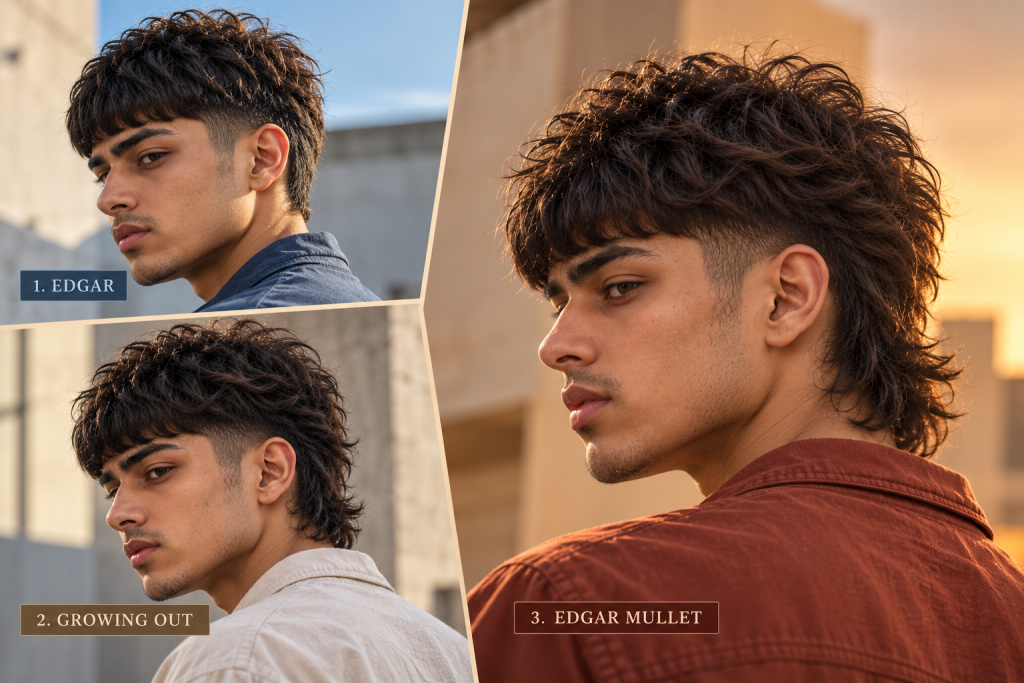
You do not necessarily need to start with long hair.
If you already have an Edgar, much of the transition is about stopping the repeated removal of hair that you now need for the back.
Tell your barber that you are growing toward an Edgar Mullet before your next cleanup.
Otherwise, a routine Edgar haircut may keep shortening exactly the areas you are trying to develop.
During the grow-in stage, the front can still be shaped and the sides can still be cleaned while more length accumulates through the rear.
The difficult part is that every area will not reach its ideal shape at the same time.
The back may need more time.
The sides may begin feeling heavy earlier.
The fringe may need attention while the rear should barely be touched.
That does not mean the grow-out has failed.
Instead of repeatedly “fixing” the back by cutting it short again, reshape the areas that genuinely need work while protecting the length contributing to the future silhouette.
If possible, show your barber both your final target and the amount of rear length you are currently trying to preserve.
That turns an awkward grow-out into a planned transition.
Keeping the Shape After the First Cut
An Edgar Mullet does not grow out uniformly.
The fringe can lose definition while the longer back still looks good.
The side treatment can become heavier while the rear actually benefits from additional growth.
The crown may need reshaping without needing to sacrifice the length below it.
That means maintenance does not always require repeating the entire original haircut.
Ask what actually needs attention.
Sometimes it is the fringe.
Sometimes the taper or fade needs refreshing.
Sometimes excess bulk needs managing around the sides or crown while the back should largely be left alone.
And sometimes the best thing you can do to the back is not cut away the progress you have made.
Styling should follow the same logic.
The front and top may need direction, separation or controlled texture. The longer rear often benefits more from natural movement than from being coated in heavy product.
Start lightly.
Add more only where the hair actually needs control.
The goal is not to force every part of an Edgar Mullet to behave the same way. The haircut works because those different areas have different jobs.
Edgar Mullet FAQ
What is an Edgar Mullet haircut?
An Edgar Mullet haircut combines recognizable Edgar characteristics—particularly a forward top and defined fringe—with deliberately preserved length through the back. The sides and crown control how smoothly or dramatically those two areas connect.
Does an Edgar Mullet need a fade?
No. An Edgar Mullet Fade is one possible version, not a requirement. The sides can instead use a taper or remain fuller depending on how much weight, connection and contrast you want.
What is an Edgar Mullet taper?
An Edgar Mullet taper cleans selected areas around the sides and edges while retaining the longer rear that creates the mullet silhouette. How much surrounding weight remains depends on the specific taper and the intended connection with the back.
Can you get an Edgar Mullet with a low taper?
Yes. A Low Taper Edgar Mullet can clean the lower side area while preserving more weight above it and toward the rear. This can work particularly well when you want the mullet to remain visibly connected rather than strongly separated.
Can an Edgar Mullet work with curly hair?
Yes. A Curly Edgar Mullet can add considerable volume and movement through the top, crown and back. The cut should be shaped around the natural curl pattern rather than trying to reproduce the exact outline of a straight-haired Edgar Mullet.
Can the back of an Edgar Mullet be short?
Yes. There is no universal required length. The back simply needs enough deliberate preservation to create a noticeable rear silhouette compared with a more compact Edgar. A Short Edgar Mullet can be subtle; additional length makes the mullet more pronounced.
What should I show my barber?
Ideally, show front, side and rear views. The references should communicate the fringe, side treatment, crown connection and amount of back length you want. A front-facing photo alone leaves too much of the haircut unexplained.
What is the difference between an Edgar and an Edgar Mullet?
A conventional Edgar generally maintains a more compact rear silhouette. An Edgar Mullet deliberately preserves additional length and weight toward the back while retaining enough of the Edgar front and top to keep that identity recognizable.
Is an Edgar Mullet the same as a Mullet Fade?
Not necessarily. A Mullet Fade is a broader mullet variation characterized by faded sides. An Edgar Mullet specifically combines the longer rear with recognizable Edgar characteristics at the front. An Edgar Mullet can include a fade, but the terms are not interchangeable.
The Haircut Works When the Contrast Looks Deliberate
An Edgar Mullet is not simply an Edgar with some extra hair left at the back.
Look at the haircut from all three directions.
From the front, there should be enough Edgar identity to establish the style.
From the side, the treatment around the ears and crown should explain how the shorter areas lead into the longer rear.
From the back, the preserved length should create a silhouette that looks intentional rather than forgotten.
You can make that relationship subtle, textured, curly, tapered, faded or highly contrasted.
But decide the shape before chasing the terminology.
If you can show your barber the front you want, the connection you want and the back you want, you have already communicated the most important parts of the haircut.
When those three areas work together, the Edgar and the mullet stop competing for attention.
They become the same haircut.