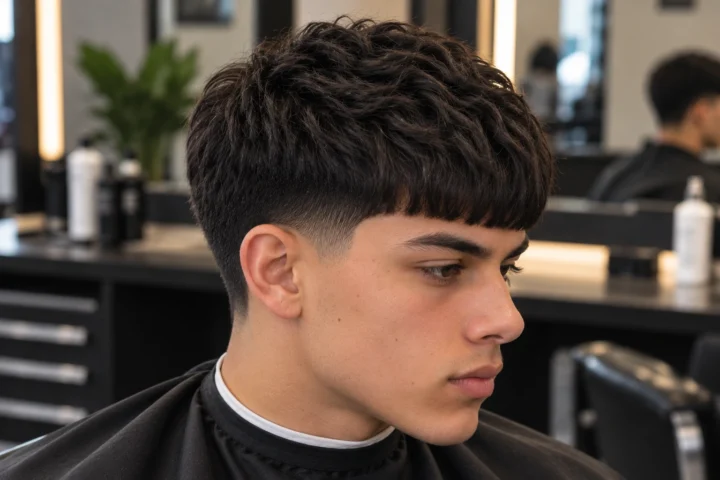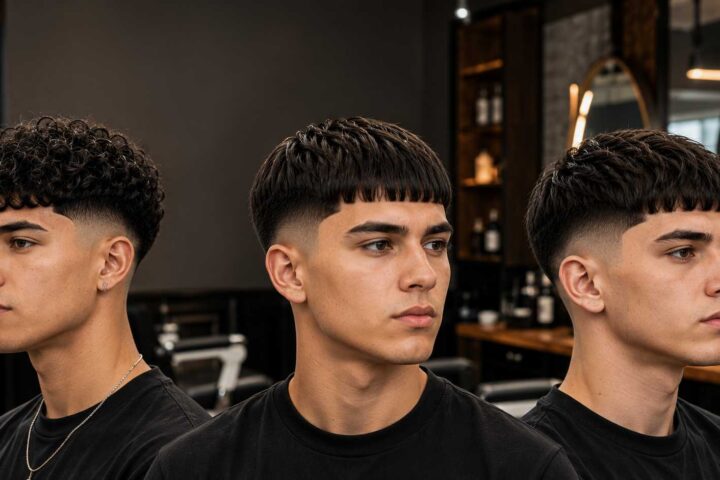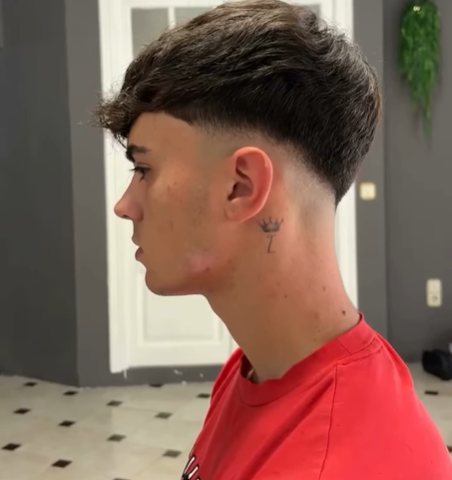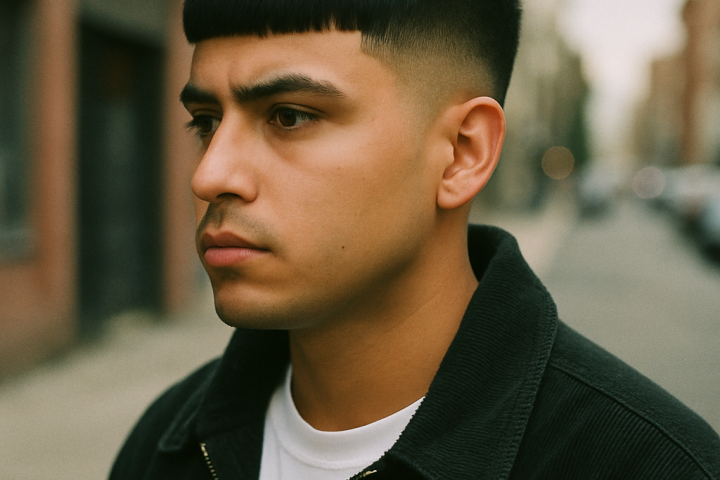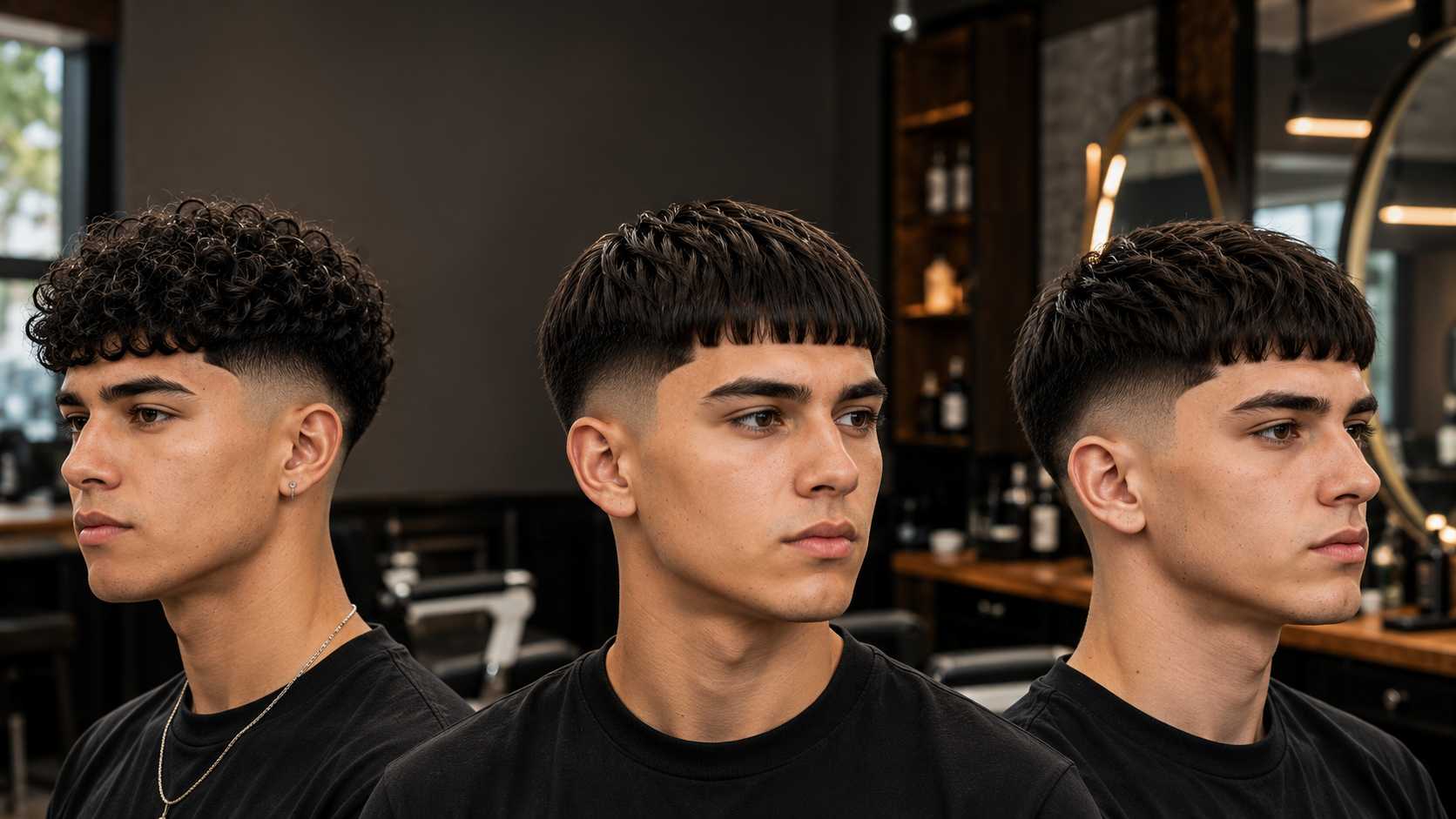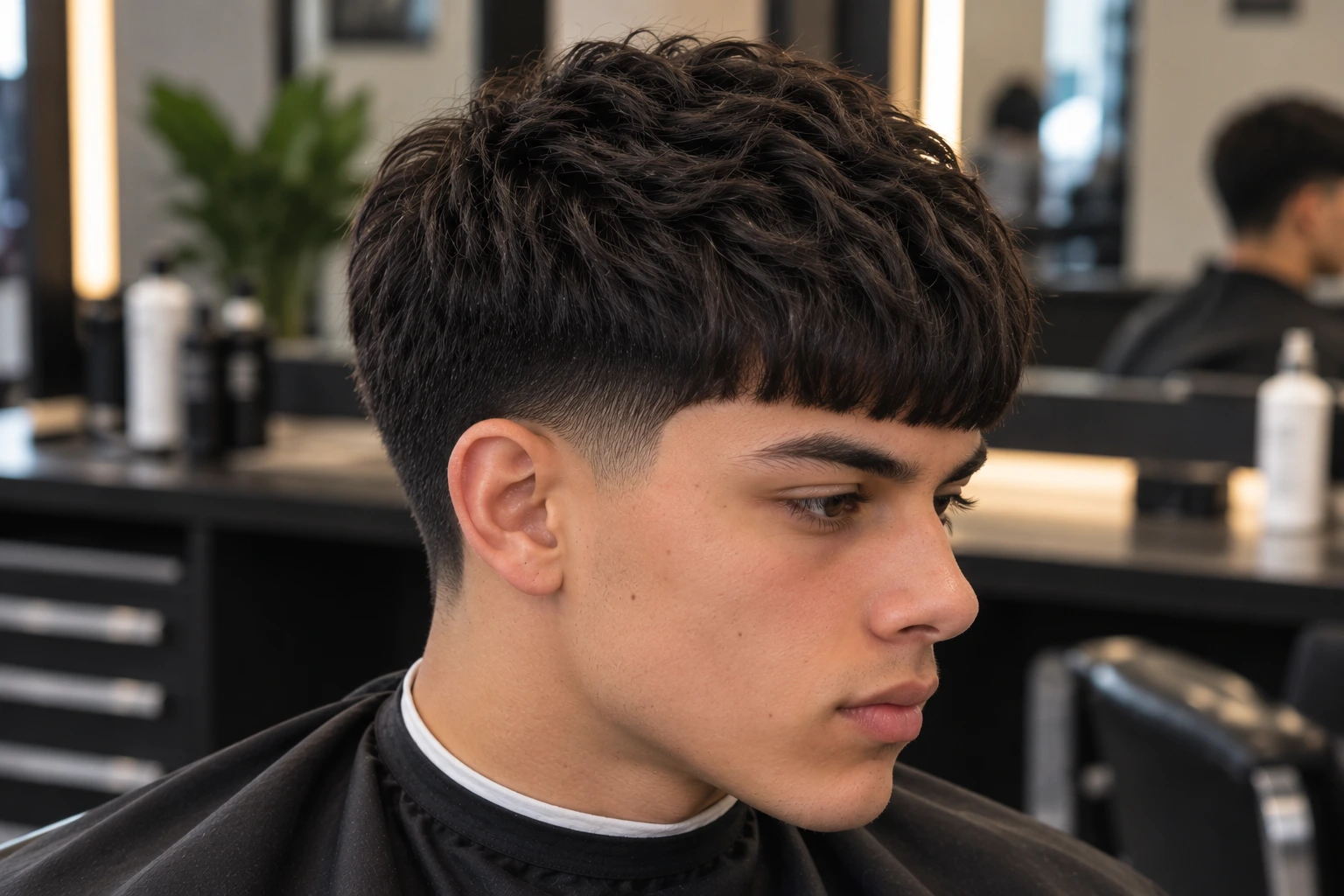

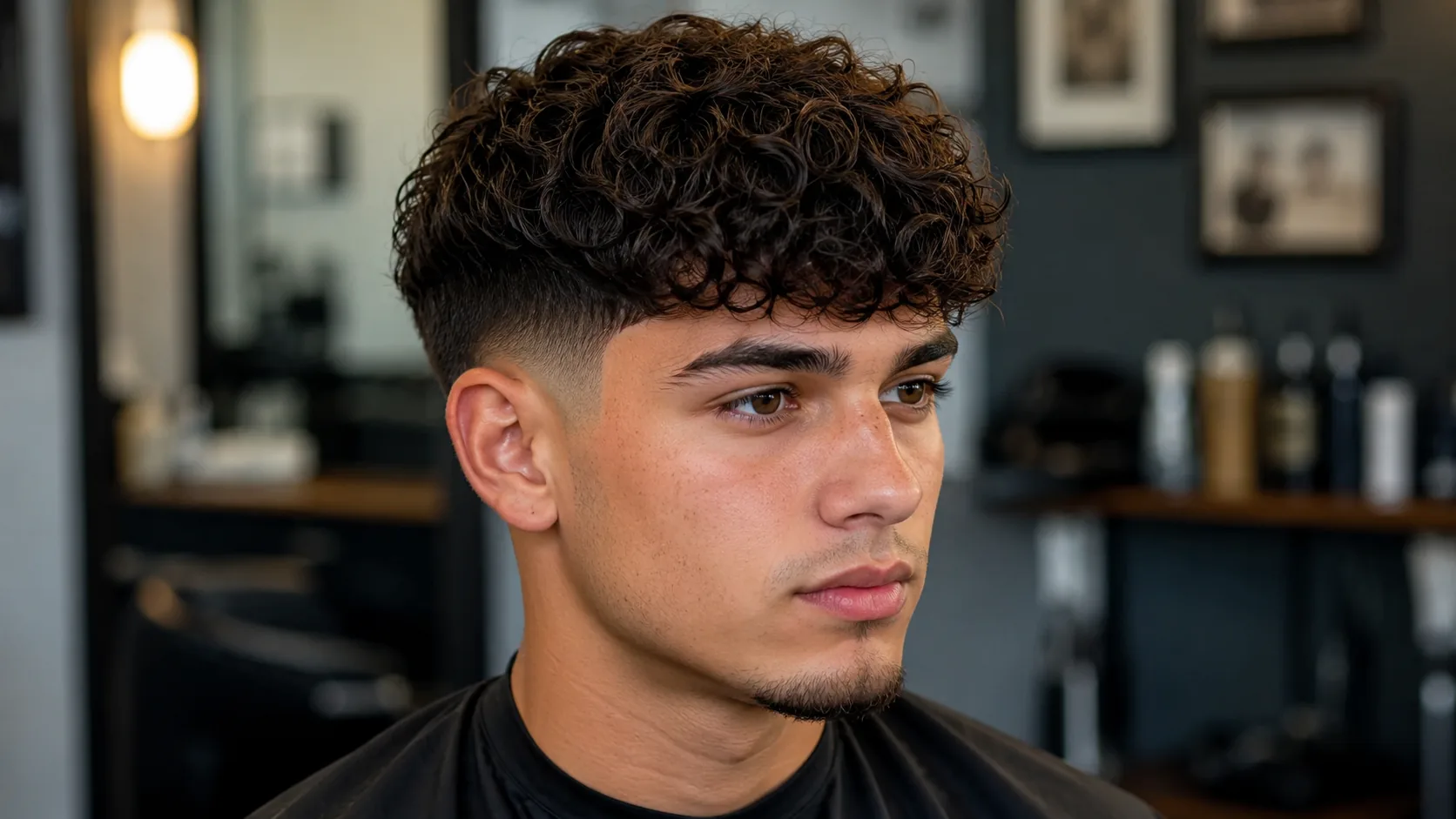
A curly Edgar haircut combines the recognizable shape of an Edgar cut with the natural volume, movement, and texture of curly hair. Instead of forcing the top completely flat, the curls are allowed to move forward toward the forehead while the sides are cleaned up with a taper or fade.
The result can range from a subtle low-taper curly Edgar to a much sharper high-fade version. The key is keeping enough length on top for the curls to retain their shape while creating a clear contrast around the sides and back.
If you’re considering the cut, this guide explains the best curly Edgar styles, how different tapers and fades change the look, what to tell your barber, and how to style and maintain your curls afterward.
What Is a Curly Edgar Haircut?
A curly Edgar is a textured variation of the Edgar haircut that works with naturally wavy, curly, or coiled hair instead of trying to make the top behave like straight hair.
The traditional Edgar is recognizable for its forward-directed top, defined fringe, and shorter sides. With curly hair, that basic silhouette remains, but the texture changes the finish.
Instead of forming a perfectly flat, blunt fringe, curls may create a softer or slightly uneven front edge. The top also tends to have more volume and dimension.
A successful curly Edgar therefore balances three elements:
- Natural texture on top
- A defined forward fringe or front shape
- Cleanly tapered or faded sides and back
If you’re new to the haircut itself, start with our complete Edgar Haircut guide before choosing a specific variation.
Why Curly Hair Works So Well With an Edgar Cut
One advantage of curly hair is that much of the texture people try to create with styling products is already present naturally.
Keeping the curls longer on top while shortening the sides creates strong visual contrast. Depending on how much length you retain, the result can look neat and compact or deliberately full and textured.
Curls also soften the very geometric appearance associated with a classic straight Edgar.
That makes the curly version especially customizable. You can keep the taper subtle, expose more of the sides with a fade, leave additional volume on top, or wear the fringe less rigidly.
The barber should work with your natural curl pattern rather than trying to reproduce the exact silhouette of an Edgar photographed on straight hair.
Best Curly Edgar Haircut Styles
There isn’t one standard curly Edgar. The height of the fade or taper, length on top, fringe, and amount of volume can significantly change the finished haircut.
Here are the variations worth considering.
1. Classic Curly Edgar
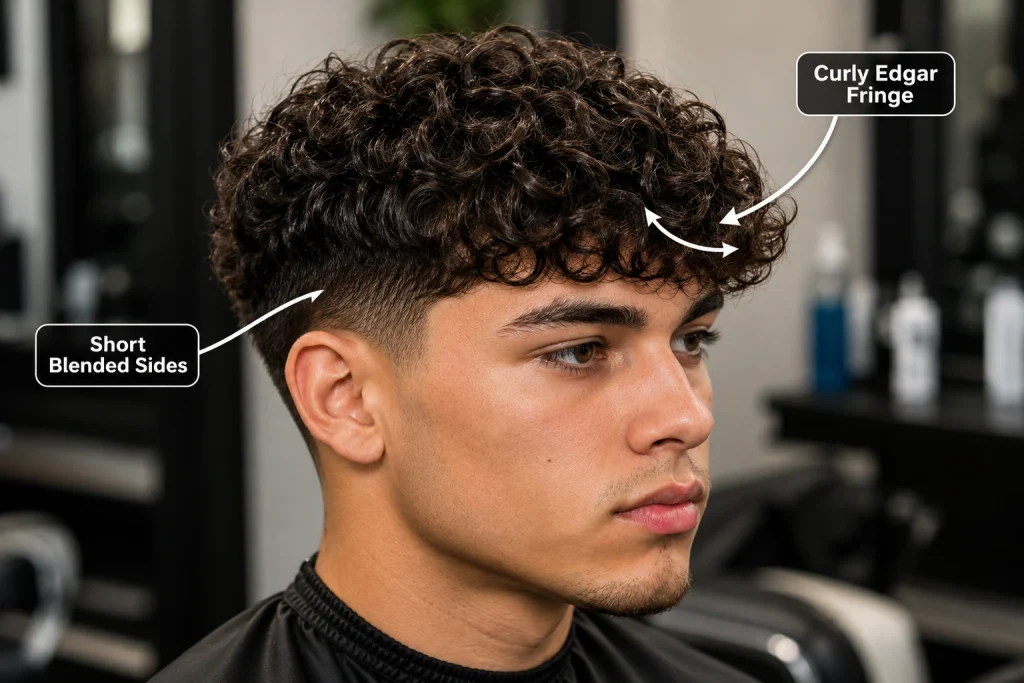
The classic version keeps the overall Edgar shape relatively simple: textured curls on top, a forward-directed front, and clean shorter sides.
It works particularly well if you want your curls to remain the main feature rather than creating extreme contrast with a skin fade.
Ask your barber to retain enough top length for your curls to form naturally and establish the front shape once the hair settles.
2. Curly Edgar With Low Taper
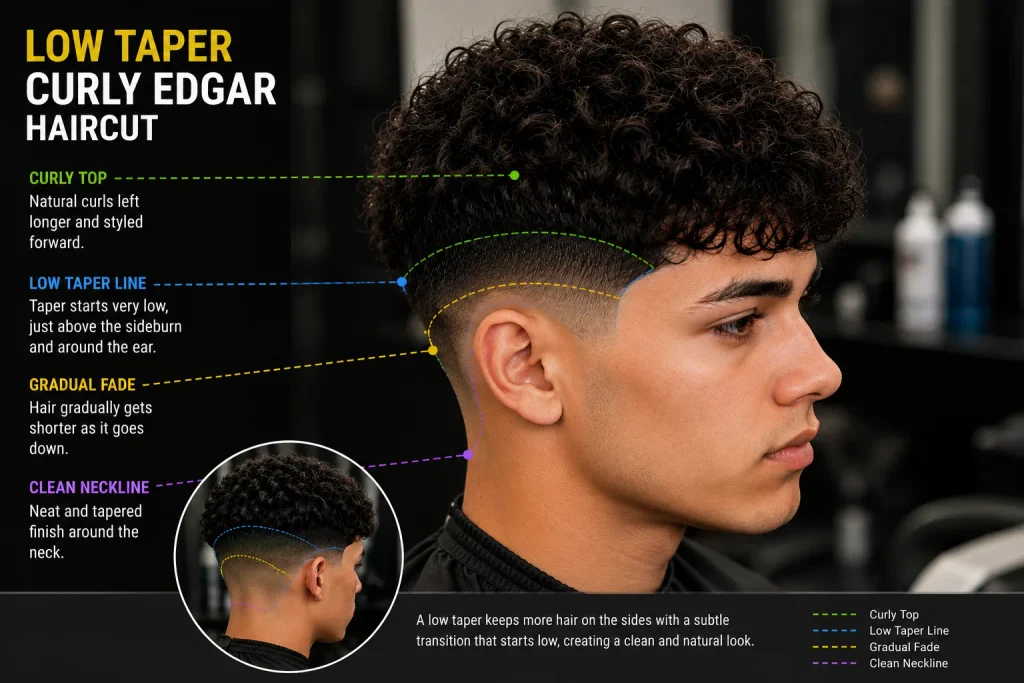
A low taper curly Edgar cleans up the hair around the sideburns, ears, and neckline while preserving more weight through the sides.
This produces a softer transition into the curls and is one of the easiest variations to wear if you don’t want the sides taken dramatically short.
It is also a good starting point for someone trying an Edgar for the first time.
For more detail on the taper itself, see our Low Taper Edgar Haircut guide.
3. Curly Edgar With Mid Fade
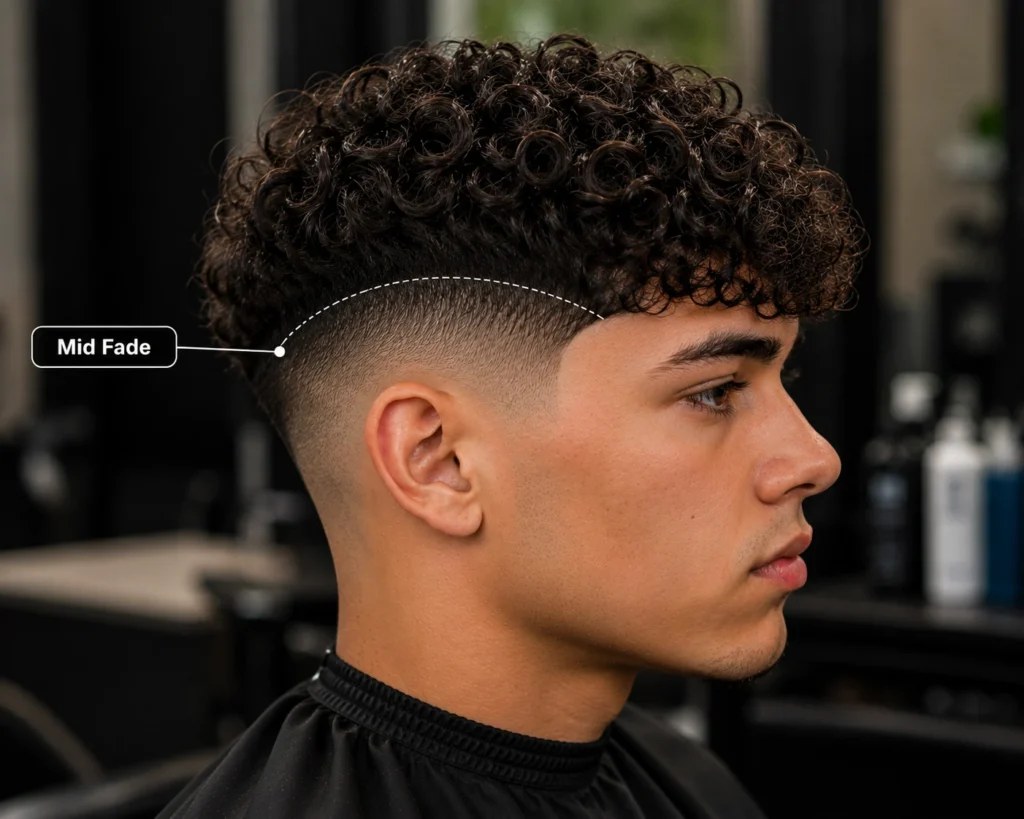
A mid fade creates more obvious separation between the curly top and shorter sides.
Because the transition begins higher than a low taper, the curls become more prominent and the overall silhouette looks sharper.
This is a useful middle ground if a low taper feels too subtle but you don’t want the stronger contrast of a high fade.
Our Mid Taper Fade Edgar Haircut guide explains the mid-level approach in greater detail.
4. Curly Edgar With High Fade
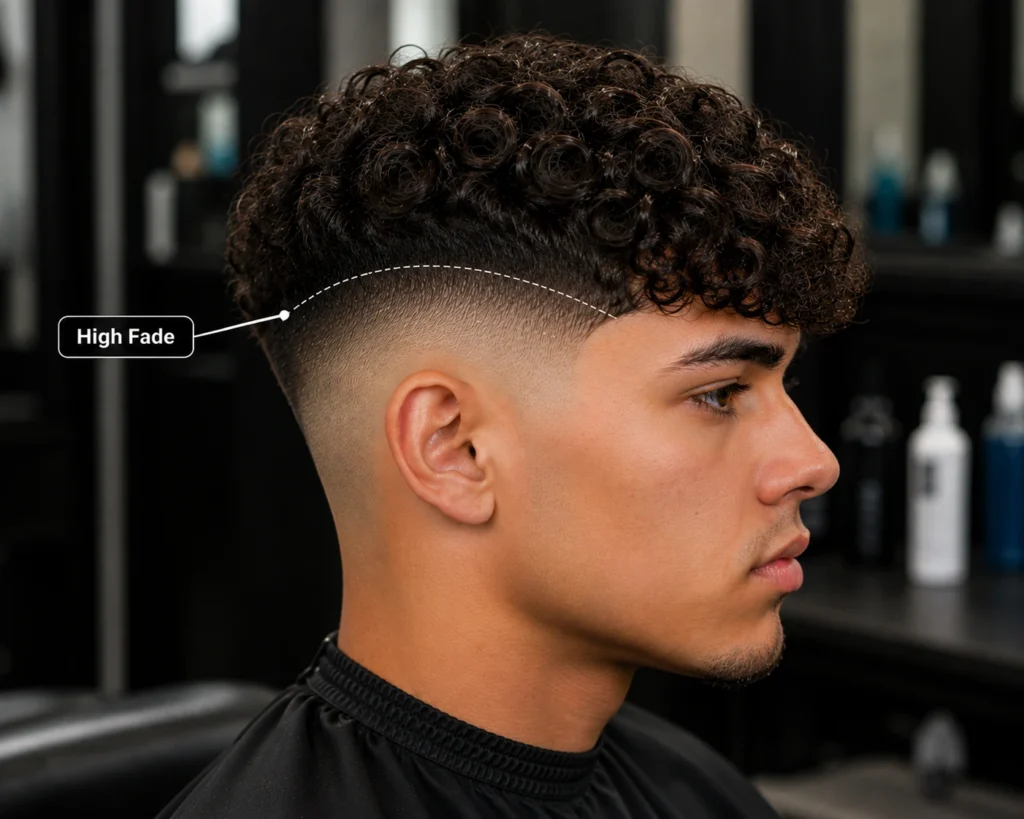
A high fade removes considerably more visual weight from the sides, leaving the curls on top as the dominant feature.
The contrast makes this one of the bolder curly Edgar variations.
However, fade height should be chosen according to your head shape, curl volume, and preferred finish rather than simply copying a reference photograph.
If you’re considering this option, compare it with our dedicated High Taper Edgar Haircut guide before your barber appointment.
5. Short Curly Edgar
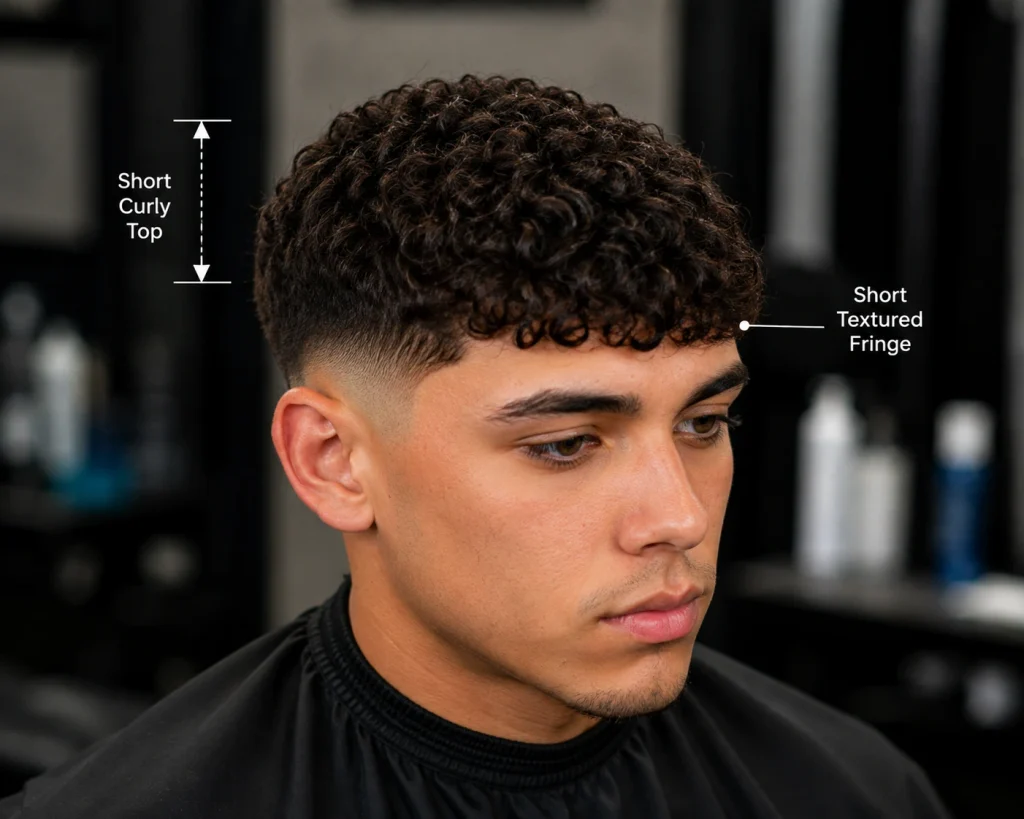
You don’t need long curls to wear an Edgar.
A short curly Edgar keeps enough texture on top to show natural movement while maintaining a more compact shape. The shorter length can also make the haircut easier to manage if you prefer a relatively simple styling routine.
The important part is not cutting the top so short that the curl pattern and forward shape disappear completely.
6. Messy Curly Edgar
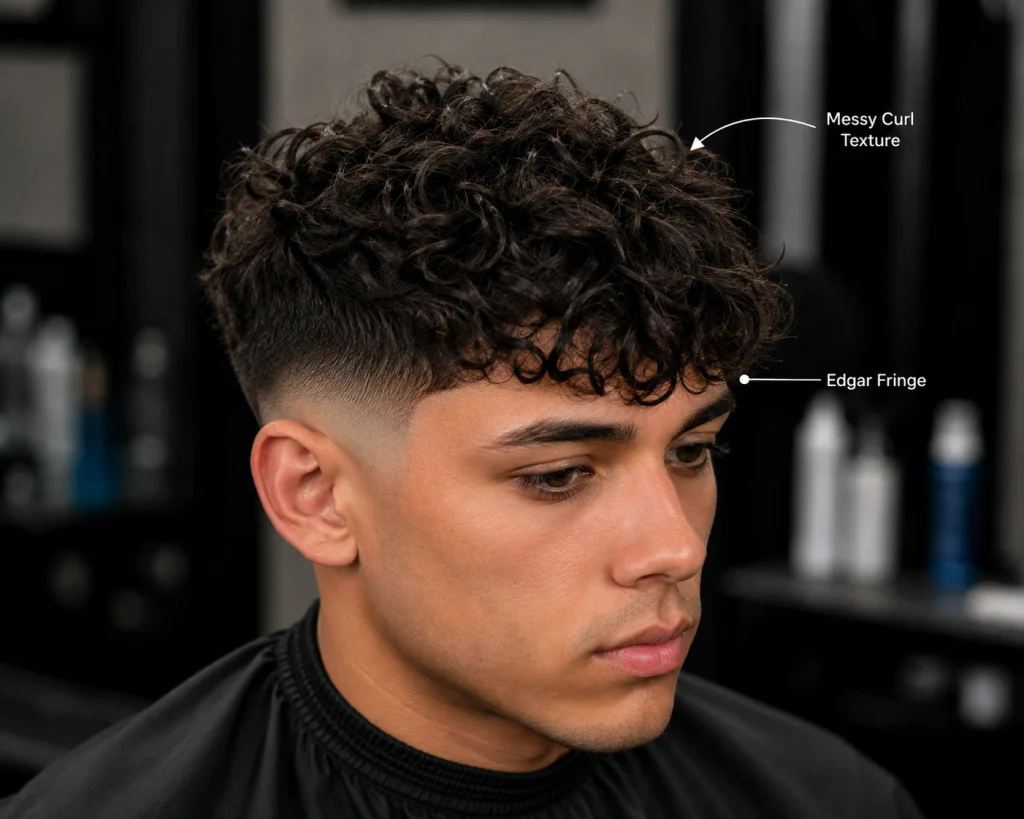
The messy curly Edgar deliberately emphasizes separation, movement, and an imperfect finish.
Rather than trying to make every curl sit in the same direction, the top is shaped loosely while retaining the recognizable Edgar silhouette underneath.
This works especially well when your natural curls resist highly controlled styling.
7. Fluffy Curly Edgar
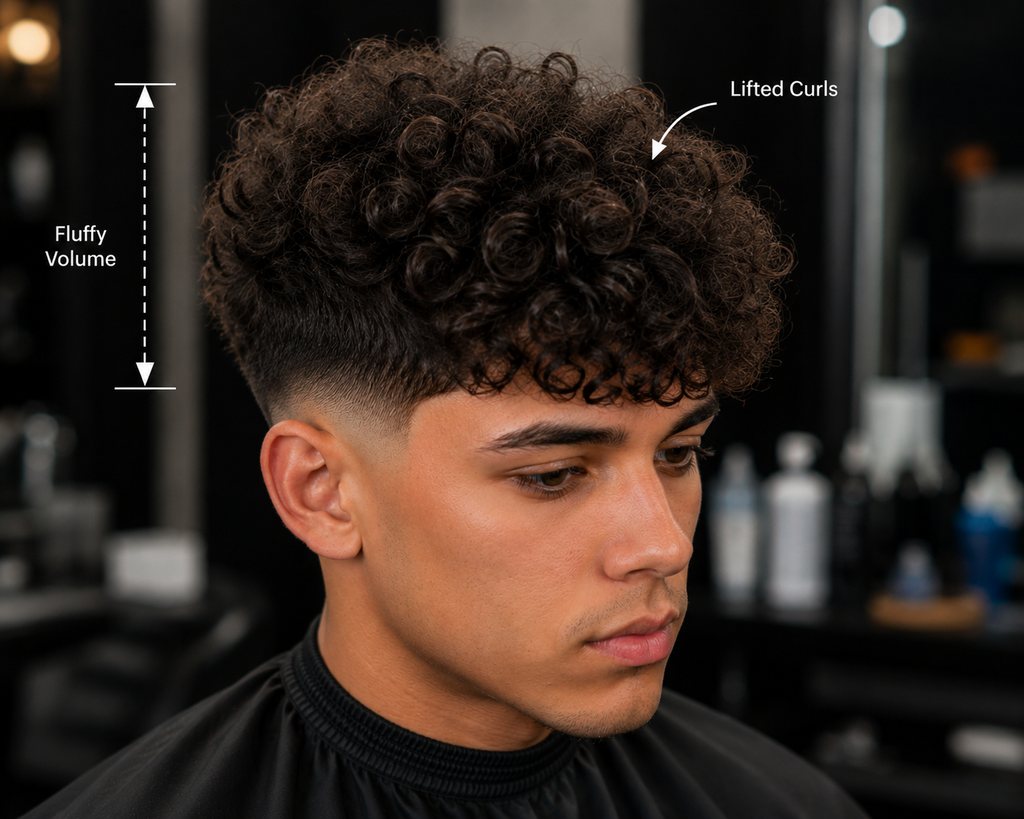
The fluffy version retains more volume and height through the top.
Instead of keeping the curls compact against the head, the haircut allows them to expand upward and forward, creating a softer and fuller silhouette.
There’s some overlap between curly and fluffy Edgars, but they aren’t identical. Curly Edgar describes the natural texture; Fluffy Edgar primarily describes the volume and finish.
See our Fluffy Edgar Haircut guide if maximum volume is the look you’re trying to achieve.
8. Curly Edgar With Longer Top
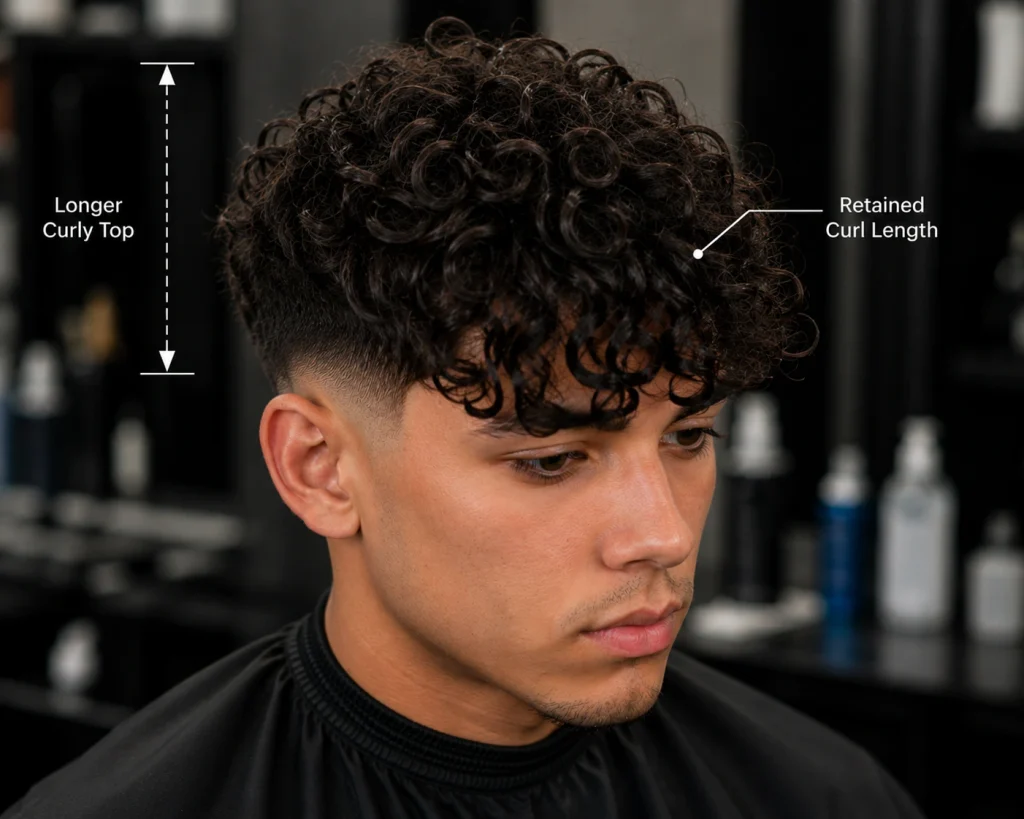
Leaving extra length on top makes the natural curl pattern much more visible.
The sides can still be tapered or faded, but the contrast comes from pairing a clean perimeter with fuller curls above it.
This version requires more attention to shaping because excessive bulk can eventually hide the Edgar silhouette as the haircut grows out.
Taper vs. Fade: Which Is Better for a Curly Edgar?
Neither is automatically better.
The right choice depends primarily on how much contrast you want between your curls and the sides.
| Option | Overall Look | Curl Emphasis | Contrast | Best For |
|---|---|---|---|---|
| Low taper | Soft and clean | High | Low | Subtle, wearable Edgar |
| Mid taper/fade | Balanced and defined | High | Medium | Noticeable but versatile contrast |
| High fade | Sharp and bold | Very high | High | Strong separation from curly top |
| Skin fade | Very sharp | Maximum | Very high | Dramatic modern finish |
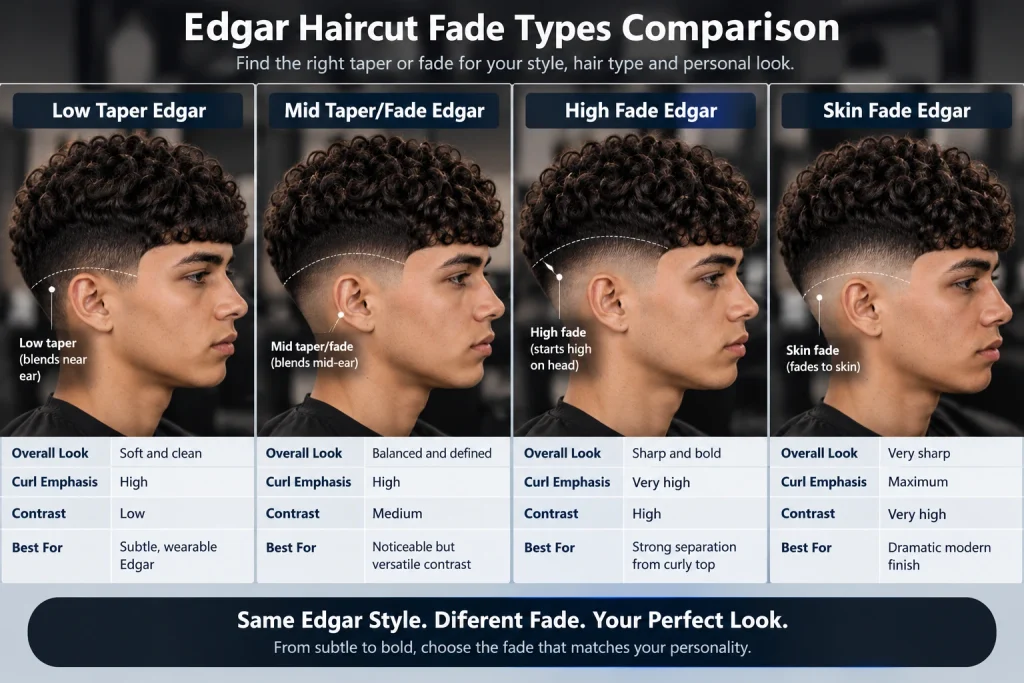
A taper generally preserves more of the natural outline around the sides, while a fuller fade removes more hair across a broader area.
Don’t rely entirely on terminology, though. Barber terminology can vary, so showing your barber a reference image of the exact transition you want is safer than relying on the words “low,” “mid,” or “high” alone.
How to Choose the Right Curly Edgar
The best version should work with the curls you actually have.
Consider Your Natural Volume
Dense curls can create substantial height and width on top. Removing some bulk may improve the silhouette, but removing too much can weaken the curl pattern and make the top look disconnected from the fringe.
Finer or looser curls may benefit from retaining more length.
Decide How Much Contrast You Want
If you prefer a softer transition, start with a low taper.
For a more obvious distinction between the sides and curls, consider a mid fade.
If you want the top to dominate the haircut visually, a higher fade creates stronger contrast.
Think About Your Fringe
The fringe is an important part of the Edgar identity.
But curly hair doesn’t necessarily form the perfectly straight horizontal line seen on a classic straight-hair Edgar. Your barber can shape the front while allowing the curls to retain some natural movement.
That usually produces a more convincing curly Edgar than trying to force every curl into a rigid line.
Account for How Your Curls Settle
Curly hair can appear different when wet, stretched, freshly styled, or completely dry.
For that reason, don’t choose your finished fringe length based solely on how the hair looks when pulled straight or saturated with water.
Discuss your normal dry curl shape with your barber before significant length is removed.
How to Ask Your Barber for a Curly Edgar
Don’t simply sit down and say, “Give me a curly Edgar.”
That leaves several important decisions open to interpretation.
Instead, communicate the individual parts of the haircut.
1. Explain What You Want on the Sides
Specify whether you want a low taper, mid fade, high fade, or another transition.
2. Say How Much Curl You Want to Keep
Explain whether you want a short, controlled top or more visible volume.
3. Explain What You Want at the Front
Show where you want the finished curly fringe to sit when your hair is dry.
4. Discuss How Much Bulk to Remove
If your hair is particularly dense, discuss shaping rather than automatically thinning everything heavily.
5. Explain How You Normally Style Your Curls
A haircut should work with your normal routine, not only with the way it looks immediately after professional styling.
Bring Reference Photos
Ideally, show your barber:
- a front view,
- a side view, and
- a photo with curl texture reasonably similar to yours.
A photograph of a straight-hair Edgar can still demonstrate fade placement, but it may not accurately represent how the top and fringe will behave on your curls.
How to Style a Curly Edgar Haircut
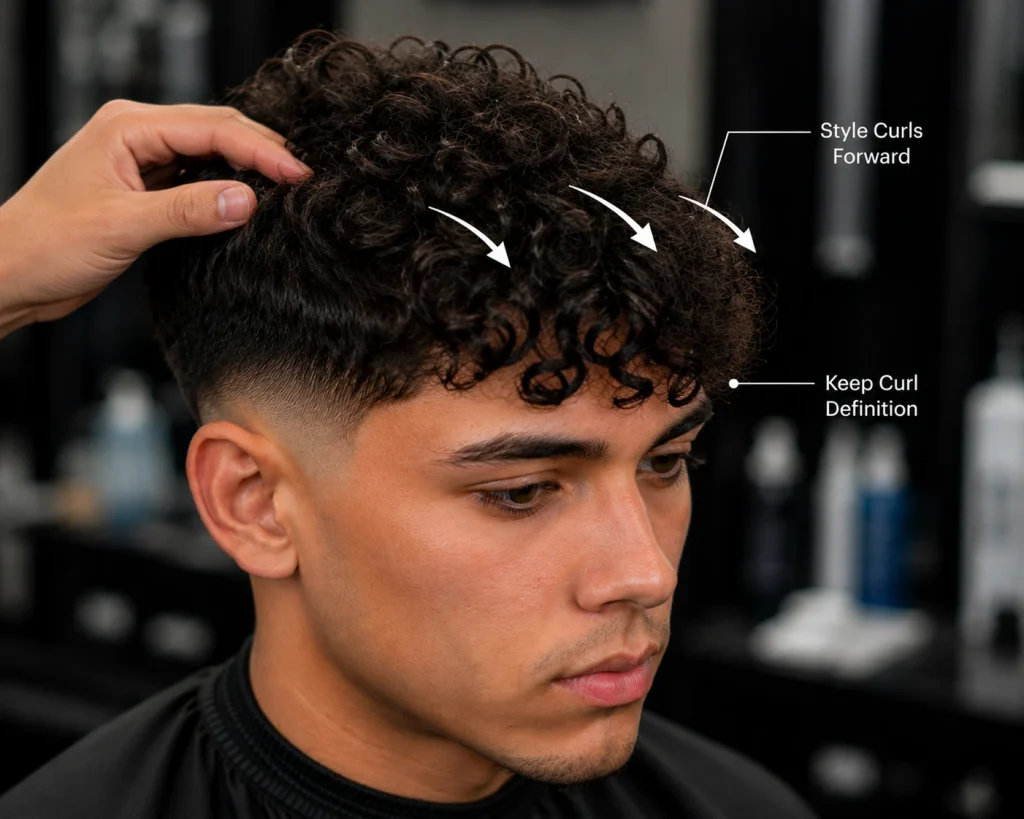
The goal isn’t to eliminate your natural texture. It’s to keep the curls defined while encouraging the overall shape forward.
Step 1: Start With Damp Hair
After washing or lightly wetting your hair, remove excess water without aggressively rubbing it.
Step 2: Apply a Small Amount of Styling Product
Depending on your hair and preferred finish, a lightweight curl cream, leave-in product, or other curl-friendly styler can help with definition and control.
Start with less product and add more only if necessary. Too much heavy product can collapse the volume you’re trying to preserve.
Step 3: Encourage the Curls Forward
Use your fingers to position the top generally toward the forehead.
Don’t try to make every curl identical.
Step 4: Define the Fringe
Arrange the front curls so they create a recognizable Edgar shape while still following their natural pattern.
Step 5: Let It Dry Naturally or Diffuse Carefully
Air-drying is the simplest option when it gives you the finish you want.
If you use a diffuser, avoid unnecessarily high heat. The American Academy of Dermatology advises limiting excessive heat because it can damage hair and notes that curly hair is particularly prone to dryness and breakage.
Step 6: Finish With Your Fingers
Once dry, make small adjustments rather than aggressively brushing through the curls.
That helps preserve separation and definition.
How to Maintain a Curly Edgar
A curly Edgar has two things to maintain simultaneously: the clean perimeter of the haircut and the condition and shape of the curls.
Keep the Taper or Fade Clean
As the sides grow, the contrast between the curly top and shorter perimeter becomes less obvious.
How often you visit your barber depends on your chosen fade, growth rate, and how sharp you like the haircut to look. A very tight fade generally shows growth sooner than a softer taper.
Watch the Fringe
The front is one of the defining elements of an Edgar.
As your curls grow, the fringe may begin sitting lower or lose its intended shape. Your barber can reshape it without necessarily removing large amounts of length from the entire top.
Don’t Neglect Moisture
Curly hair tends to be more prone to dryness and breakage. Dermatologists from the American Academy of Dermatology recommend conditioning curly hair and avoiding dry brushing, which can contribute to frizz and breakage.
Avoid Overworking the Curls
Constant brushing, excessive heat, and aggressive manipulation can work against the texture that makes this haircut distinctive.
The objective is controlled shape—not perfectly motionless hair.
Common Curly Edgar Mistakes
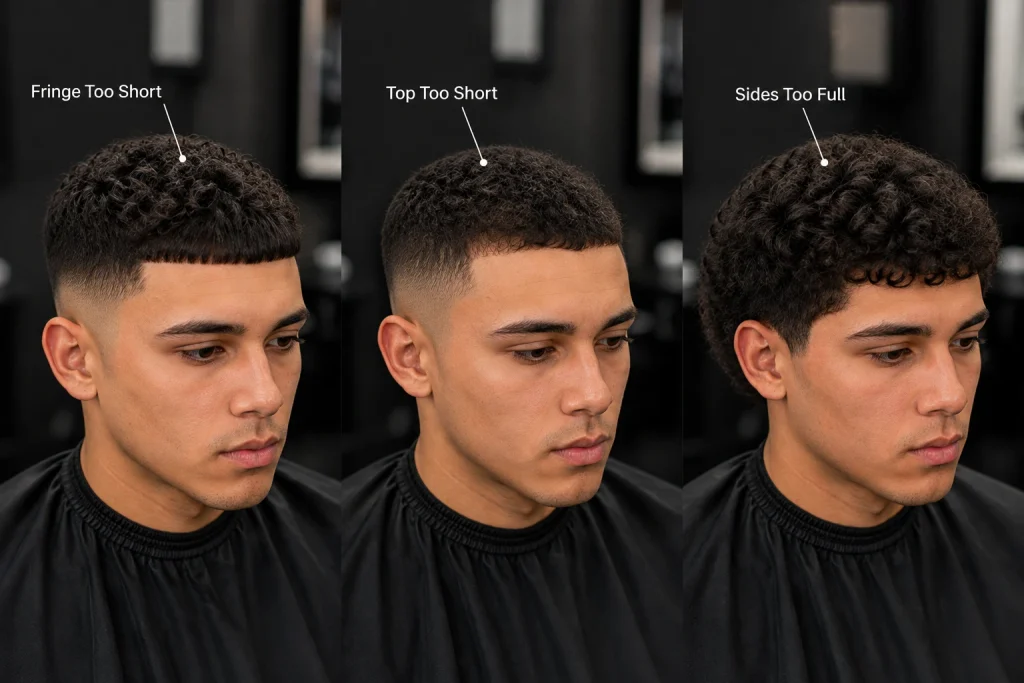
A good reference photo isn’t enough if the haircut ignores how curly hair behaves.
Cutting the Fringe Too Aggressively
Removing too much length from the front can leave the fringe much shorter than expected once the curls settle into their normal shape.
Taking Too Much Length Off the Top
The Edgar needs structure, but the curly version also needs enough hair for the curl pattern to remain visible.
Too little length can turn the haircut into an ordinary short fade.
Over-Thinning Dense Curls
Removing bulk can be useful, but excessive thinning can alter the way curls group together and leave the top looking uneven.
Choosing a Fade Only Because It Looks Good on Someone Else
A high fade that looks excellent in one reference image may create completely different proportions on another person.
Use inspiration photographs as a communication tool, not as a guarantee of an identical result.
Using Too Much Product
More product doesn’t necessarily mean more definition.
Heavy application can weigh down the curls and remove the volume that gives a curly Edgar much of its character.
Brushing Out the Finished Texture
Avoid aggressively brushing dry curls. Doing so can disrupt their definition and contribute to frizz and breakage.
Letting the Sides Overwhelm the Shape
You can let a curly Edgar grow, but eventually the sides become full enough that the contrast defining the haircut begins to disappear.
At that point, a cleanup can restore the silhouette without dramatically shortening the top.
Is a Curly Edgar Right for You?
A curly Edgar is worth considering if you:
- want to keep your natural curl texture visible;
- like a defined fringe or forward-directed shape;
- want cleaner sides without removing all the volume on top;
- prefer a haircut that can range from subtle to bold depending on the taper or fade; and
- are willing to maintain the perimeter as it grows.
It may be less suitable if you want a haircut that requires almost no shaping or if you strongly prefer keeping the same length around the entire head.
Most importantly, don’t choose your version solely from a trend photograph. The best curly Edgar is one adapted to your natural curl pattern, density, preferred length, and maintenance tolerance.
Frequently Asked Questions
Can You Get an Edgar Haircut With Curly Hair?
Yes. Curly hair can work particularly well with an Edgar because its natural texture adds volume and movement to the top. The haircut should be adapted to the way your curls naturally form rather than copied directly from a straight-hair Edgar.
What Fade Looks Best With a Curly Edgar?
There isn’t one universally best fade. A low taper creates a softer transition, a mid fade adds more contrast, and a high fade creates a much sharper separation between the sides and curly top.
How Long Should Curly Hair Be for an Edgar?
You need enough length for your natural curl pattern to remain visible and for the front to form the desired fringe. The exact length varies considerably according to curl pattern and the style you’re trying to achieve, so a fixed measurement isn’t appropriate for everyone.
Should I Get a Taper or Fade With a Curly Edgar?
Choose a taper if you want to preserve more weight around the sides and create a softer finish. Choose a fade if you want stronger contrast between the curls and shorter sides.
How Do I Keep a Curly Edgar From Getting Frizzy?
Use a curl-care routine appropriate for your hair, avoid aggressively brushing dry curls, keep the hair conditioned, and limit excessive heat. These practices can help preserve curl definition while reducing dryness, frizz, and breakage.
Final Thoughts
The curly Edgar haircut works best when the cut complements natural texture instead of trying to suppress it.
A low taper can keep the look understated, while mid and high fades create progressively stronger contrast. Longer curls add volume and movement; shorter curls produce a cleaner, more compact version.
Whichever variation you choose, focus on three things when talking to your barber: how much curl you want to retain, where you want the fringe to sit, and how much contrast you want around the sides.
Get those decisions right, and the result will look like an Edgar designed specifically for your hair—not a straight-hair haircut forced onto curls.